Just-in-Time (JIT) Material Procurement: Optimize Procurement

In the construction world, time and material flow define success. A delay in the delivery of steel, cement, or electrical supplies can halt an entire site. On the other hand, overstocking materials ties up capital and increases waste.

This is where Just-in-Time (JIT) Material Procurement steps in — a smart, lean approach to ensure materials arrive exactly when needed, not weeks before or days too late.

JIT helps builders and contractors achieve the perfect balance between availability and efficiency, reducing inventory costs and avoiding costly downtime.

What Is Just-in-Time (JIT) Material Procurement?

Just-in-Time (JIT) is a lean supply chain strategy that minimizes inventory levels by synchronizing procurement and delivery with actual project schedules.

Instead of stockpiling materials, project managers procure items in smaller quantities, scheduled to arrive “just in time” for use.

In construction, this approach demands real-time coordination among procurement teams, suppliers, transporters, and site engineers — often enabled through digital construction management systems.
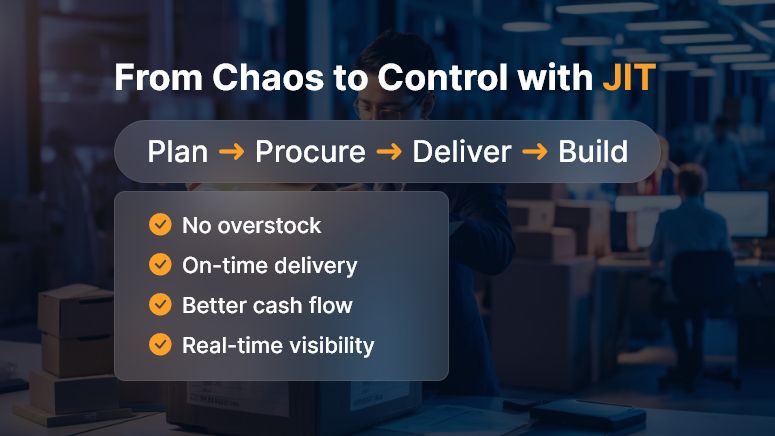
From Chaos to Control with JIT

Why JIT Matters for Modern Construction Projects

Construction projects today are complex, fast-paced, and multi-site. JIT material procurement provides several operational and financial advantages:

1. Reduced Inventory and Storage Costs

Traditional procurement models require bulk buying, leading to expensive warehousing, spoilage, and pilferage. With JIT, materials arrive only when required — saving up to 25-30% of storage and handling costs.

2. Improved Cash Flow

By avoiding premature bulk purchases, contractors keep working capital free for core operations. This helps maintain liquidity and financial agility throughout the project lifecycle.

3. Fewer Material Wastages

Overstocking leads to damage, obsolescence, and poor accountability. JIT reduces waste by ensuring materials match usage, improving sustainability and cost efficiency.

4. Enhanced Project Scheduling and Coordination

Because JIT aligns procurement with task schedules, it encourages teams to plan better and synchronize timelines across departments — procurement, site operations, and vendors.

5. Minimized On-Site Clutter and Safety Risks

Less material clutter means safer, cleaner, and more productive construction sites — directly improving workplace safety and site mobility.

How Digital Tools Enable JIT Procurement

Implementing JIT procurement manually can be challenging. However, digital tools make it achievable and scalable. Here’s how:

1. Real-Time Inventory and Demand Tracking

Cloud-based construction platforms provide live dashboards showing consumption rates, reorder levels, and stock positions across sites. Procurement teams can forecast needs precisely and schedule deliveries automatically.

2. Integrated Vendor Portals

Modern tools allow vendors to see upcoming requirements and update their delivery schedules proactively. This eliminates manual follow-ups and communication gaps.

3. Smart Alerts and Notifications

Automated alerts notify teams before material depletion or delay, ensuring proactive decisions rather than reactive firefighting.

4. Data-Driven Procurement Decisions

Analytics modules assess past consumption patterns, supplier reliability, and lead times — enabling smarter purchase planning and negotiation.

5. Seamless Site-to-Procurement Coordination

Field engineers can raise requisitions directly from mobile apps, while central procurement teams can approve, order, and track deliveries in real time.

Steps to Implement JIT Material Procurement in Construction

If you’re planning to move toward a JIT model, here’s a proven roadmap:

  • Map Your Material Flow

Identify which materials can be sourced on a JIT basis without disrupting workflow. Bulk materials (cement, steel) may still require buffer stock.

  • Collaborate with Reliable Suppliers

Choose vendors who can guarantee consistent quality and delivery timelines.

  • Digitize Procurement and Inventory

Use construction management software to track demand, deliveries, and usage in real time.

  • Create Predictive Schedules

Integrate project Gantt charts with procurement modules to automatically trigger purchase requests based on task progress.

  • Set Performance KPIs

Monitor supplier reliability, lead times, delivery accuracy, and cost savings to evaluate the success of JIT adoption.

  • Train Your Teams

Help procurement and site teams understand the lean principles behind JIT to ensure smooth adoption.

Challenges of JIT Procurement (and How to Overcome Them)

While JIT delivers high efficiency, it requires precision and digital readiness. Common challenges include:

Challenge Impact Solution
Supplier delays Workflow disruption Build a network of backup vendors
Transportation issues Missed deadlines Use route tracking & logistics alerts
Poor forecasting Material shortages Leverage AI-based demand prediction
Lack of visibility Communication gaps Use centralized project dashboards

The ROI of JIT Procurement

Companies implementing JIT procurement report:

  • 20–35% reduction in inventory carrying costs
  • 15–25% faster project completion through smoother coordination
  • 10–20% higher cash flow efficiency
  • Fewer material wastages and better sustainability metrics

Over time, these improvements translate to higher profit margins, better client satisfaction, and stronger supplier partnerships.

Conclusion: Building the Future, One On-Time Delivery at a Time

Just-in-Time Material Procurement isn’t just about reducing inventory — it’s about building a culture of precision, collaboration, and efficiency.

For construction firms adopting digital transformation, JIT is a cornerstone of lean operations. With integrated procurement dashboards, predictive analytics, and vendor collaboration, you can turn timing into your competitive advantage.

FAQs

1. What is Just-in-Time procurement in construction?

It’s a method of sourcing materials to arrive exactly when needed, reducing storage and holding costs.

2. How does JIT reduce project delays?

By synchronizing procurement with task schedules, materials are always available when required — no waiting time.

3. What type of software supports JIT procurement?

Integrated construction management platforms with modules for inventory tracking, supplier coordination, and analytics.

4. Is JIT suitable for all materials?

Not always. Critical or imported materials may need buffer stock, while consumables and short-lead materials fit JIT best.

5. What are the key benefits of JIT procurement?

Reduced costs, better cash flow, less waste, improved coordination, and safer worksites.

6. How can JIT improve sustainability?

By minimizing excess stock and wastage, it supports eco-friendly and resource-efficient construction.

7. Does JIT work for multi-site projects?

Yes, if supported by centralized procurement dashboards and strong vendor communication.

8. What KPIs track JIT success?

Inventory turnover rate, supplier lead time, delivery accuracy, and stock-out frequency.

9. Can JIT procurement work without automation?

It’s possible, but inefficient — automation ensures accuracy, transparency, and speed.

10. How does JIT impact supplier relationships?

It builds long-term, trust-based relationships through consistent collaboration and visibility.
The Ultimate Checklist Before Starting Any Construction Project

Starting a construction project is thrilling — but without a clear construction project checklist, it can quickly turn chaotic. Before the foundation is poured, every plan, permit, and precaution must be in place. A well-designed checklist ensures that your project stays on budget, meets deadlines, and complies with all relevant regulations.

Let’s explore the ultimate pre-construction checklist you should complete before starting any construction project.

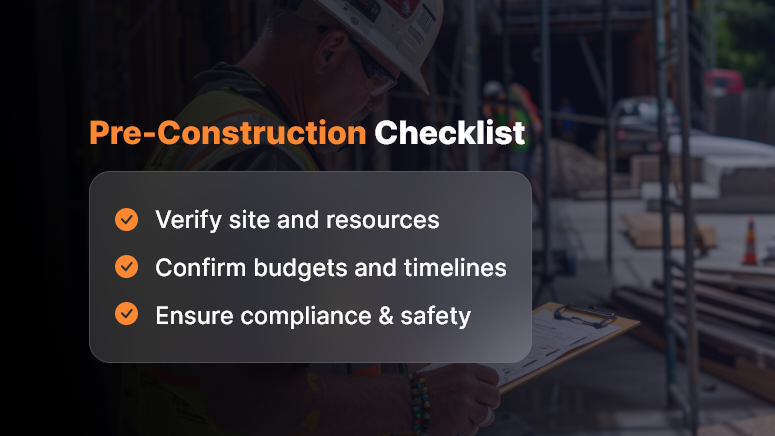
Pre-Construction Checklist

1. Pre-Planning and Feasibility

Good preparation builds great projects.

  • Define project objectives: Clarify if the goal is residential, commercial, or industrial.
  • Conduct feasibility studies: to assess the technical, environmental, and financial aspects.
  • Set budget and funding: Confirm total costs, cash flow, and backup financing.
  • Identify stakeholders: Include investors, contractors, engineers, and government bodies.
  • Survey the site: Perform soil tests, topographic mapping, and geotechnical investigations.

Strong feasibility planning ensures the entire construction project checklist starts on solid ground.

2. Legal and Regulatory Compliance

Ignoring compliance can halt progress instantly.

  • Verify land ownership: Ensure titles and deeds are authentic and dispute-free.
  • Obtain building permits: Get all local, zoning, and environmental clearances.
  • Follow municipal codes: Meet fire safety, labor, and pollution standards.
  • Secure insurance: Include liability, builder’s risk, and workers compensation.

This section of your pre-construction checklist guarantees legality and accountability.

3. Design and Engineering

Design is the bridge between planning and execution.

  • Finalize architectural design: Align with the client’s vision and local regulations.
  • Validate structural safety: Review wind load, seismic resistance, and material standards.
  • Coordinate MEP systems: Integrate mechanical, electrical, and plumbing seamlessly.
  • Embrace sustainability: Add green materials and energy-efficient layouts.
  • Conduct value engineering: Balance quality with cost-effectiveness.

With this, your construction planning checklist becomes both smart and sustainable.

4. Contracts and Procurement

Before construction starts, lock in the essentials.

  • Choose qualified contractors: Review licenses, portfolios, and references.
  • Define the scope of work: Avoid vague deliverables and cost disputes.
  • Run fair bidding processes: Maintain transparency in selection.
  • Plan procurement: Identify long-lead items and verify supplier reliability.
  • Fix payment schedules: Link payments to milestones and inspections.

Transparent contracts keep your construction checklist legally and financially secure.

5. Project Management and Scheduling

Timing is everything in construction.

  • Create a Work Breakdown Structure (WBS): Divide work into manageable sections.
  • Build a Gantt chart: Track progress visually across timelines.
  • Apply the Critical Path Method (CPM): Focus on activities affecting delivery time.
  • Allocate resources smartly: Assign the workforce and machinery efficiently.
  • Plan risk management: Prepare for weather delays or material shortages.

A well-planned schedule transforms your construction project checklist into a live project control tool.

6. Health, Safety, and Environment (HSE)

Safety ensures productivity.

  • Develop a site safety plan: Include PPE usage, emergency drills, and audits.
  • Identify hazards: Assess risks from excavation, heights, or chemicals.
  • Manage waste effectively: Segregate and recycle construction debris.
  • Protect the environment: Control noise, dust, and runoff.
  • Train all workers: Provide first-aid, fire safety, and machinery handling sessions.

A complete construction safety checklist reduces incidents and improves team morale.

7. Technology and Documentation

Digitization drives modern construction success.

  • Use digital project tools: Manage approvals, drawings, and reports online.
  • Implement paperless workflows: Store all files securely in the cloud.
  • Adopt BIM (Building Information Modeling): Detect design clashes early.
  • Set communication protocols: Ensure transparent reporting and follow-ups.
  • Centralize document control: Store contracts, permits, and inspection records efficiently.

This step ensures your construction documentation checklist stays organized and audit-ready.

8. Financial Controls

Financial discipline keeps projects healthy.

  • Prepare detailed cost plans: Include labor, materials, and overheads.
  • Forecast cash flow: Align payment cycles with project stages.
  • Ensure tax compliance: Review GST, VAT, and statutory rules.
  • Maintain contingency reserves: Allocate at least 5–10% for emergencies.
  • Conduct monthly audits: Track financial performance consistently.

Strong financial management fortifies your construction project checklist from the ground up.

9. Stakeholder Communication

Collaboration drives clarity.

  • Host a kickoff meeting: Align everyone on scope, schedule, and deliverables.
  • Define accountability: Assign clear roles to each stakeholder.
  • Maintain reporting cadence: Provide weekly and monthly progress updates.
  • Set dispute resolution systems: Define mediation or arbitration processes.
  • Encourage transparency: Keep communication open and factual.

Effective communication ensures your construction project planning checklist remains collaborative and efficient.

10. Final Pre-Construction Checklist

Before breaking ground, review everything once more:

  • All approvals and permits are in place
  • Budget and contingencies are verified
  • Contracts are signed and sealed
  • Site is cleared and secure
  • HSE plans are ready and trained
  • Stakeholders approved all designs

You’re now ready to begin your project with confidence and compliance.

Conclusion

Every great structure starts with an even greater plan. A thorough construction project checklist ensures your project remains compliant, efficient, and safe.

By following this guide, you’ll minimize risk, maximize productivity, and deliver successful outcomes — from the first blueprint to final handover.

Frequently Asked Questions (FAQs)

1. What is a Construction Project Checklist?

A construction project checklist is a structured document that outlines all essential steps, approvals, and verifications needed before starting construction. It ensures compliance, safety, and readiness.

2. Why is a Pre-Construction Checklist Important?

It prevents costly mistakes by ensuring you’ve addressed every aspect — from land approvals to contractor selection and safety compliance — before the project begins.

3. What Should Be Included in a Construction Checklist?

Key items include site verification, budgeting, permits, design approvals, contracts, safety measures, and financial controls.

4. How Do You Prepare a Construction Project Checklist?

Start by listing all stages — planning, legal, design, safety, and procurement — and assign responsible teams for each. Review it regularly before execution.

5. How Does a Checklist Help in Project Management?

It streamlines communication, tracks progress, and ensures accountability across teams, reducing delays and rework.

6. Who Uses a Construction Project Checklist?

Project managers, contractors, engineers, architects, and site supervisors rely on it to align work and maintain compliance.

7. How Can Technology Simplify Construction Planning?

Digital project management tools centralize tasks, automate documentation, and track progress in real time, ensuring transparency and accuracy.

8. How Do I Ensure Legal Compliance Before Construction?

Verify land titles, acquire all permits, and comply with fire, environmental, and labor laws as part of your pre-construction checklist.

9. What Are Common Risks in Pre-Construction Planning?

Inadequate feasibility studies, missing permits, and poor budgeting are major risks that can delay projects or increase costs.

10. Can Small Construction Firms Use This Checklist?

Absolutely. Whether small or large, every firm benefits from a detailed construction project checklist that ensures control, compliance, and confidence.

The Biggest Construction Trends to Watch in 2026

The construction industry is at a crossroads. Rising materials costs, labor shortages, climate pressures, and digital disruption are forcing firms to adapt — or fall behind. As we look ahead to 2026, several transformative trends are emerging that will reshape how projects are conceived, executed, and delivered.

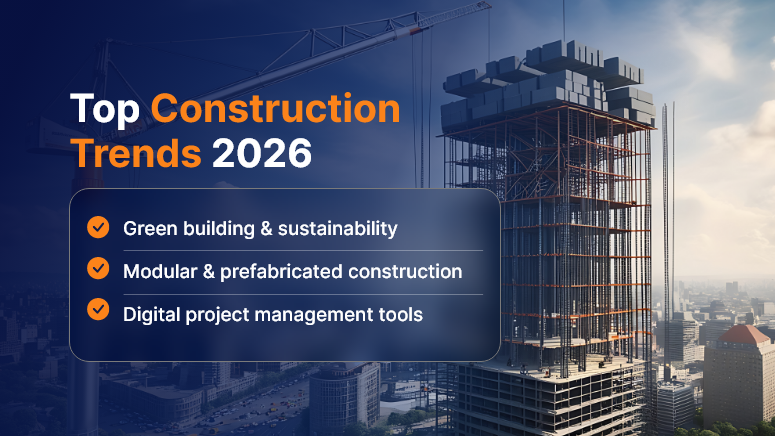
Top Construction Trends 2026

Here’s what contractors, developers, and industry leaders should keep a close eye on:

1. Modular, Prefab & Offsite Construction Become Mainstream

What was once a niche technique is rapidly becoming a standard for gains in speed, quality, and cost control. In 2026, many projects will lean heavily on modular components, volumetric units, bathroom pods, and pre-assembled MEP racks.

Why it matters:

  • It reduces on-site labor needs and exposure to weather.
  • Factory-controlled conditions improve quality and consistency.
  • Logistics & site scheduling become critical differentiators.

What to watch for / do:

  • Design for Manufacture & Assembly (DfMA) principles must be incorporated early.
  • Plan logistics, staging, crane paths, and just-in-time sequencing carefully.
  • Select repeatable scopes (e.g., restroom pods, corridor modules) as pilots.

2. AI & Generative Tools Becoming Ubiquitous (But Quietly)

AI is no longer buzz — it’s being embedded into estimating, scheduling, design optimizations, site monitoring, and compliance checks. In 2026, expect AI to operate in the background, offering suggestions, flagging risks, and enabling predictive insights.

Key applications:

  • Generative design for layouts and structural elements.
  • Predictive maintenance: sensor data alerts about potential failures.
  • AI-driven project planning and scenario simulation.

What to do now:

  • Clean and standardize your data (cost histories, productivity, supplier metrics).
  • Pilot AI in small domains (e.g., equipment scheduling, clash detection).
  • Build a framework to accept “nudges” rather than full automation overnight.

3. Robotics, Autonomy & Automation Fill the Labor Gap

With labor scarcity persisting, automation will shift from experimental to practical. Expect to see robotic bricklayers, autonomous grading machinery, 3D scanning drones, and multi-agent robotic systems co-working alongside human laborers.

Impact:

  • Repetitive, high-fatigue tasks can be offloaded.
  • Human roles shift toward monitoring, management, and quality assurance.
  • Safety can be improved by reducing workers’ exposure to dangerous tasks

Implementation tips:

  • Start with micro-tasks (rebar tying, repetitive layout, scanning).
  • Assign a “robotics champion” within your team to monitor productivity metrics.
  • Leverage multi-agent robotics for complex tasks (e.g., surveying using multiple drones).

4. Smart Materials, Adaptive & Living Construction

“Smart materials” will play a greater role in 2026: concrete with embedded sensors, self-healing polymers, dynamic glazing, bio-based composites, and even living building materials.

Trends to watch:

  • Sensor-laced concrete to detect stress, cracks, or corrosion.
  • Living building materials that self-regenerate or sequester carbon.
  • Recycled, reclaimed, or low-carbon materials are becoming the default, not the premium.

Advice for contractors:

  • Engage with material suppliers early to test performance.
  • Capture necessary data for embodied carbon and EPD (Environmental Product Declarations).
  • In bids, include performance warranties, not just specs.

5. Real-Time Safety, Health Monitoring & Motion Capture

Safety is evolving beyond checklists and helmets. In 2026, systems using wearables, motion capture (MoCap), computer vision, and real-time analytics will help prevent accidents before they occur.

How this trend manifests:

  • Wearables that detect fatigue, improper posture, or dangerous zones.
  • Site cameras linked to AI that flag PPE noncompliance or unsafe behavior.
  • Motion capture systems to analyze worker movements and reduce musculoskeletal strain.

Getting started:

  • Pilot wearable devices or sensor jackets in one high-risk zone.
  • Utilize historical incident data to train motion analysis models.
  • Shift KPIs from lagging (incident rate) to leading indicators you can act on (near-miss alerts).

6. Digital Twins & Lifecycle Integration

Smart construction is evolving into smart operations. The “digital twin” of a building or infrastructure will no longer be a post-handover novelty — it will be built from Day 0.

Why it matters:

  • Facility management, maintenance, and performance tracking can tie into the same model.
  • Real-time monitoring, energy optimization, and predictive upkeep become possible.
  • Reduces risks in handover and operational phases.

Tips:

  • Specify IoT and sensor systems early in design → integrate into BIM and the twin.
  • Use common naming standards (Haystack, Brick, ASHRAE) for equipment point IDs.
  • Offer clients ongoing performance contracts leveraging the twin you build.

7. Sustainability, Carbon Targets & Regulation Pressure

Regulatory pressure, client demands, and ESG (Environmental, Social, Governance) mandates will force greener construction. Low-carbon materials, net-zero targets, embodied carbon limits, and carbon accounting will become more common in 2026.

Key drivers:

  • Developers and governments are demanding EPDs, carbon caps, or carbon offset plans.
  • Incentives for green building, but penalties for noncompliance in some jurisdictions.
  • Lifecycle analysis is becoming part of the bid criteria.

What contractors can do:

  • Build carbon accounting into your estimating systems.
  • Track embodied carbon & operational emissions per project.
  • Partner with material suppliers that provide transparency and innovation.

8. Workforce Transformation: Hybrid Roles & Upskilling

The rise of tech in construction demands new skills. Skilled trades won’t disappear, but roles like “site technologist,” “robotics operator,” “data analyst,” or “digital foreman” will become common.

Trends:

  • Continuous training and digital literacy will become the baseline.
  • Recruiting will focus not only on trade skills, but also on adaptability and tech affinity.
  • On-site workers may get handheld AR / VR tools or assistive exoskeletons.

Starting points:

  • Develop internal training programs in BIM, robotics, and AI.
  • Promote hybrid role ladders combining field and tech skills.
  • Use VR/AR simulations to accelerate onboarding in high-risk tasks.

9. Infrastructure, Adaptive Reuse & Retrofit Boom

New construction is expensive and resource-intensive. In 2026, many markets will pivot toward retrofits, adaptive reuse, and infrastructure upgrades rather than purely greenfield builds.

Why this shift:

  • Energy regulations are pushing upgrades to existing stock.
  • Limited land in urban areas.
  • Infrastructure stimulus from governments globally.

Opportunities:

  • Specialize in retrofit technologies (insulation, envelope upgrades, facade systems).
  • Combine smart sensors & building automation in upgrades.
  • Use modular insertions or plug-and-play systems for retrofits.

10. Equipment & OEM Shifts: Digitalization + Lifecycle Services

Construction machinery is also transforming. OEMs are embedding telematics, predictive maintenance, autonomous features, and offering equipment as services rather than pure sales.

Implications:

  • Contractors may lease “smart” equipment with usage-based contracts.
  • Data from machinery feeds project analytics (productivity, idle times, fuel efficiency).
  • OEMs may become long-term service partners rather than mere suppliers.

Challenges to Watch

No trend is without friction. Here are key challenges that will shape who succeeds:

  • High upfront investment — Many technologies require capital; ROI needs careful forecasting.
  • Interoperability & system silos — Different software, protocols, and vendors may not talk easily.
  • Regulation lag — Building codes and approvals may struggle to catch up with new methods (e.g. 3D printing).
  • Workforce resistance/skills gap — Older workers may resist digital change.
  • Data security & privacy risks — Sensor networks and digital models carry cybersecurity exposure.
  • Reliability & maintenance — Sensors, robots, networks can fail; redundancy is essential.
  • Change management overhead — Organizational processes must evolve alongside tech.

How Contractors Can Prepare Now

To ride these waves rather than be overwhelmed:

  • Run pilot projects: Pick one trend (e.g., modular bathroom pods, wearable safety) and test it.
  • Build digital backbone: Use open standards (IFC, COBie) and APIs to ensure systems can integrate.
  • Develop data culture: Collect, analyze, and feed insights back into operations.
  • Invest in training: Upskill your workforce early to use, not fear, new tools.
  • Partner strategically: Work with vendors, research labs, and material innovators.
  • Track metrics & ROI: Measure time saved, rework avoided, safety events reduced, carbon improvements.
  • Offer lifecycle services: Use the data and digital assets you build to provide value post-construction.

Conclusion

2026 will be a watershed year in construction. The trends we see now — modular building, embedded intelligence, robotics, smart materials, sustainability, digital twins, workforce shifts, and equipment digitalization — are converging to redefine what it means to build.

Contractors who embrace this transformation will gain speed, quality, differentiation, and long-term sustainability. Those who wait risk being disrupted. The next frontier in construction is not just harder or taller — it’s smarter.

FAQs

1. What is the biggest construction trend expected in 2026?

One of the biggest trends is modular and off-site construction becoming mainstream. Prefabricated and factory-built components will help projects reduce costs, accelerate timelines, and improve quality consistency.

2. How will AI impact the construction industry by 2026?

AI will be embedded into almost every phase — estimating, scheduling, site monitoring, and risk prediction. By 2026, contractors will rely on AI for real-time decision support, predictive analytics, and generative design rather than manual guesswork.

3. What role will robotics play in construction?

Robotics and autonomous machinery will fill the labor shortage gap. Expect robotic bricklayers, autonomous grading machines, surveying drones, and even robotic exoskeletons to assist workers in repetitive or dangerous tasks.

4. Are smart materials really practical in construction?

Yes. By 2026, smart materials like self-healing concrete, dynamic glass, and bio-based composites will be more accessible. These improve durability, sustainability, and efficiency while reducing lifecycle costs.

5. How will digital twins change project delivery?

Digital twins will no longer stop at construction — they’ll extend into facility operations. Contractors will hand over fully integrated twins with real-time IoT data for maintenance, energy optimization, and long-term performance monitoring.

6. Why is sustainability becoming such a big deal in construction?

Climate regulations, ESG requirements, and client expectations are making sustainability non-negotiable. In 2026, contractors will face stricter carbon caps, demand for Environmental Product Declarations (EPDs), and pressure to achieve net-zero goals.

7. How will workforce roles evolve with these trends?

Construction roles will blend traditional skills with digital literacy. New positions like digital foreman, robotics operator, or site technologist will emerge, requiring continuous upskilling and adaptability.

8. What challenges will contractors face when adopting these trends?

The main challenges include high upfront investment, interoperability issues between digital tools, workforce resistance, skills gaps, and data security concerns. Change management will be as important as the technology itself.

9. Is smart construction only for large firms?

No. Smaller contractors can start with targeted tools — like drones for site surveys, modular components for repetitive units, or wearable safety gear. Scaling can happen gradually as ROI becomes clearer.

10. How should contractors prepare for 2026 now?

Contractors should:

  • Pilot emerging technologies on select projects
  • Invest in training and upskilling teams
  • Build a digital backbone with open standards
  • Partner with vendors and innovators
  • Track ROI through safety, cost, and productivity metrics

Stakeholder Management: Keeping Everyone on the Same Page

The success or failure of a project often hinges less on technical execution than on how well stakeholders are managed. Stakeholders—whether clients, team members, vendors, local communities, regulatory agencies, or end users—carry expectations, influence, and sometimes conflicting goals.

Stakeholder management is the art and practice of identifying, engaging, communicating with, and aligning all parties so that the project proceeds smoothly, conflict is minimized, and value is delivered.

In this blog, we explore key principles, steps, challenges, and strategies for stakeholder management—so you can keep everyone on the same page throughout the project lifecycle.

Why Stakeholder Management Matters

Let’s start with why stakeholder management is not just “nice to have” but critical:

  • Alignment of expectations: Misaligned expectations lead to scope creep, disputes, or dissatisfaction.
  • Risk mitigation: Unheard stakeholders may raise objections, delays, or resistance midstream.
  • Better decision-making: Stakeholders often hold valuable insights, constraints, or feedback that improve outcomes.
  • Trust and buy-in: When people feel included and informed, they are more supportive and cooperative.
  • Conflict reduction: Proactive communication and transparent decision paths help reduce surprises and confrontations.
  • Smoother change management: When changes are necessary, good stakeholder relationships ease acceptance.

In construction projects, for example, Public notes that “indirect stakeholders” (residents, shop owners, political groups) often get overlooked in favor of direct ones (clients, contractors), but their influence can make or break the project’s public perception and regulatory compliance.

That principle holds in nearly all domains: it’s not enough to focus only on parties who deliver or receive the project’s outputs; you must also manage those impacted.

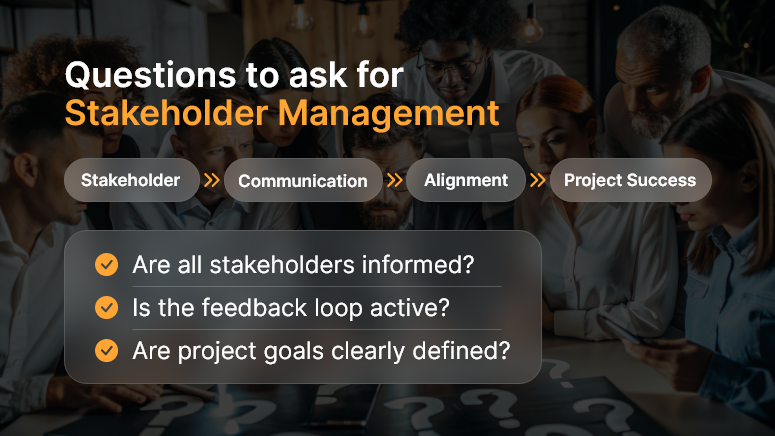
The Stakeholder Management Lifecycle

A robust stakeholder management approach can be organized in phases:

  • Identification & Mapping
  • Analysis & Prioritization
  • Engagement Strategy & Planning
  • Communication & Interaction
  • Monitoring, Feedback & Adjustment
  • Post-Project Review & Improvement

Let’s unpack each phase.

1. Identification & Mapping

What to do:

  • List all potential stakeholders (internal and external).
  • Include direct participants (e.g., clients, team, vendors) and indirect ones (e.g., regulators, communities, media, neighboring businesses, interest groups).
  • Build a stakeholder map or visual (flowchart, matrix, network diagram) showing relationships, influence, roles, and interactions.
  • Regularly revisit and update this map — stakeholders may emerge, shift in influence, or drop off.
  • Public emphasizes that stakeholder mapping must be repeated regularly, because new stakeholders may appear, priorities change, and risk profiles shift.

Tips:

  • Use frameworks like the impact/influence matrix (e.g., high-influence / high-interest quadrant)
  • Use tools such as stakeholder maps, stakeholder registers, and entity-relationship diagrams

2. Analysis & Prioritization

What to analyze:

  • Influence or power (how much a stakeholder can affect the project)
  • Interest or stake (how affected they are by the project)
  • Attitude (supportive, neutral, resistant)
  • Risks or issues they may pose (delays, objections, negative press)
  • Dependence relationships (who is dependent on whom)
  • Needs, concerns, and expectations

How to prioritize:

  • Focus more resources on high-power, high-interest stakeholders
  • Identify “watch” group (high power, low interest) and “keep informed” group (low power, high interest)
  • Balance across stakeholder groups so no key stakeholder feels neglected

3. Engagement Strategy & Planning

Once you know who matters most and what their concerns are, decide how, when, and how much to engage them.

Key components:

  • Communication channels and frequency (meetings, newsletters, workshops, town halls, social media, one-on-one)
  • Tone, content, and format depend on stakeholder type and literacy
  • Two-way engagement, not just broadcasting: include mechanisms for input, feedback, grievance redressal
    Escalation and issue resolution paths
  • Roles & responsibilities: who in your team is responsible for stakeholder relationships
  • Governance & access control: who sees what information, when, and who can respond

In the Public example, their tool allows defining what each stakeholder sees and who can interact with whom, ensuring access control and relevance.

4. Communication & Interaction

This is the execution phase: implementing your engagement plan.

Best practices:

  • Be transparent: Even the bad news. Publish schedules, explain “why,” and explain what you’ll do to mitigate negative impacts. Public gives the example of informing residents in advance about noise, pollution, scheduling, and mitigation efforts.
  • Communicate clearly and concisely: Use language the stakeholder understands. Avoid jargon when talking to non-technical audiences.
  • Regular cadence: Consistency builds trust — weekly or monthly updates, standups for the core team, newsletters for the broader group.
  • Tailor messages: Different stakeholders have different needs. A subcontractor may want technical details; a community group needs a high-level schedule, impact, and mitigation steps.
  • Active listening: Provide mechanisms for suggestions, complaints, and feedback. Don’t ignore or dismiss them.
  • Respond respectfully: Even negative or unreasonable complaints merit proper replies. Sometimes an apology or clarification goes a long way.
  • Facilitate stakeholder interactions: Encourage dialogue, co-creation, and joint problem solving.

5. Monitoring, Feedback & Adjustment

Stakeholder management is not “set and forget.” You must continuously monitor, evaluate, and refine your approach.

  • Track engagement metrics: response rates, sentiment, escalation frequency
  • Monitor risks or dissatisfactions emerging from stakeholders
  • Update your stakeholder maps and priority lists as conditions change
  • Adjust communication frequency, content, or format based on feedback
  • Document lessons learned and evolve engagement strategies

6. Post-Project Review & Improvement

Once the project is done, close the loop:

  • Conduct stakeholder debriefs: What worked? What didn’t?
  • Collect stakeholder satisfaction surveys or feedback
  • Document best practices and improvement areas
  • Feed them into your organization’s process library so future projects benefit

As the Public says, “When every construction project comes to an end, you transfer these experiences to future endeavours.”

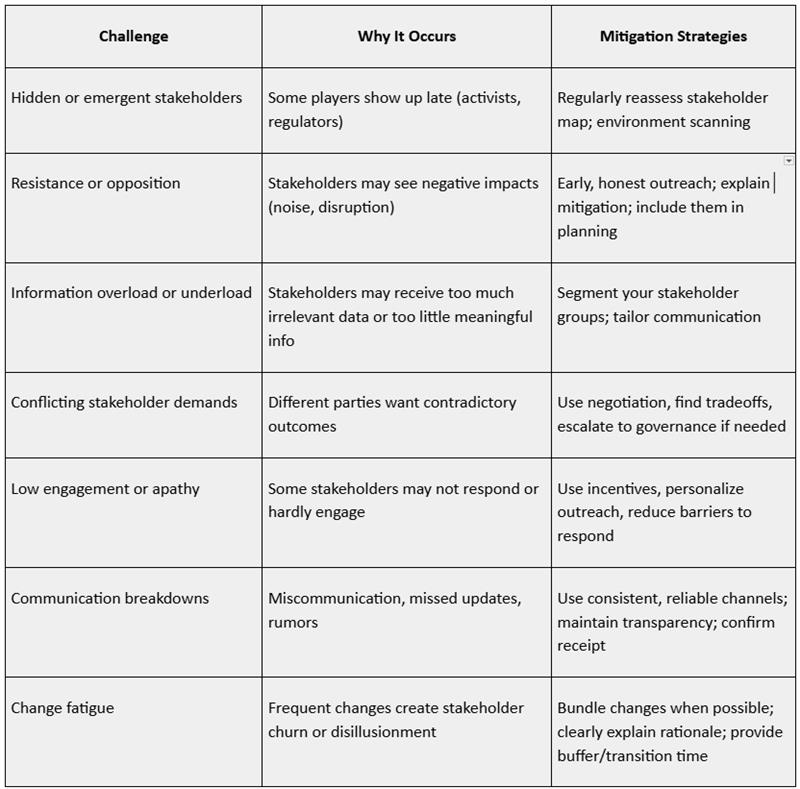
Common Challenges & How to Overcome Them

Real-World Examples & Illustrations

  • Construction & Infrastructure: As in the Public example, when construction causes noise, dust, and road closures, residents may be negatively impacted. Transparent scheduling, mitigation planning (like dust suppression, work hours, alternate routes), and proactive announcements can reduce complaints and local resistance.
  • Urban Redevelopment / Infrastructure Projects: Local businesses, commuters, environmental activists, municipal agencies—each must be engaged, informed, and sometimes compensated.
  • IT / Software Projects: Stakeholders include customers, sponsors, regulatory bodies, internal users, and third-party integrators. Managing expectations about feature scope, cutover plans, downtime, and data migration is critical.
  • Product Launch / Consumer Goods: External stakeholders may include media, influencers, end-users, and regulatory authorities. Early beta users’ feedback becomes critical.
  • NGO or Social Projects: Communities, donors, local government, and beneficiaries all have stakes in outcomes, transparency, and inclusiveness.

In each case, the principles (mapping, transparency, two-way communication, iteration) apply.

Tips & Best Practices

  • Start early – don’t wait until problems arise to engage stakeholders
  • Use stakeholder personas – treat groups with similar needs as a “persona” to tailor messaging
  • Use multiple channels – email, meetings, apps, dashboards, social media, town halls
  • Visual dashboards – for those who like quick overviews (Gantt, status RAG, heat maps)
  • Structured feedback loops – surveys, Q&A sessions, suggestion boxes
  • Governance forums – advisory boards, steering committees, where stakeholders can participate in decisions
  • Neutral facilitators – when tensions exist, use a mediator or third party to facilitate dialogue
  • Document every interaction – keep records of communications, concerns, decisions
  • Balance visibility vs confidentiality – some data is sensitive (bids, budget); gate who sees what
  • Empathy & respect – treat dissenting voices with dignity, acknowledge concerns, even if you cannot satisfy them fully

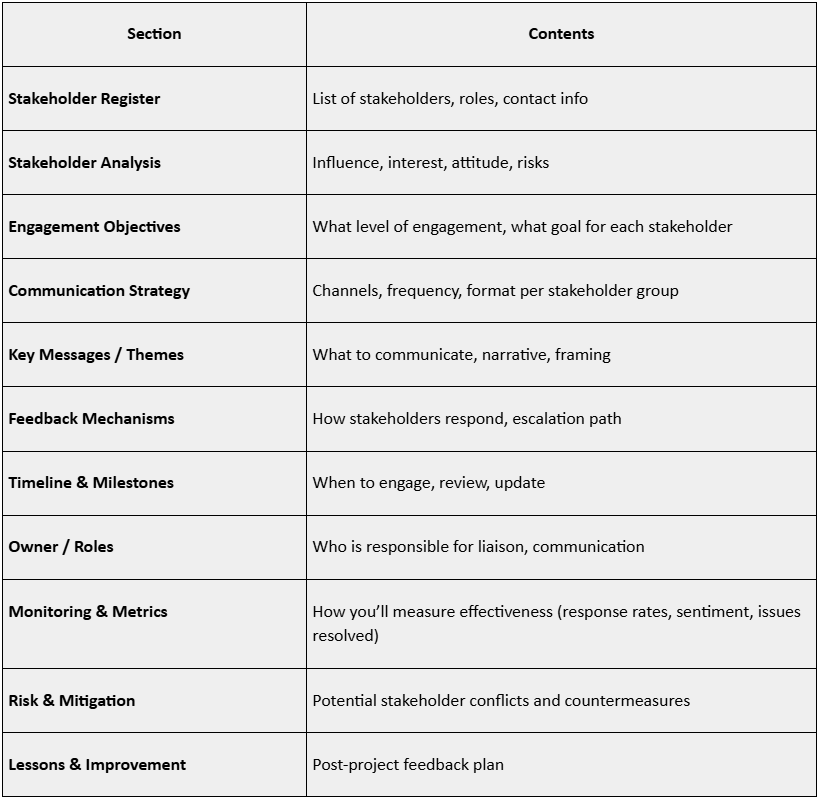
Sample Stakeholder Management Plan Outline

Here’s a template you can adapt:

Conclusion

Stakeholder management is not a peripheral activity — it’s central to project success. A project might have the best technology, schedule, or budget plan, but if key stakeholders feel ignored, misled, or antagonized, delays, pushback, or failure can ensue.

By systematically identifying, prioritizing, engaging, and adapting to stakeholders — with transparency, clarity, and responsiveness — you can keep everyone on the same page. That alignment helps reduce surprises, build trust, and enable smoother execution.

Would you like me to create a shorter “blueprint” or slide deck summary of this for your blog or presentation?

FAQs

1. What is stakeholder management in projects?

Stakeholder management is the process of identifying, analyzing, engaging, and communicating with individuals or groups who are affected by or can influence a project. It ensures expectations are aligned and conflicts are minimized.

2. Why is stakeholder management important?

Without proper stakeholder management, projects risk misaligned expectations, delays, conflicts, or even failure. Effective engagement builds trust, improves decision-making, and helps gain support from all parties.

3. Who are considered stakeholders in a project?

Stakeholders include anyone with a direct or indirect interest in the project: clients, project teams, vendors, investors, regulatory agencies, local communities, and even end users.

4. What is stakeholder mapping?

Stakeholder mapping is the process of visually identifying stakeholders, their level of influence, and their interest in the project. This helps prioritize engagement efforts and ensures no key stakeholder is overlooked.

5. How do you prioritize stakeholders?

Stakeholders are typically prioritized based on their power (influence) and interest (level of impact). High-power, high-interest stakeholders require the most attention, while others may simply need to be kept informed.

6. What are common challenges in stakeholder management?

Some challenges include hidden stakeholders emerging later, conflicting demands, resistance to change, communication breakdowns, and low engagement from certain groups.

7. How to manage conflicts between stakeholders?

Conflicts can be reduced by open communication, transparency, and negotiation. If disagreements persist, use governance structures (like steering committees) or neutral facilitators to resolve disputes.

8. How often should I update stakeholders?

The frequency depends on the stakeholder’s role and influence. Core team members may need daily or weekly updates, while external stakeholders may only require monthly progress reports or milestone reviews.

9. What tools can help in stakeholder management?

Tools include stakeholder registers, RACI charts, communication plans, project dashboards, feedback surveys, and specialized project management software that controls access and communication.

10. How can organizations improve stakeholder engagement over time?

By conducting post-project reviews, gathering feedback, documenting lessons learned, and refining communication strategies, organizations can build stronger stakeholder relationships for future projects.

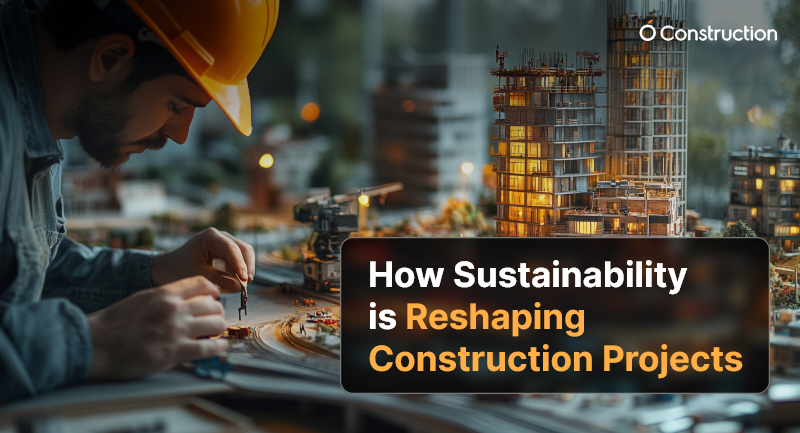
How Sustainability Is Reshaping Construction Projects

Sustainability isn’t just a buzzword — it’s a business imperative reshaping the construction industry. Did you know that the construction sector accounts for nearly 40% of global carbon emissions? Companies that fail to integrate eco-friendly practices face rising costs, regulatory scrutiny, and reputational risks.

For construction managers, project owners, and architects, understanding sustainable construction is no longer optional — it’s a competitive advantage. In this blog, we’ll explore how sustainable construction practices are transforming projects from design to delivery, uncover actionable strategies, and show how digital tools like OConstruction can simplify green initiatives. By the end, you’ll have clear, practical insights to reduce environmental impact while boosting efficiency and profitability.

Sustainable Construction

Business Relevance & Why It Matters

Sustainable construction goes beyond environmental responsibility — it drives measurable business value. For companies in the construction and real estate sectors, adopting eco-friendly practices can reduce operational costs, improve compliance, and enhance brand reputation.

Who benefits most?

  • Project managers: Streamline sustainable workflows with real-time visibility into materials and energy use.
  • Construction firms: Reduce waste and optimize supply chain efficiency.
  • Clients and investors: Gain confidence in projects that meet environmental, social, and governance (ESG) standards.

Real-world examples of challenges and solutions:

  • Excessive material waste: Traditional construction projects often discard 20–30% of materials. Sustainable alternatives reduce waste and save costs.
  • High energy consumption: Eco-friendly designs, including passive heating/cooling and energy-efficient materials, lower operating costs for buildings.
  • Regulatory hurdles: Digital tools can track compliance with green certifications such as LEED or BREEAM, preventing costly fines.

With a digital construction platform, these challenges transform into opportunities. By integrating project planning, resource management, and sustainability tracking in one dashboard, companies can make data-driven decisions that balance environmental goals with profitability.

Best Practices, Frameworks, and Actionable Strategies

1. Material Selection & Sourcing

  • Do: Opt for renewable, recyclable, and locally sourced materials to reduce carbon footprint and shipping emissions.
  • Don’t: Rely solely on traditional concrete or steel without evaluating alternatives such as bamboo, recycled steel, or low-carbon cement.
  • Quick Win: Use OConstruction’s material tracking module to monitor usage, procurement, and eco-certifications in real time.

2. Energy-Efficient Design

  • Do: Implement passive design principles, solar panels, and energy-efficient lighting.
  • Don’t: Ignore building orientation, insulation, and ventilation, which significantly impact energy performance.

Step-by-Step Framework:

  • Analyze site and climate data.
  • Select energy-efficient systems and materials.
  • Track projected vs. actual energy consumption using your digital platform.

3. Waste Management & Recycling

  • Do: Create a waste management plan and assign recycling responsibilities.
  • Don’t: Dispose of construction debris without considering reuse or repurposing.
  • Tip: OConstruction can generate reports showing waste reduction metrics and material savings for sustainability reporting.

4. Water & Resource Conservation

  • Do: Implement rainwater harvesting, greywater recycling, and low-flow fixtures.
  • Don’t: Neglect water audits, which can reveal significant savings opportunities.

5. Monitoring & Reporting Sustainability Goals

  • Track carbon emissions, material usage, and compliance metrics digitally.
  • Set KPI targets for each project and monitor progress in real time.
  • Use dashboards to communicate results to stakeholders, ensuring accountability.

6. Staff Training & Culture

  • Do: Educate your workforce on sustainable construction practices.
  • Don’t: Treat sustainability as a one-off checklist.

Customer Story

For example, GreenBuild Co., a mid-sized construction firm, used OConstruction’s sustainability tracking feature to reduce material waste by 25% and energy usage by 18% across multiple projects. By integrating project management with real-time dashboards:

  • Project managers gained visibility into material sourcing and on-site consumption.
  • Teams optimized workflows to minimize environmental impact without delaying deadlines.
  • Clients appreciated transparent sustainability reports, boosting trust and securing repeat contracts.

The outcome? Cost savings, regulatory compliance, and stronger brand positioning — all while actively contributing to greener construction practices.

Key Takeaways & Closing Summary

  • Sustainable construction isn’t just eco-friendly; it’s strategically profitable. Businesses that implement these practices reduce costs, comply with regulations, and strengthen their brand.
  • Digital platforms like OConstruction simplify sustainability by offering real-time tracking, reporting, and actionable insights.
  • Quick wins: Optimize materials, implement energy-efficient designs, manage waste effectively, and engage staff in a sustainability culture.
  • Remember: Sustainability is a journey, not a single point to check. Starting small with measurable steps can lead to long-term environmental and business impact.

By integrating sustainability into construction projects, companies can achieve cost savings, efficiency, and competitive advantage — while building a better future for communities and the environment.

FAQs

1. What is sustainable construction?

Sustainable construction involves designing, building, and operating structures in ways that minimize environmental impact, reduce waste, conserve resources, and improve energy efficiency. It balances economic, social, and ecological considerations for long-term value.

2. Why is sustainable construction important in today’s projects?

It helps companies reduce carbon footprints, lower operating costs, comply with regulations, and enhance brand reputation. With growing environmental concerns and stricter standards, sustainable construction has become a competitive necessity.

3. How can digital tools support sustainable construction?

Platforms like OConstruction track material usage, energy consumption, waste management, and compliance metrics in real time. This helps teams make data-driven decisions, optimize workflows, and ensure transparency in sustainability efforts.

4. What are the key benefits of adopting sustainable construction practices?

  • Reduced construction and operational costs
  • Enhanced compliance with green building standards (LEED, BREEAM)
  • Lower carbon emissions and resource usage
  • Stronger client trust and brand reputation

5. What are some common sustainable construction strategies?

  • Using eco-friendly and recycled materials
  • Energy-efficient design, lighting, and HVAC systems
  • Waste reduction and recycling on-site
  • Water conservation through rainwater harvesting and greywater reuse

6. Can small construction firms implement sustainable practices?

Yes. Sustainable construction is scalable. Digital platforms help even small firms monitor, track, and report sustainability metrics efficiently, without major upfront investment.

7. How does sustainable construction impact project timelines?

When planned properly, sustainability can improve efficiency by reducing waste and rework. Tools like OConstruction ensure better scheduling and resource management, keeping projects on track.

8. How do clients benefit from sustainable construction projects?

Clients get energy-efficient, environmentally responsible buildings with lower long-term costs. Transparent sustainability reporting also builds trust and supports ESG commitments.

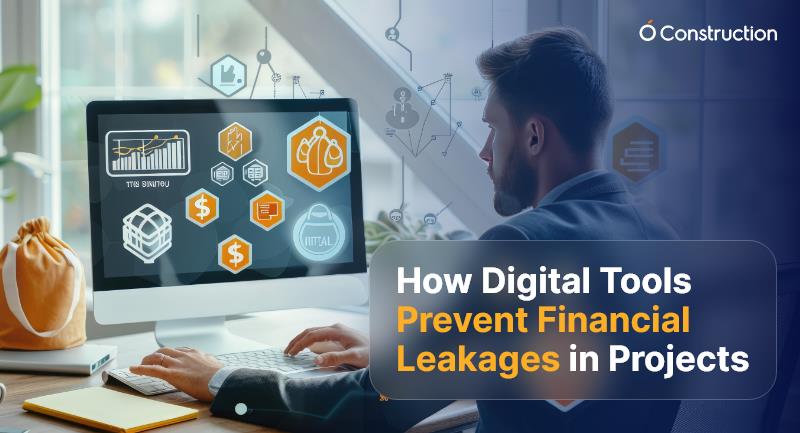
How Digital Tools Prevent Financial Leakages in Projects

Cost overruns are the Achilles’ heel of the construction industry. Studies reveal that 9 out of 10 large projects exceed their budgets, sometimes by as much as 50% or more. The reasons vary — from untracked invoices to material wastage, scope creep, or delayed approvals. But the root cause is often the same: poor visibility and lack of control over finances.

This is where digital project management tools come in. By providing real-time cost tracking, automated workflows, and predictive insights, they enable construction companies to identify leaks early and prevent them from escalating into substantial financial losses.

In this blog, we’ll delve into why financial leakages in projects are a pressing issue, how they impact profitability, and the practical ways digital tools like OConstruction help address these gaps. Whether you’re a project manager, contractor, or finance controller, this guide will show you how to safeguard your bottom line.

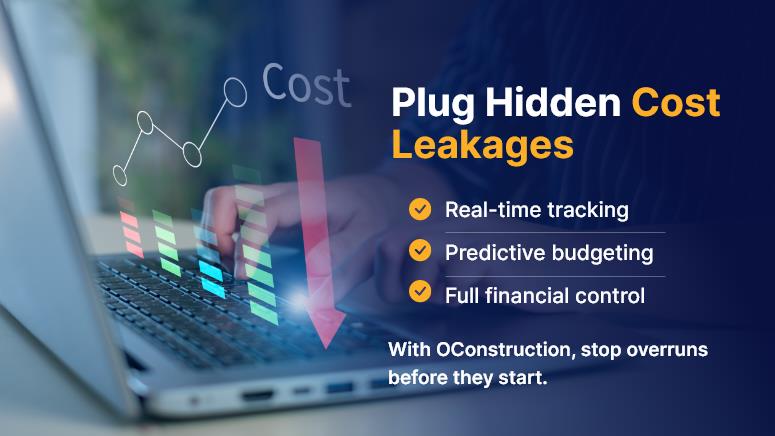
Plug Hidden Cost Leakages

Business Relevance & Why It Matters

Financial leakages in projects may seem like small issues at first glance. A misplaced invoice, a delayed approval, or a minor over-purchase of materials might not raise alarms immediately.

But when multiplied across a large construction project with multiple vendors, subcontractors, and timelines, these “small” issues can quickly escalate into significant financial drains.

Why This Matters for Businesses

Construction projects already operate on tight margins. Any unmonitored leak not only eats into profits but also damages client trust. Imagine promising to deliver a commercial complex within a ₹50 crore budget, only to explain midway that costs have ballooned by 20%. That’s not just a financial setback; it’s a reputational hit.

Who Benefits Most from Prevention

  • Contractors: Gain visibility into expenses and reduce disputes with clients.
  • Project Managers: Ensure smooth execution without firefighting cost overruns.
  • Finance Controllers: Strengthen compliance and reporting accuracy.
  • Owners/Investors: Protect ROI and gain confidence in project delivery.

Real-World Problems Across Industries

  • Infrastructure Projects: A highway contractor delays vendor payments due to manual reconciliation. Result? Late fees and strained supplier relationships.
  • Commercial Construction: A retail mall project overspends on materials due to duplicate procurement requests not caught in time.
  • Residential Projects: A housing developer faces hidden labor costs because subcontractor hours are tracked on paper instead of a central system.

The pain vs. solution contrast couldn’t be clearer: traditional methods expose businesses to leakages, while digital systems build a safety net.

Best Practices, Frameworks, and Actionable Strategies

Digital construction tools don’t just replace spreadsheets; they transform how costs are planned, tracked, and controlled. Below are the proven practices and frameworks that leading construction companies use to prevent financial leakages in projects.

1. Automate Cost Tracking for Accuracy

Manual expense tracking is prone to errors and delays. Even the most diligent project manager cannot match the precision of an automated system.

  • With digital tools: every transaction is captured instantly and linked to the right project, task, or vendor.
  • Outcome: Managers know exactly where the money is going, ensuring no expense goes untracked.

Example: Instead of waiting for monthly reconciliations, a project manager can see daily material costs logged automatically into the system.

2. Leverage Real-Time Dashboards for Transparency

Dashboards are more than pretty visuals. They provide instant clarity on budgets, expenses, and forecasts.

  • Identify areas where costs are rising faster than expected.
  • Monitor project performance against financial baselines.
  • Take corrective action before overruns occur.

Imagine catching an over-budget material purchase on the same day it’s requested — that’s the power of real-time visibility.

3. Integrate Finance and Project Operations

Siloed teams are a major cause of financial leakages. Finance works on one set of numbers, while the project team works on another. Misalignment creates discrepancies that only surface too late.

  • With integration: Finance, procurement, and site managers use the same system.
  • Result: No duplicate costs, no missed payments, and smoother audits.

OConstruction ensures everyone speaks the same financial language.

4. Adopt Predictive Budgeting for Proactive Control

Traditional budgeting reacts after the damage is done. Predictive budgeting flips the script by using historical and live data to forecast potential overruns.

  • Anticipate cost spikes in labor or materials.
  • Adjust budgets before commitments are made.
  • Prevent risks from escalating into losses.

For example, if steel prices are projected to rise, the system alerts managers to secure materials early, saving costs.

5. Do’s and Don’ts for Preventing Leakages

Do’s

  • Standardize workflows to minimize manual errors.
  • Set automated alerts for budget threshold breaches.
  • Regularly review subcontractor invoices and link them to contracts.
  • Track material usage to prevent wastage.

Don’ts

  • Don’t rely only on manual reconciliation — errors multiply fast.
  • Don’t delay expense reporting; late entries distort reality.
  • Don’t overlook “minor” costs — they accumulate quickly.
  • Don’t manage separate systems for finance and projects.

6. Quick Wins for Immediate Impact

  • Digitize procurement to reduce fraud and ensure transparency.
  • Automate payroll and subcontractor payments to avoid hidden costs.
  • Schedule monthly audits using system-generated reports.
  • Link costs to project milestones for better accountability.

These steps deliver fast ROI without complex implementations.

7. A Practical Framework for Financial Control

Here’s a simple but powerful framework to follow:

  • Baseline the Budget Digitally – Define expected costs across labor, materials, and overhead.
  • Connect Every Expense – Link every rupee spent to specific tasks, vendors, or milestones.
  • Track Actual vs. Planned Costs – Use live dashboards for daily monitoring.
  • Review Weekly – Conduct quick reviews with finance and site managers.
  • Report Automatically – Share transparent reports with stakeholders to build trust.

Following this framework ensures continuous financial discipline across the project lifecycle.

Customer Story/Use Case Example

For example, Skyline Builders, a mid-sized construction company, struggled with frequent budget overruns due to manual invoice approvals and late expense tracking. By adopting OConstruction’s digital project cost management platform, they achieved measurable improvements:

  • Reduced untracked expenses by 30% in the first year
  • Saved nearly 15% in overall project costs
  • Accelerated subcontractor payment cycles by 40%
  • Delivered projects on schedule with improved client confidence

This transformation highlights how plugging financial leakages with digital tools delivers both financial and operational wins.

Key Takeaways & Closing Summary

Financial leakages in projects are silent killers of profitability. But with the right strategies, they are preventable.

In summary:

  • Automated cost tracking ensures accuracy.
  • Real-time dashboards provide transparency.
  • Integration of finance and project teams eliminates silos.
  • Predictive budgeting enables proactive control.

By combining these best practices with a platform like OConstruction, companies not only stop leakages but also gain the ability to deliver projects faster, cheaper, and with higher quality.

Final Thought:

The choice is simple: stick with outdated methods and risk uncontrolled losses, or adopt digital tools to future-proof financial management. The companies that embrace digital transformation today will be tomorrow’s leaders in construction efficiency.

FAQs

1. What are financial leakages in projects?

There are hidden costs like duplicate payments, material wastage, or billing errors that increase project expenses.

2. How can digital tools stop financial leakages?

They track costs in real time, automate approvals, and flag unusual spending before it escalates.

3. Why are leakages common in construction projects?

Because of multiple vendors, manual tracking, and a lack of centralized cost control.

4. Who benefits most from preventing financial leakages?

Project managers, finance teams, and owners—all gain clarity, savings, and smoother execution.

5. Is OConstruction suitable for small firms too?

Yes, it’s scalable for both small contractors and large enterprises, offering cost control and transparency.

Category: Construction Academy

Subcategory: Budgeting and Planning

Subcategory: Construction Phase

Subcategory: Design Coordination

Subcategory: Estimation Techniques

Subcategory: Initiation and Feasibility

Subcategory: Introduction

Subcategory: Personal Management

Subcategory: Project Close-Out

Subcategory: Project Scheduling

Subcategory: Project Teams

Subcategory: Proposal Management

Subcategory: Total Quality Management

Subcategory: Tracking and Control

Subcategory: Work Breakdown

Category: Help Desk

Subcategory: Client

Subcategory: Construction 101

Subcategory: Contractor Management

Subcategory: Expense

Subcategory: Finance Budget

Subcategory: Inventory Management

Subcategory: My Approvals

Subcategory: Site Management

Subcategory: Vendor Management