Cost vs. Value: How to Prioritize Features in Budget Decisions

When it comes to managing construction projects, one of the hardest choices isn’t just setting the budget—it’s deciding what to prioritize within it. A flashy new feature may look appealing, but will it truly drive value? According to McKinsey, nearly 45% of construction projects exceed their budgets due to poor allocation of resources and unclear prioritization. That’s where cost vs. value in project management becomes essential.

In this blog, we’ll explore how to evaluate features not only based on cost but also on the real value they bring to your business. You’ll learn how to make smarter budget decisions, balance short-term savings with long-term ROI, and see how OConstruction’s integrated project management platform helps you streamline these tough trade-offs.
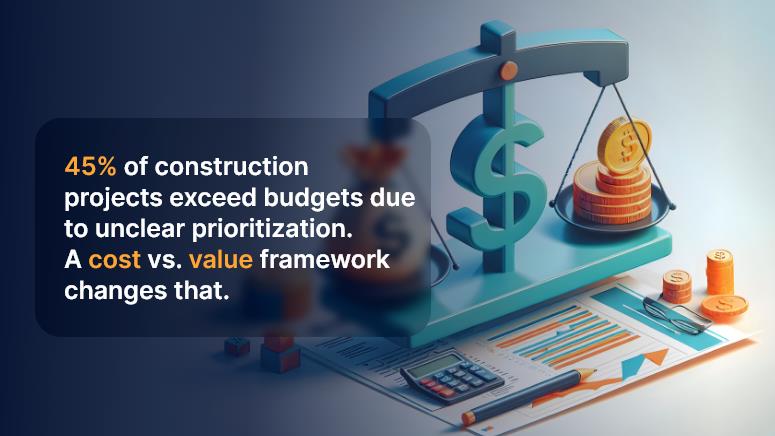
45 per of construction

Business Relevance & Why It Matters

Every construction project has constraints: time, scope, and most importantly, budget. Yet, many teams struggle to align spending with true business value. Choosing features purely on cost often leads to short-lived wins but long-term headaches—while focusing solely on value without considering budget constraints can derail profitability.

Why Companies Should Care:

  • Executives need clear ROI visibility to justify investments to stakeholders.
  • Project managers require tools to allocate budgets efficiently and avoid feature overload.
  • Clients & developers want confidence that every dollar spent translates to tangible project outcomes.

Common Challenges Without a Cost vs. Value Approach:

  • Over-investing in underused features that inflate costs.
  • Neglecting critical tools (like risk tracking or time management) that save money in the long run.
  • Struggling to demonstrate ROI when negotiating budgets or pitching to clients.

The cost vs. value in the project management framework provides a lens to assess priorities based on both immediate affordability and long-term benefits. When supported by digital platforms like OConstruction, businesses gain real-time insights into cost allocation, usage patterns, and ROI forecasting. The result? Better decisions, leaner budgets, and higher client satisfaction.

Best Practices, Frameworks, and Actionable Strategies

Dos for Balancing Cost vs. Value in Project Management

  • Quantify Value Beyond Cost

Don’t just look at upfront pricing. Evaluate features on long-term savings, efficiency gains, and improved client relationships. For instance, a robust time-tracking tool might cost more, but it can prevent budget overruns.

  • Prioritize Must-Have Features First

Start by identifying critical features that directly impact project delivery (e.g., task scheduling, client reporting, and risk tracking). OConstruction lets you categorize features by “must-have,” “nice-to-have,” and “optional,” ensuring essentials come first.

  • Involve Stakeholders in Decision-Making

Different stakeholders view value differently. Executives may focus on ROI, while project managers may value automation. Use collaboration dashboards to gather diverse inputs before finalizing.

  • Apply a Weighted Scoring Framework

Score features by cost, business impact, and urgency. This structured method ensures decisions aren’t swayed by emotions or trends.

Don’ts in Feature Prioritization

  • Don’t Overload Teams with Unnecessary Features

More isn’t always better. Too many features can confuse users, leading to low adoption and wasted budgets.

  • Don’t Undervalue Integration

Buying a cheap standalone tool may save in the short term, but creates silos later. Integrated platforms like OConstruction deliver long-term value through seamless workflows.

  • Don’t Ignore Future Growth

A feature that seems excessive now might be essential as your business scales. Avoid tunnel vision by considering scalability

Quick Wins & Best Practices

  • Start Small, Scale Later: Invest in core features now, then expand as ROI proves itself.
  • Use Data-Driven Insights: Leverage usage reports to see which tools add the most value.
  • Revisit Priorities Quarterly: Business needs evolve, so should your feature priorities.

Step-by-Step Framework: Balancing Cost vs. Value

  • Identify Needs: List all potential features with input from stakeholders.
  • Estimate Costs: Get upfront and long-term pricing for each feature.
  • Measure Value: Score each feature’s impact on efficiency, client satisfaction, and risk reduction.
  • Rank & Prioritize: Apply a weighted scoring system to align with goals.
  • Decide & Implement: Start with high-value, essential features.
  • Review & Adjust: Track ROI quarterly and reprioritize as needed.

Customer Story

For example, Skyline Developers, a mid-sized construction firm, struggled with ballooning budgets due to underutilized software features. They were paying for advanced analytics and AI forecasting, but lacked adoption among teams.

After adopting OConstruction, they implemented the cost vs. value in the project management framework. Using the platform’s built-in scoring tools and ROI dashboards, Skyline prioritized essential features like time tracking, task management, and real-time collaboration. They postponed non-critical add-ons until adoption improved.

The results:

  • Project delivery improved by 30% due to better scheduling.
  • Software costs were reduced by 20% after cutting unused features.
  • Client satisfaction rose significantly thanks to transparent reporting.

This cost vs. value approach helped Skyline balance budgets, improve outcomes, and build stronger trust with stakeholders.

Key Takeaways

Balancing cost vs. value in project management is about more than numbers—it’s about making strategic choices that maximize ROI, minimize waste, and deliver real impact.

Key Takeaways:

  • Start with essentials. Focus on must-have features that directly influence project outcomes.
  • Use data, not guesswork. Measure feature adoption and ROI continuously.
  • Think long-term. Value extends beyond cost, especially when scaling.

In today’s competitive construction landscape, companies that prioritize value-driven budgeting not only save money but also strengthen client trust and deliver projects on time. By leveraging digital tools like OConstruction, you can turn budget decisions into a growth strategy.

Frequently Asked Questions

1. What does cost vs. value mean in project management?

Cost vs. value in project management refers to weighing the price of a feature, tool, or resource against the long-term benefits it delivers. Instead of focusing only on upfront costs, teams consider ROI, efficiency gains, and scalability when making budget decisions.

2. Why is cost vs. value important in construction project budget planning?

Construction projects often face tight budgets and high stakeholder expectations. Without a cost vs. value approach, teams risk overspending on underused features or neglecting critical tools. Prioritizing based on value ensures budgets drive measurable project outcomes.

3. How can project managers prioritize features effectively?

Project managers can use a weighted scoring framework that evaluates features on cost, business impact, and urgency. This structured method helps avoid emotional or trend-driven decisions and ensures investments align with project goals.

4. What are common mistakes when prioritizing features in construction projects?

The most common mistakes include:

  • Overloading teams with unnecessary features.
  • Ignoring integration between tools.
  • Focusing only on upfront costs without considering long-term ROI.
  • Overlooking scalability for future growth.

5. How does software like OConstruction help in balancing cost vs. value?

OConstruction provides built-in scoring tools, ROI dashboards, and real-time usage reports. These features help teams categorize must-have vs. nice-to-have features, track adoption, and reprioritize budgets quarterly to stay aligned with business needs.

6. What role do stakeholders play in feature prioritization?

Executives, project managers, clients, and developers each view value differently. Involving all stakeholders ensures that decisions reflect diverse needs—ROI for executives, automation for managers, and usability for teams—leading to smarter budget allocation.

7. Can cost vs. value decisions improve client satisfaction?

Yes. When budgets are allocated to features that directly improve project delivery—like time tracking, risk management, and transparent reporting—clients see faster results, fewer overruns, and clearer ROI, which builds trust and long-term relationships.

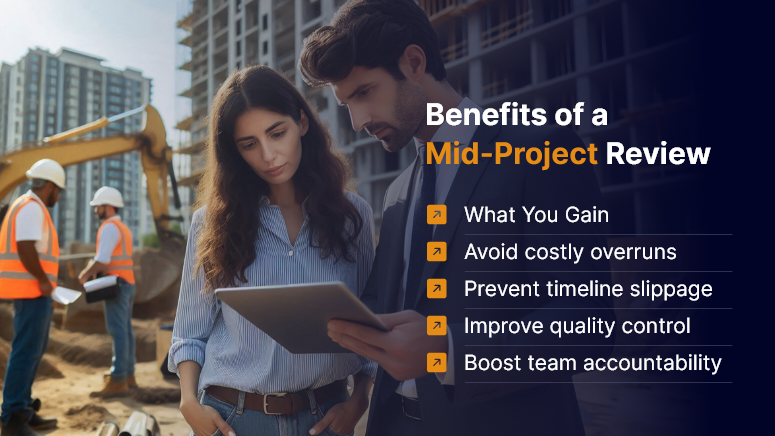
How to Conduct a Mid-Project Review in Construction

In construction, the halfway point of a project is more than a milestone — it’s a reality check. According to a McKinsey report, large projects are typically 20% over schedule and up to 80% over budget by the end. Many of these issues could have been identified and corrected if a structured mid-project review in construction had been carried out.

This review isn’t just about ticking boxes — it’s about uncovering potential delays, budget overruns, and quality risks while there’s still time to fix them. In this guide, we’ll break down exactly how to conduct a successful mid-project review in construction, so you can keep your timelines, costs, and teams on track using the power of OConstruction’s integrated platform.

Benefits of a Mid-Project Review

Why a Mid-Project Review in Construction Matters

Your construction schedule is not static—it’s a living, breathing roadmap. Without an intentional check-in, small deviations can grow into full-blown setbacks.

The Business Case for a Mid-Project Review

  • Prevent Cost Overruns: Catch budget drift early by comparing planned vs. actual expenditures.
  • Improve Timeline Accuracy: Identify schedule slippage before it impacts delivery.
  • Enhance Quality Control: Ensure work meets specifications before it’s too late to correct.

Who Benefits Most?

  • Project Managers get clarity on performance metrics.
  • Contractors avoid rework and disputes with accurate reporting.
  • Developers protect ROI by preventing late-stage surprises.

Pain vs. Solution Example:

  • Without a mid-project review: Crews continue working without knowing critical tasks are delayed; materials arrive late; cost reports are outdated.
  • With a mid-project review in construction: OConstruction’s dashboards show real-time cost, schedule, and quality metrics, allowing you to adjust plans instantly.

How to Conduct a Mid-Project Review in Construction: Step-by-Step

1. Set Clear Review Objectives

Define what you’re evaluating — costs, timelines, quality, safety, or all four.
Pro tip: In OConstruction, create a custom review checklist tied to live project data, so nothing is overlooked.

2. Gather Accurate Data

  • Pull budget vs. actual reports.
  • Review updated Gantt charts for schedule progress.
  • Collect site inspection notes and safety records.

With OConstruction, all this data is centralized, thereby reducing the risk of errors associated with scattered spreadsheets.

3. Conduct Stakeholder Interviews

Speak with site supervisors, contractors, and suppliers to gain a deeper understanding of the challenges.
Best Practice: Use structured digital forms in OConstruction to capture feedback consistently across all teams.

4. Identify Variances and Root Causes

Look for deviations in budget, timelines, or quality.

  • If costs are high, are material prices the cause?
  • If timelines slip, are dependencies properly managed?

OConstruction’s dependency tracking makes cause-and-effect analysis simple.

5. Develop a Corrective Action Plan

Once issues are identified, assign responsibility and set deadlines for fixes. Use OConstruction’s task management feature to allocate follow-up actions and track them until completion.

6. Communicate Findings Clearly

Don’t let your review sit in a PDF nobody reads. Automate stakeholder updates directly from your OConstruction dashboard, ensuring everyone is aligned and accountable.

Customer Success Story

For example, HarborBuild Contractors, a mid-sized commercial builder, implemented their first mid-project review in construction using OConstruction. They discovered a 12% budget overrun risk due to underestimated subcontractor hours.

By adjusting workloads and renegotiating contracts mid-way, they:

  • Saved $480,000 in projected overruns
  • Reduced schedule delay risk by 3 weeks
  • Improved subcontractor satisfaction through better coordination

The result? The project finished on time and 5% under budget, improving their bid success rate for future contracts.

Key Takeaways

A mid-project review in construction is your best insurance against late and over-budget deliveries.

Quick Recap:

  • Be proactive – Schedule your review before issues escalate.
  • Use accurate data – Centralized, real-time reporting is non-negotiable.
  • Engage stakeholders – Consistent communication prevents surprises.
  • Take action fast – A review is pointless without follow-through.

In short, the mid-project review is not just a checkpoint—it’s a powerful control mechanism. By combining structured evaluations with tools like OConstruction, you can pivot quickly, protect your budget, and maintain client trust.

FAQs

1. What is a mid-project review in construction?

A mid-project review is a structured evaluation conducted at the halfway point of a construction project. It examines budget, timelines, quality, and safety to identify potential risks early. Instead of waiting until final delivery, the review allows project teams to make corrections while there’s still time to avoid costly overruns or delays.

2. Why is a mid-project review important in construction projects?

Because construction projects are complex and dynamic, small delays or cost overruns can snowball into major setbacks. A mid-project review helps you catch these issues early, improve schedule accuracy, and ensure quality standards are being met. This proactive step protects ROI, improves accountability, and builds stronger client trust.

3. How does a mid-project review prevent cost overruns and delays?

By comparing planned vs. actual expenditures, analyzing updated schedules, and reviewing progress reports, teams can see where budgets are drifting or timelines are slipping. With corrective action plans in place, you can immediately address these issues, preventing further escalation.

4. Who should participate in a mid-project review?

Typically, project managers, contractors, site supervisors, engineers, and key stakeholders, such as developers or clients. Each provides valuable insights—project managers focus on performance metrics, contractors highlight operational challenges, and developers look at budget and ROI.

5. How often should construction companies conduct mid-project reviews?

While the halfway point is the standard milestone, complex or high-risk projects may benefit from additional reviews at quarterly or phase-based intervals. The key is not just frequency but consistency—reviews must be structured, data-driven, and actionable.

6. What data is essential for a mid-project review?

You’ll need accurate financial reports (budget vs. actuals), updated project schedules (like Gantt charts), site inspection records, safety compliance reports, and stakeholder feedback. OConstruction simplifies this by centralizing all this data into one integrated platform.

7. What happens after the mid-project review?

The most critical step is developing and implementing a corrective action plan. This includes assigning tasks, setting new deadlines, and tracking accountability. Without follow-through, even the best review won’t drive results.

8. How can technology like OConstruction improve mid-project reviews?

Instead of juggling spreadsheets, PDFs, and manual reports, OConstruction provides real-time dashboards, automated reports, dependency tracking, and task management features. This ensures reviews are accurate, efficient, and easy to act upon.

9. What are the common mistakes to avoid in mid-project reviews?

Treating the review as a box-ticking exercise instead of a problem-solving process.

  • Using outdated or inaccurate data.
  • Failing to involve key stakeholders.
  • Not implementing corrective actions after the review.

10. Can mid-project reviews improve future bids and projects?

Yes. A successful review not only helps the current project but also generates insights into productivity, cost control, and team efficiency. Companies that consistently conduct reviews build a reputation for delivering on time and within budget—making them more competitive in future bids.

How to Handle Delays in Construction Without Losing Client Trust

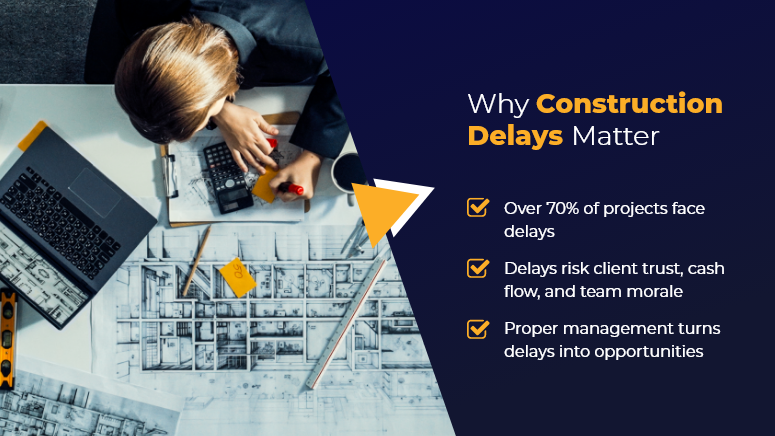
In construction, time is money and trust. Yet, research shows more than 70% of construction projects experience some form of delay. Whether it’s supply chain disruptions, weather conditions, or unforeseen site issues, construction delays can quickly damage client relationships.

However, delays don’t have to mean broken trust. In fact, how you manage them can strengthen your reputation. By being transparent, proactive, and strategic, you can keep your clients informed, maintain confidence, and still deliver high-quality results.

In this article, we’ll explore proven ways to handle construction delays while preserving client trust, and how OConstruction’s integrated tools make the process more manageable and less stressful.

Why Construction Delays Matter

Why Managing Construction Delays Matters

Construction delays are inevitable, but unmanaged delays can lead to costly disputes, legal issues, and reputational damage.

The Business Case

  • Financial Stability – Prolonged delays impact cash flow and increase overhead costs.
  • Client Retention – How you communicate during a delay determines whether a client will hire you again.
  • Team Morale – Clear direction during delays keeps crews focused and productive.

Who Benefits the Most?

  • Project Managers – Reduce the chaos and uncertainty when schedules shift.
  • Contractors & Builders – Maintain relationships that lead to repeat business.
  • Clients & Developers – Receive honest updates and realistic expectations.

Pain vs. Solution

Without proper delay management:

  • Clients feel blindsided by sudden timeline changes.
  • Costs spiral without clear recovery plans.
  • Trust erodes, leading to lost contracts.

With proactive management—especially using OConstruction’s construction project management tools—you can:

  • Track delay causes and impacts in real time.
  • Communicate updates with accurate, data-backed insights.
  • Adjust schedules and resources to recover timelines faster.

Best Practices & Strategies to Handle Construction Delays

1. Identify the Cause Early

  • Document delays as soon as they occur and identify root causes.
  • Use OConstruction’s delay tracking module to categorize delays (weather, supply chain, labor, etc.).

2. Communicate Transparently with Clients

  • Share the issue immediately — before they ask.
  • Explain what happened, the expected impact, and your recovery plan.
  • With OConstruction, you can send real-time progress reports backed by visual dashboards.

3. Provide a Recovery Plan, Not Just a Problem

  • Offer alternative solutions, such as overlapping tasks or bringing in extra crews.
  • Use the platform’s schedule simulation feature to model recovery scenarios.

4. Avoid Overpromising

  • Don’t reduce timelines unrealistically to appease clients—it leads to bigger disappointment.
  • Always base new estimates on verified data and historical project performance.

5. Strengthen Contract Clauses for Delays

  • Include realistic delay clauses and weather contingencies in contracts.
  • Store and manage all contracts in OConstruction’s secure document repository.

6. Keep Internal Teams Aligned

  • Ensure all subcontractors and teams understand the updated schedule.
  • Push instant notifications via OConstruction’s mobile app to keep everyone in sync.

7. Learn from Each Delay

  • Conduct a post-project review to see how delays were handled.
  • Feed these lessons into future construction risk management processes.

Customer Success Story

For example, NorthPoint Builders, a mid-sized general contracting firm, faced a three-week delay when a critical supplier missed a delivery. Instead of avoiding the conversation, they used OConstruction to:

  • Generate a detailed delay impact report.
  • Share a realistic recovery schedule with the client within 24 hours.
  • Track every step of the revised plan through milestone dashboards.

The result? The client appreciated the transparency and awarded them two more projects the following year. Their on-time delivery rate improved by 15%, and internal team coordination became smoother than ever.

Key Takeaways

Construction delays don’t have to destroy client relationships—if you handle them right. The key is to act early, communicate honestly, and back your recovery plan with data.

Actionable Insights:

  • Act quickly – The sooner you address a delay, the easier it is to recover.
  • Communicate clearly – Clients value honesty over sugar-coated updates.
  • Use technology – Platforms like OConstruction make tracking and recovery faster.

By reframing delays as opportunities to showcase professionalism, you can turn potential losses into lasting trust.

The Role of Preconstruction Planning in Project Success

Studies reveal that over 60% of construction delays stem from issues that could have been prevented during the planning stage. From misaligned budgets to unclear scopes, these problems don’t appear out of thin air—they originate from skipping or rushing preconstruction planning.

Preconstruction planning is the strategic foundation of every successful project. It aligns budgets, resources, timelines, and expectations before the first brick is laid. Without it, even the best crews and materials can’t save a project from overruns and delays.

In this guide, we’ll explore why preconstruction planning is critical, how it impacts project success, and the exact steps to make it work — using tools like OConstruction to streamline every stage.

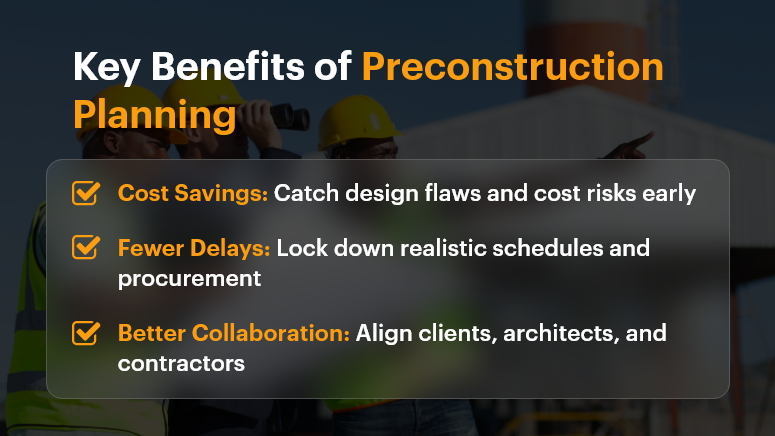
Key Benefits of Preconstruction Planning

Why Preconstruction Planning Matters for Project Success

A construction project isn’t just a collection of tasks—it’s a complex sequence of interconnected decisions. Preconstruction planning ensures those decisions are well-informed and strategically aligned before execution begins.

The Business Case

  • Cost Savings – Early planning identifies design flaws and cost risks before they escalate.
  • Fewer Delays – By locking down schedules, dependencies, and procurement plans, projects stay on track.
  • Better Stakeholder Alignment – Clients, architects, engineers, and contractors work from a shared roadmap.

Who Benefits the Most?

  • General Contractors – Gain clarity on scope, resources, and schedules.
  • Developers & Investors – Get accurate cost and ROI projections.
  • Project Managers – Reduce firefighting by addressing issues upfront.

Pain vs. Solution Contrast

Without preconstruction planning, projects often face:

  • Unplanned change orders that blow up budgets.
  • Conflicts between design intent and site realities.
  • Delays due to unclear task ownership.

With proper planning—especially on OConstruction’s integrated platform—you get:

  • Accurate cost estimation tools.
  • Centralized document and design coordination.
  • Real-time risk tracking before execution begins.

Best Practices & Actionable Strategies for Effective Preconstruction Planning

1. Define Clear Project Objectives

Set measurable goals for budget, scope, and timeline. Every decision during the project should be evaluated against these objectives.

2. Conduct a Feasibility Study

  • Assess site conditions, regulatory requirements, and market constraints.
  • Use OConstruction to centralize feasibility reports for quick stakeholder access.

3. Build a Realistic Budget and Schedule

  • Avoid guesswork by using historical data from similar projects.
  • Include contingencies for unexpected delays or costs.
  • OConstruction’s construction cost estimation module ensures every line item is accounted for.

4. Assemble the Right Team Early

  • Bring in key players—architects, engineers, subcontractors—before construction begins.
  • Assign clear responsibilities to avoid role confusion later.

5. Coordinate Design and Preconstruction Documents

  • Ensure design drawings match the buildable scope.
  • Store and share versions through OConstruction’s document management to prevent errors.

6. Identify and Mitigate Risks

  • Conduct a thorough risk assessment covering safety, supply chain, and environmental factors.
  • Track and monitor risks in OConstruction’s risk management dashboard.

7. Lock Down Procurement Plans

  • Pre-order long-lead items to avoid future bottlenecks.
  • Track procurement milestones alongside your schedule in OConstruction.

8. Keep Communication Transparent

  • Schedule weekly planning meetings with all stakeholders.
  • Use OConstruction’s collaboration tools for updates, RFIs, and design clarifications.

Customer Success Story

For example, a commercial construction firm faced frequent budget overruns due to incomplete early-stage planning. After implementing OConstruction’s preconstruction planning features, they:

  • Reduced cost estimation errors by 22%.
  • Cut preconstruction review time from three weeks to one.
  • Improved on-time project delivery rate by 18%.

They achieved this by centralizing all preconstruction documents, coordinating design reviews within the platform, and tracking procurement against a realistic schedule. The result? Greater client satisfaction and higher profit margins.

Key Takeaways

Preconstruction planning is not an optional step—it’s the blueprint for delivering projects on time and within budget. When you plan effectively, you reduce risks, control costs, and build trust with clients.

Actionable Insights:

  • Start early – The sooner you plan, the fewer surprises later.
  • Centralize data – Use a platform like OConstruction to keep everyone aligned.
  • Plan for change – Include contingency time and budget buffers.

By mastering preconstruction planning, you set your projects up for success before construction even begins.

Managing Material Costs in a Volatile Market for Construction Success

In the past two years, construction material prices have surged by more than 40% in some categories, according to the U.S. Bureau of Labor Statistics. Lumber, steel, and concrete — the backbone of most builds — have been hit by unpredictable supply chain disruptions, fuel cost hikes, and global inflation.

For contractors, developers, and procurement managers, managing material costs in a volatile market is no longer just a financial concern — it’s a survival strategy. Without proactive cost control, projects can spiral over budget before the first concrete pour.

In this guide, we’ll explore the root causes of cost volatility, proven strategies to mitigate risks, and how OConstruction’s integrated platform empowers you to stay ahead — even when prices swing wildly.

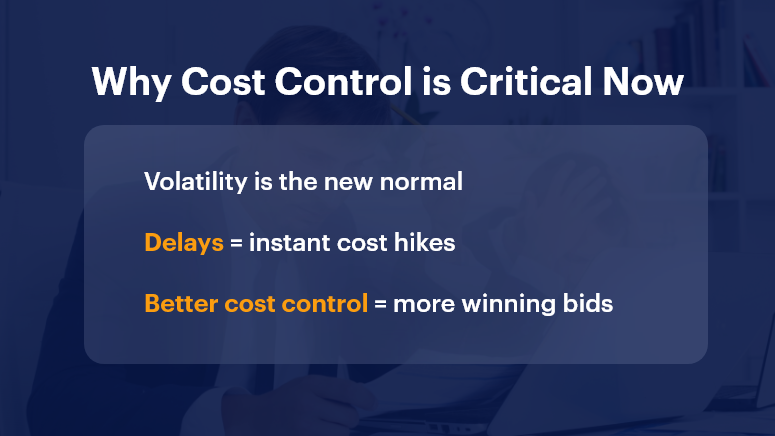
Why Cost Control is Critical Now

Why Managing Material Costs in a Volatile Market Matters

Price instability can turn profitable projects into financial drains. When material costs rise unexpectedly, profit margins shrink, payment terms get tighter, and delivery schedules can collapse.

Why companies must act now:

  • Market volatility is the new normal — Global supply chains remain fragile, and commodity prices are unpredictable.
  • Small delays can cause big cost spikes — Postponed orders often face higher rates or rush premiums.
  • Competition is fierce — Companies with better cost control win more bids.

Who benefits most from effective cost management?

  • Project managers need accurate budget forecasting.
  • Procurement teams are responsible for supplier negotiations.
  • Executives safeguarding profitability.

Real-world pain points:

  • Steel price jumps cause mid-project budget crises.
  • Shipping container shortages delay material deliveries by weeks.
  • Over-reliance on single suppliers leaves teams vulnerable to disruptions.

With OConstruction’s material cost tracking, supplier analytics, and forecasting tools, you can lock in pricing, spot risks early, and negotiate from a position of strength.

Best Practices for Managing Material Costs in a Volatile Market

1. Lock in Prices Early

Price guarantees and bulk purchasing agreements can protect against sudden cost hikes.

  • Negotiate contracts with clear escalation clauses.
  • Use OConstruction to track contract timelines and trigger renewal alerts before rates change.

2. Diversify Supplier Networks

Relying on a single source is risky in volatile markets.

  • Maintain relationships with multiple vetted suppliers.
  • Use supplier performance dashboards to compare delivery speed, reliability, and cost history.

3. Leverage Real-Time Data

Decisions made on outdated pricing data lead to overspending.

  • Integrate live market feeds into procurement planning.
  • OConstruction’s analytics help you spot trends before they impact your budget.

4. Optimize Inventory Management

Overstock ties up capital; understock causes delays.

  • Use just-in-time ordering for predictable items.
  • Employ demand forecasting features in OConstruction to balance supply and cash flow.

5. Standardize Materials Where Possible

Standardization simplifies procurement and increases bulk discount potential.

  • Replace multiple similar products with a single approved option.
  • Document standards in a central digital library accessible to all project teams.

6. Conduct Scenario Planning

Prepared teams can pivot faster when prices change.

  • Run “what-if” simulations for cost increases or delivery delays.
  • Align contingency plans with supplier capabilities.

7. Align Procurement and Project Schedules

When construction timelines and procurement aren’t in sync, costs climb.

  • Use OConstruction to link project milestones with order placement deadlines.
  • Avoid last-minute orders that attract premium pricing.

Customer Story: Turning Volatility into Opportunity

For example, Skyline Builders, a mid-sized commercial construction firm, faced soaring steel prices mid-way through a retail project. By using OConstruction’s supplier analytics and bulk procurement module, they acted fast:

  • Locked in pricing for the remaining steel requirements.
  • Shifted part of their order to a secondary supplier with surplus inventory.
  • Monitored delivery schedules through the platform to avoid idle crews.

The result? They saved 12% on projected steel costs and delivered the project two weeks ahead of schedule — turning what could have been a budget disaster into a competitive win.

Key Takeaways

Managing material costs in a volatile market isn’t about eliminating risk — it’s about controlling it with data, foresight, and flexibility.

In summary:

  • Act early — Secure prices before market swings.
  • Stay flexible — Keep multiple suppliers and backup plans ready.
  • Use data — Real-time insights beat guesswork.

By combining strategic procurement practices with OConstruction’s digital tools, you can safeguard budgets, strengthen supplier relationships, and keep projects moving despite market turbulence.

And remember — volatile markets reward the prepared, not the reactive.

Ensuring Legal Compliance with Vendor and Labor Contracts

Every year, construction firms lose millions due to contract mismanagement and non-compliance. Whether it’s labor violations or poorly structured vendor agreements, the consequences are severe — penalties, project delays, and reputational damage. Legal compliance in construction contracts is no longer just about ticking boxes. With ever-evolving labor laws, environmental standards, and vendor regulations, your contracts must be airtight — and enforceable.

In this blog, we’ll explore the best practices to ensure full compliance with vendor and labor contracts, common pitfalls to avoid, and how platforms like OConstruction help streamline and secure your contract processes.

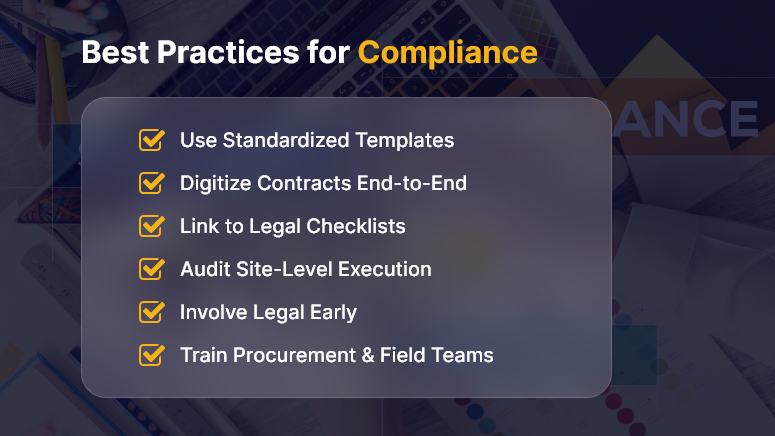
Best Practices for Compliance

Why Legal Compliance in Contracts Matters More Than Ever

Construction is one of the most regulated industries in the world. Labor laws, safety codes, subcontractor rules, and payment terms — all must be followed to the letter. Even a small slip in contract terms or documentation can result in:

  • Heavy fines and legal penalties
  • Work stoppages or permit revocations
  • Project delays that hurt client trust
  • Damage to brand and future business opportunities

Let’s break this down with real-world relevance.

Use Case 1: Delayed Worker Payments

A mid-sized construction firm failed to adhere to the minimum wage updates in a state labor law. This caused a strike, delayed the site timeline by 4 weeks, and cost the company ₹28 lakhs in penalties and idle machinery.

Use Case 2: Incomplete Vendor Agreements

An infrastructure firm had an informal vendor agreement with a scaffolding supplier. When the vendor underdelivered and breached safety standards, the lack of proper terms made legal enforcement impossible. The firm had to bear the entire rework cost.

Ensuring legal compliance in construction contracts isn’t about fear — it’s about future-proofing your business.

Best Practices to Ensure Contract Compliance (With Action Steps)

1. Standardize Contract Templates

Create legally vetted templates for vendors and labor contractors based on current regulations. Include essential clauses like:

  • Payment milestones
  • Labor rights and hours
  • Insurance and liability coverage
  • Dispute resolution terms

OConstruction lets you build contract templates that auto-populate key data and stay updated with regulatory changes.

2. Digitize Contract Lifecycle Management

Manual contract tracking = errors + delays.

Instead:

  • Use cloud-based systems to manage drafts, approvals, versions, and renewals.
  • Set automated alerts for contract renewals or compliance milestones.
  • Centralize storage so stakeholders can easily access contract records.

3. Map Contracts to Compliance Checklists

Each contract should tie to a checklist of legal mandates — specific to region, scope, and contract type.

For example:

  • Vendor Contracts → GST, Environmental clearance, Material specs
  • Labor Contracts → Minimum wage laws, EPF/ESI registration, Working hour limits

OConstruction links every contract to dynamic checklists that flag gaps instantly.

4. Audit Frequently (And Don’t Skip the Field)

Your contract is only as good as its enforcement.

  • Conduct quarterly audits of contract execution — especially at sites.
  • Use mobile-friendly tools so on-ground teams can upload evidence (e.g., labor rosters, delivery slips).
  • Track deviations with root cause analysis.

5. Involve Legal and Compliance Early

Too often, legal review comes last. Flip that.

  • Involve legal and compliance teams during vendor onboarding and RFP reviews.
  • Document every negotiation or clause revision inside the system for future reference.
  • Define clear responsibilities for approvals—automated routing helps avoid bottlenecks.

With OConstruction, you can assign roles for every contract step and track approval logs.

6. Train Project and Procurement Teams

Even the best system fails if users don’t understand it.

Run training workshops on:

  • Recognizing risky clauses
  • Labor law changes
  • Digital contract workflows

Empowered teams = fewer errors = better compliance.

Customer Example: Seamless Compliance in Action

For example, BuildEdge Infra, a multi-city contractor, struggled with labor contract tracking across its 7 sites. Using OConstruction’s contract management module:

  • They standardized agreements across vendors.
  • Set up real-time alerts for expiring documents.
  • Enabled mobile audits to ensure on-ground compliance.

As a result, BuildEdge avoided ₹15 lakhs in non-compliance penalties in just one year, and slashed contract approval time by 40%.

Key Takeaways: Contracts Are Your First Line of Defense

Legal compliance in construction contracts is about precision, preparation, and process. If contracts are vague, manual, or delayed, they become liabilities instead of safeguards.

Remember:

  • Standardization and digitization are non-negotiable.
  • Proactive audits and compliance mapping reduce legal risk.
  • Platforms like OConstruction make compliance easy, trackable, and scalable.

Don’t just meet the rules — master them.

Category: Construction Academy

Subcategory: Budgeting and Planning

Subcategory: Construction Phase

Subcategory: Design Coordination

Subcategory: Estimation Techniques

Subcategory: Initiation and Feasibility

Subcategory: Introduction

Subcategory: Personal Management

Subcategory: Project Close-Out

Subcategory: Project Scheduling

Subcategory: Project Teams

Subcategory: Proposal Management

Subcategory: Total Quality Management

Subcategory: Tracking and Control

Subcategory: Work Breakdown

Category: Help Desk

Subcategory: Client

Subcategory: Construction 101

Subcategory: Contractor Management

Subcategory: Expense

Subcategory: Finance Budget

Subcategory: Inventory Management

Subcategory: My Approvals

Subcategory: Site Management

Subcategory: Vendor Management