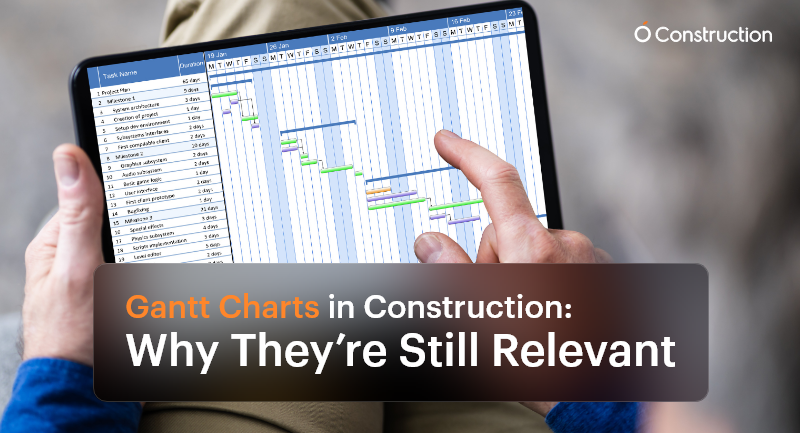
Gantt Charts in Construction: Why They’re Still Relevant

Despite the surge of advanced AI-driven scheduling tools and live dashboards, Gantt charts in construction remain a cornerstone of project management. Why? Because construction is more intricate, deadline-driven, and team-dependent than ever before.

Every team needs a visual and reliable roadmap that brings clarity to the chaos, from project managers and subcontractors to site supervisors and procurement officers. This is where Gantt charts continue to shine.

Why Gantt Charts Still Matter in Construction

Construction is not just about bricks and concrete—it’s about precision planning, coordination, and communication. A single scheduling misstep can cause ripple effects that delay inspections, exceed budgets, or stall final delivery.
Here’s how Gantt charts in construction offer critical value:
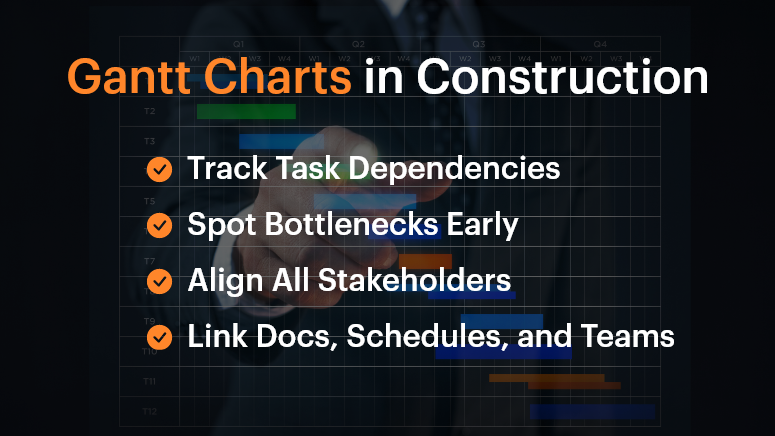
Gantt Charts in Construction

1. Track Dependencies Across Subcontractors

In a construction project, workstreams are tightly connected. Plumbing must be completed before walls are closed. Electrical systems may need to be coordinated with HVAC layouts.

Gantt charts help teams visualize and manage these dependencies—if Task A is delayed, you immediately see how Task B is affected. This preemptive visibility is vital for planning contingencies.

2. Identify Project Bottlenecks Early

As the chart progresses, you can pinpoint lagging tasks before they become full-blown roadblocks. For example, a delayed steel delivery in the foundation phase will affect structural framing and roofing. Gantt charts enable you to identify those early warning signs and make adjustments in real-time.

3. Keep All Stakeholders Aligned

When different teams—from architects to subcontractors—work off the same chart, everyone understands what’s happening and when. This unified view reduces miscommunication and avoids scope creep.

Who Benefits Most from Gantt Charts?

Project Managers

They oversee everything from timelines to team coordination. Gantt charts help them:

  • Visualize overlapping tasks
  • Track milestones
  • Adjust schedules on the fly

Site Supervisors

Working in the field, they need clear, day-to-day task breakdowns. Gantt charts:

  • Show what needs to happen today, tomorrow, or next week
  • Improve coordination between field teams

Procurement Teams

Timing material delivery is critical. Gantt charts let them:

  • Schedule deliveries aligned with task progress
  • Avoid storage or material wastage

Real-World Example: Coordinating Complex Trades

Imagine a multi-story commercial project with concurrent plumbing, HVAC, and electrical work. Gantt charts allow managers to sequence tasks precisely so that the plumbing team completes their install before HVAC ducts are installed, avoiding rework or clashes.

Without this planning, teams step on each other’s toes, leading to delays, friction, and budget overshoots.

Best Practices for Using Gantt Charts in Construction

DOs:

  • Use Dependencies Wisely: Link tasks based on logical, real-world sequences. If one activity slips, the dependent tasks should automatically adjust.
  • Break Down Phases: Don’t lump the entire project into a single line. Divide it into logical segments: design, permitting, site prep, foundation, structure, MEP, interiors, inspections, and handover.
  • Update Frequently: Treat your Gantt chart as a live document. Weekly or daily updates ensure it reflects the real-time site status, not just the plan.

DON’T:

  • Overcomplicate It: Don’t try to document every micro-task. Focus on deliverables and milestones to keep things clean and readable.
  • Use Static Formats: Avoid spreadsheets or printed charts. They become outdated quickly. Use digital, interactive platforms.
  • Work in Isolation: Don’t keep the chart limited to a few managers. Make sure it’s accessible and collaborative for the entire team.

What OConstruction’s Gantt Chart Feature Brings to the Table

OConstruction amplifies the power of Gantt charts with purpose-built features for modern construction workflows:

  • Drag-and-Drop Scheduling: Adjust tasks easily to reflect real-world changes on site.
  • Color-Coded Status: Visual cues show task health—green for done, yellow for pending, red for delays.
  • Real-Time Syncing: Updates from field engineers or subcontractors automatically update the chart.
  • Forecasting: Identify tasks at risk of delay with trend analysis and alert mechanisms.
  • Integrated Documents: Link each task with blueprints, contracts, or RFIs for quick reference.

A Simple Framework to Build Gantt Charts

Here’s how to get started:

  • List Major Phases: Design, site clearance, structural work, MEP, finishing, and handover.
  • Break Into Tasks: Under each phase, define key deliverables (e.g., concrete pour, steel delivery, plumbing inspection).
  • Assign Durations and Owners: Estimate how long each task takes and who’s responsible.
  • Map Dependencies: Connect the tasks that rely on one another.
  • Collaborate: Share with teams and adjust based on their feedback.
  • Publish and Track: Keep the chart open and updated throughout the build.

Customer Story

Build Rite Constructions, a mid-size commercial builder, implemented OConstruction’s Gantt chart feature across five simultaneous projects. The result?

  • 28% reduction in schedule overruns
  • Improved vendor coordination
  • Fewer site clashes between trades
  • Real-time timeline visibility for both on-site teams and HQ

Their secret? They used Gantt charts not just for planning, but for active coordination and adjustment.

Final Thoughts

Gantt charts in construction aren’t just old-school charts—they’re dynamic tools that drive clarity and performance. In today’s fast-moving, multi-stakeholder projects, they provide the structure teams need to stay on track.

With modern tools like OConstruction, Gantt charts become a live, interactive command center for your entire project.

Don’t manage construction chaos. Plan around it—with a Gantt chart that evolves as your project does.

FAQs

Q1. Why are Gantt charts still relevant in modern construction projects?
Because construction involves multiple dependencies, trades, and deadlines, Gantt charts provide a clear visual roadmap that keeps teams aligned, prevents delays, and ensures milestones are met.

Q2. Who benefits most from using Gantt charts in construction?
Project managers, site supervisors, and procurement teams all gain clarity. Gantt charts help managers track milestones, field teams see day-to-day priorities, and procurement plan material deliveries on time.

Q3. How do Gantt charts help with task dependencies?
They make dependencies visible—so if one task slips (like plumbing installation), you immediately see how it impacts the next (like HVAC or electrical work), allowing you to plan contingencies early.

Q4. Can Gantt charts prevent delays and bottlenecks?
Yes. By highlighting lagging tasks in real-time, Gantt charts allow managers to act before issues snowball into schedule overruns.

Q5. What’s the biggest mistake teams make with Gantt charts?
Overcomplicating them. Trying to track every micro-task makes charts unreadable. The focus should be on phases, deliverables, and milestones.

Q6. Why are digital Gantt charts better than spreadsheets or paper charts?
Printed or static charts become outdated quickly. Digital Gantt charts update in real time, are accessible to all stakeholders, and integrate directly with project data.

The Ultimate Guide to Construction Scheduling Techniques

Construction is complex, and without a proper schedule, it’s chaos waiting to happen. Did you know that 98% of mega construction projects face delays or cost overruns? Even smaller projects can derail without a strong scheduling system in place.

The truth is, every successful build — whether it’s a residential home or a commercial complex — starts with an accurate, realistic, and adaptive schedule.

In this guide, we’ll break down the top construction scheduling techniques, show you when to use them, and how digital tools like OConstruction’s project management software simplify the entire process.

Whether you’re managing one project or fifteen, these methods will help you stay ahead, reduce risk, and deliver on time, every time.

Why Construction Scheduling Techniques Matter for Modern Teams

Proper construction scheduling isn’t just about dates and tasks. It’s about predictability, accountability, and profitability.

Construction projects involve multiple moving parts: labor, permits, deliveries, inspections, client approvals, weather dependencies, and more. Without robust scheduling techniques, projects often slip into reactive mode, causing:

  • Missed deadlines and penalties
  • Cost overruns due to rework and inefficiencies
  • Poor client satisfaction and damaged reputation

Scheduling is no longer a back-office admin job — it’s a strategic advantage.

Who Benefits Most?

  • Project managers gain clear visibility into timelines, delays, and task dependencies
  • Contractors and site engineers know exactly when crews, materials, and vendors are scheduled
  • Executives and clients get transparency on project milestones and delivery status
  • Operations teams can plan better across multiple sites using live data

In industries like real estate development, infrastructure, interior design, and EPC, mastering construction scheduling techniques leads to faster delivery and lower costs.

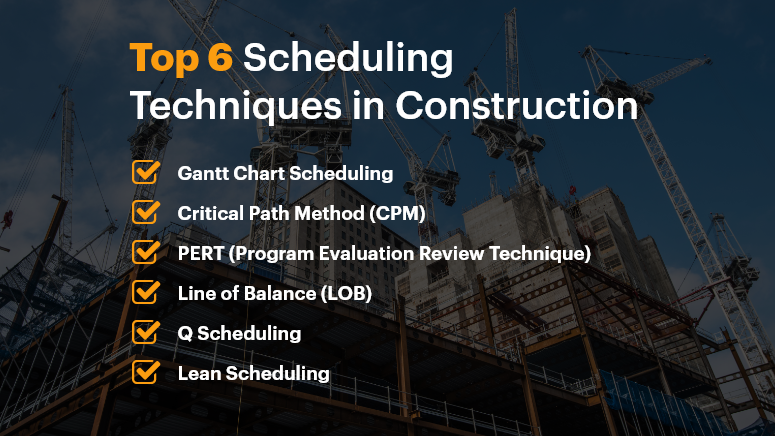
Top 6 Scheduling Techniques in Construction

Best Practices, Frameworks, and Scheduling Techniques

Let’s explore the most effective scheduling techniques, common pitfalls to avoid, and how to implement them efficiently with tools like OConstruction.

Do’s and Don’ts of Construction Scheduling

  • Use visual tools like Gantt charts: Gantt charts provide a timeline-based visual layout that shows start/end dates, dependencies, and milestones. These are ideal for stakeholder communication and progress tracking.
  • Don’t build a schedule without buffer times: Things will go wrong — delays in delivery, weather issues, labor shortages. Building in contingency helps you stay realistic and flexible.
  • Align the schedule with resource availability: Scheduling without resource coordination leads to idle time or overbooking. Use platforms that integrate resource planning and project timelines.
  • Don’t treat your schedule as static: Construction schedules should evolve with the project. Use software that allows real-time updates and mobile syncing for your field teams.

Quick Wins for Better Scheduling

  • Adopt cloud-based scheduling tools

Spreadsheets get outdated fast. Cloud-based systems let teams access and edit schedules from anywhere, with changes synced in real time.

  • Define task dependencies clearly

Use the Predecessors and Successors logic to avoid task conflicts and idle waiting. Tools like OConstruction allow drag-and-drop Gantt charts to manage these visually.

  • Integrate schedules with your procurement and budget plans

When material delivery or payment approvals are disconnected from the schedule, delays happen. Choose a unified platform that ties them together.

  • Use mobile apps for field updates

Let site supervisors mark task completion or flag delays from their phones. This ensures your schedule reflects the actual ground reality.

Step-by-Step Framework: Choosing the Right Scheduling Technique

1. Gantt Chart Scheduling

Ideal for: Small to mid-size projects with linear workflows
Visualize each task along a timeline. Helps communicate progress to clients and track dependencies easily.

2. Critical Path Method (CPM)

Ideal for: Complex builds with tight deadlines
Identifies the longest stretch of dependent activities and highlights the minimum project duration. Perfect for tracking what’s most likely to delay delivery.

3. Program Evaluation Review Technique (PERT)

Ideal for: Projects with uncertainty in task duration
Uses optimistic, pessimistic, and most likely timelines to calculate expected durations. Useful in early planning stages.

4. Line of Balance (LOB)

Ideal for: Repetitive workflows like high-rise floors or housing units
Visualizes task repetition across segments to balance resources and avoid bottlenecks.

5. Q Scheduling (Quantitative Scheduling)

Ideal for: Resource-heavy projects
Focuses on quantities of work per task per period, linking material usage directly with the schedule.

6. Lean Construction Scheduling (Last Planner System)

Ideal for: Agile, collaborative environments
Encourages weekly planning and real-time coordination with field teams. Perfect for reducing waste and improving flow.

Each of these construction scheduling techniques has its use case. The smart move is using a platform like OConstruction, which supports multiple techniques and adapts to your project type.

Customer Story: Turning Chaos into Clarity

For example, TitanStruct Infra, a mid-size infrastructure firm, used OConstruction’s Gantt-based scheduling module combined with real-time field reporting to manage six highway expansion projects across two states.

Here’s how it helped:

  • Used the critical path method to highlight high-risk delays
  • Integrated project timelines with vendor delivery schedules
  • Allowed site engineers to update task statuses via mobile
  • Enabled management to visualize milestone progress in a single dashboard

Outcome:

  • 35% improvement in schedule adherence
  • 25% less idle time across teams
  • Faster decision-making with real-time delay alerts

That’s the power of combining construction scheduling techniques with smart software.

Key Takeaways: From Delay-Prone to Deadline-Driven

  • Scheduling is the strategic core of successful construction project management
  • Choose the right technique based on project size, complexity, and team structure
  • Tools like OConstruction turn theory into execution with drag-and-drop Gantt charts, mobile updates, and critical path analysis
  • Standardize your approach, but stay agile with real-time data

With the right methods and the right platform, you’ll always be on time and on budget.

FAQs

1. What is construction scheduling and why is it important?
Construction scheduling is the process of planning, organizing, and tracking tasks, resources, and timelines to ensure projects are delivered on time and within budget. It prevents delays, cost overruns, and miscommunication among teams.

2. Which construction scheduling technique is best for small projects?
For small to mid-sized projects, Gantt chart scheduling is the most effective. It visually shows timelines, dependencies, and milestones in a simple way — making it easy to communicate with clients and track progress.

3. How does the Critical Path Method (CPM) help in construction projects?
CPM identifies the longest chain of dependent tasks, highlighting the activities that directly impact the project’s delivery date. This helps managers prioritize critical tasks and avoid project delays.

4. When should I use PERT instead of CPM?
Use PERT when project tasks involve uncertainty in duration (e.g., early-stage planning or projects with many unknowns). PERT accounts for optimistic, pessimistic, and most-likely timelines, while CPM works better with fixed durations.

5. What is Line of Balance (LOB) scheduling used for?
LOB is ideal for repetitive tasks such as high-rise construction or housing projects. It ensures smooth sequencing and resource allocation across repeated tasks, reducing bottlenecks.

The Role of Mobile Access in Modern Construction Project Management

Construction is a highly dynamic industry that demands agility, communication, and quick decision-making. Today, leveraging mobile access in construction project management software is transforming the way projects are managed, both on-site and off-site.

As construction projects grow in complexity, having real-time access to project data becomes essential for teams working across different locations.

In this blog, we will discuss the significant benefits of mobile access in construction management software, how it enhances productivity, and why it’s becoming indispensable in modern construction operations.

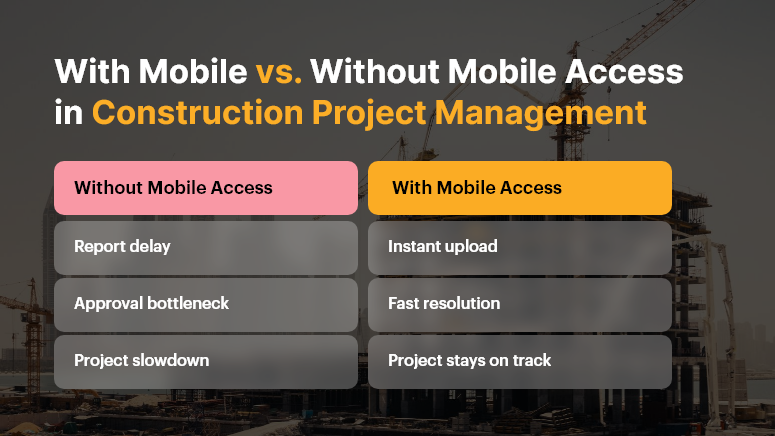
With Mobile vs. Without Mobile Access in Construction Project Management

Why Mobile Access is Essential in Construction Project Management

Managing a construction project involves juggling tasks, timelines, budgets, and resources. Traditionally, communication was limited to phone calls, emails, or in-person meetings, which led to delays and miscommunication. Today, construction project management software with mobile access eliminates these barriers by providing instant updates and real-time collaboration across all stakeholders.

Here’s why mobile access matters in modern construction:

  • Real-Time Communication: Immediate updates, messaging, and notifications between teams and the office.
  • Task Tracking: Managers and field workers can track progress, reassign tasks, and set deadlines directly from their mobile devices.
  • On-Site Documentation: Workers can capture photos, videos, and notes to keep the project documented, eliminating paperwork.
  • Centralized Data Access: Contractors and site managers have access to the latest plans, blueprints, and documents, anywhere, anytime.

Mobile access to construction project management software streamlines workflows, boosts productivity, and reduces the chances of errors, ensuring timely project completion.

Key Benefits of Mobile Access in Construction Project Management Software

Mobile functionality in construction management software provides several advantages that enable projects to run more smoothly and efficiently. Let’s explore these key benefits:

1. Real-Time Updates and Notifications

Construction timelines are fluid, with tasks constantly changing due to unforeseen issues such as weather delays, material shortages, or design changes. Mobile access ensures that:

  • Updates are pushed instantly to team members, whether they are on-site or off-site
  • Supervisors can modify timelines or reassign tasks on the go
  • Critical information, like design changes or new tasks, is immediately accessible

Real-time notifications ensure no one misses important changes, keeping projects on schedule and under budget.

2. Enhanced Collaboration Across Teams

In construction, clear communication between the field and the office is crucial. Mobile access fosters better collaboration by enabling:

  • Sharing of images, documents, and plans between teams instantly
  • Direct messaging within the app eliminates the need for phone calls or emails
  • Seamless coordination between subcontractors, contractors, and project managers

With construction project management software, mobile tools allow teams to collaborate in real-time, regardless of location.

3. Faster Issue Resolution

Construction projects often face unexpected issues, such as design flaws, material shortages, or safety hazards. Mobile access allows field workers to:

  • Capture issues, add notes, and upload photos directly into the project management system
  • Collaborate with architects, engineers, or project managers to resolve problems immediately
  • Track the status of ongoing issues and the steps being taken to fix them

The ability to address issues in real-time leads to faster resolutions and minimized downtime, keeping projects on track.

4. On-the-Go Task and Resource Management

Managing tasks and resources is a dynamic, ongoing process in construction. Mobile access allows construction managers to:

  • Assign or modify tasks while on the move, keeping the project fluid and adaptable
  • Monitor team productivity in real-time and adjust resources as needed
  • Access up-to-date reports on project status, labor utilization, and material inventory

Construction project management software with mobile functionality ensures that no task is missed and resources are allocated efficiently, improving overall productivity.

5. Access to Key Documents Anytime, Anywhere

Blueprints, RFIs, and project plans are central to every construction project. With mobile access to construction project management software, your team can:

  • Open and view up-to-date drawings, documents, and specifications on-site
  • Use version-controlled documents to ensure everyone is working with the most recent information
  • Quickly access technical manuals, safety guidelines, and site-specific documents without leaving the field

This level of accessibility reduces the need for time-consuming back-and-forth between the office and job site, ensuring quick decisions can be made.

Top Mobile Features to Look For in Construction Project Management Software

When selecting construction project management software for mobile access, consider tools that offer the following features to maximize efficiency:

  • Cross-platform mobile apps (iOS and Android)
  • Offline capabilities for areas with poor internet connectivity
  • Push notifications for instant task and schedule updates
  • Document and photo upload features for field documentation
  • Task tracking with real-time status updates
  • Voice memo support for quick communication
  • GPS and location tagging for tracking on-site progress
  • Mobile-friendly Gantt charts and timelines

These features ensure that your construction management software adapts to the unique demands of the field while offering powerful on-the-go capabilities.

Improving Field Productivity with Mobile Access

Field productivity is a critical driver of project success, as every hour counts on construction sites. With mobile access, construction teams can:

  • Minimize downtime: Access to real-time information means fewer delays waiting for approvals or updates.
  • Increase efficiency: Workers can quickly check task lists, upload updates, and communicate with project managers without leaving the job site.
  • Track time and resources: Keep track of labor hours, equipment usage, and material deliveries to maintain budget and schedule adherence.

Mobile access through construction project management software allows managers to keep their team aligned and focused, driving increased productivity.

Case Example: Real-Time Mobile Access in Action

Let’s look at an example of how mobile access changes the course of a construction project:

  • Without mobile access: A supervisor notices a discrepancy in the foundation layout. They write it down, go back to the trailer, file a report, and wait for approval. This causes delays and potentially costly rework.
  • With mobile access: The supervisor takes a photo, tags the issue with a note, and instantly uploads it into the software. The project manager receives it in real-time, consults with the architect, and approves the fix — all within minutes. The issue is resolved quickly, saving both time and money.

This shows how real-time mobile access helps avoid delays, reduce rework, and keep projects within budget.

Challenges You Can Overcome with Mobile Construction Project Management Software

Using construction project management software with mobile capabilities helps mitigate some of the industry’s common challenges, including:

  • Communication breakdowns between the office and field teams
  • Missed or outdated documents that cause confusion or delays
  • Duplicated efforts or rework due to untracked task progress
  • Project delays caused by inefficient approvals and decision-making
  • Budget overruns from untracked changes or errors

Mobile-enabled construction software offers a comprehensive solution to these problems, helping teams work smarter, not harder.

Conclusion

Mobile access is transforming the construction industry. By integrating construction project management software with mobile functionality, project teams gain real-time collaboration, increased efficiency, and greater control over tasks and resources. As the construction industry moves toward digital solutions, having the right mobile tools ensures smoother workflows, fewer errors, and timely project delivery.

FAQs

Q1. Why is mobile access important for small construction teams?

Even small teams benefit from mobile access as it improves communication, task tracking, and document sharing, reducing the time spent on administrative tasks and enabling real-time updates.

Q2. Is mobile construction software secure?

Yes, modern construction project management software uses encryption, secure cloud storage, and role-based access to protect sensitive data.

Q3. Can construction workers use mobile apps offline?

Many mobile apps offer offline functionality, allowing users to update information when connectivity is restored.

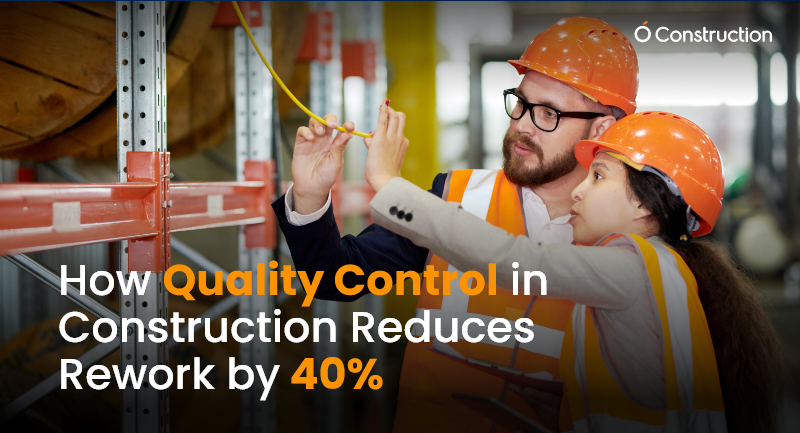
How Quality Control in Construction Reduces Rework by 40%

In construction, time is money, and rework is a costly leak in both. Studies show that rework can account for 5% to 15% of total construction costs. That means on a $10 million project, rework alone can burn up to $1.5 million. These aren’t just minor mistakes; they’re missed deadlines, wasted materials, frustrated workers, and unhappy clients.

But there’s good news: companies that prioritize quality control from the very beginning — especially those using robust construction project management software — have reported up to 40% fewer rework instances. That translates into significant savings and smoother project delivery.

In this blog, we’ll explore how quality control processes work, how they reduce costly mistakes, and how you can integrate them into your construction workflow, with or without digital tools.

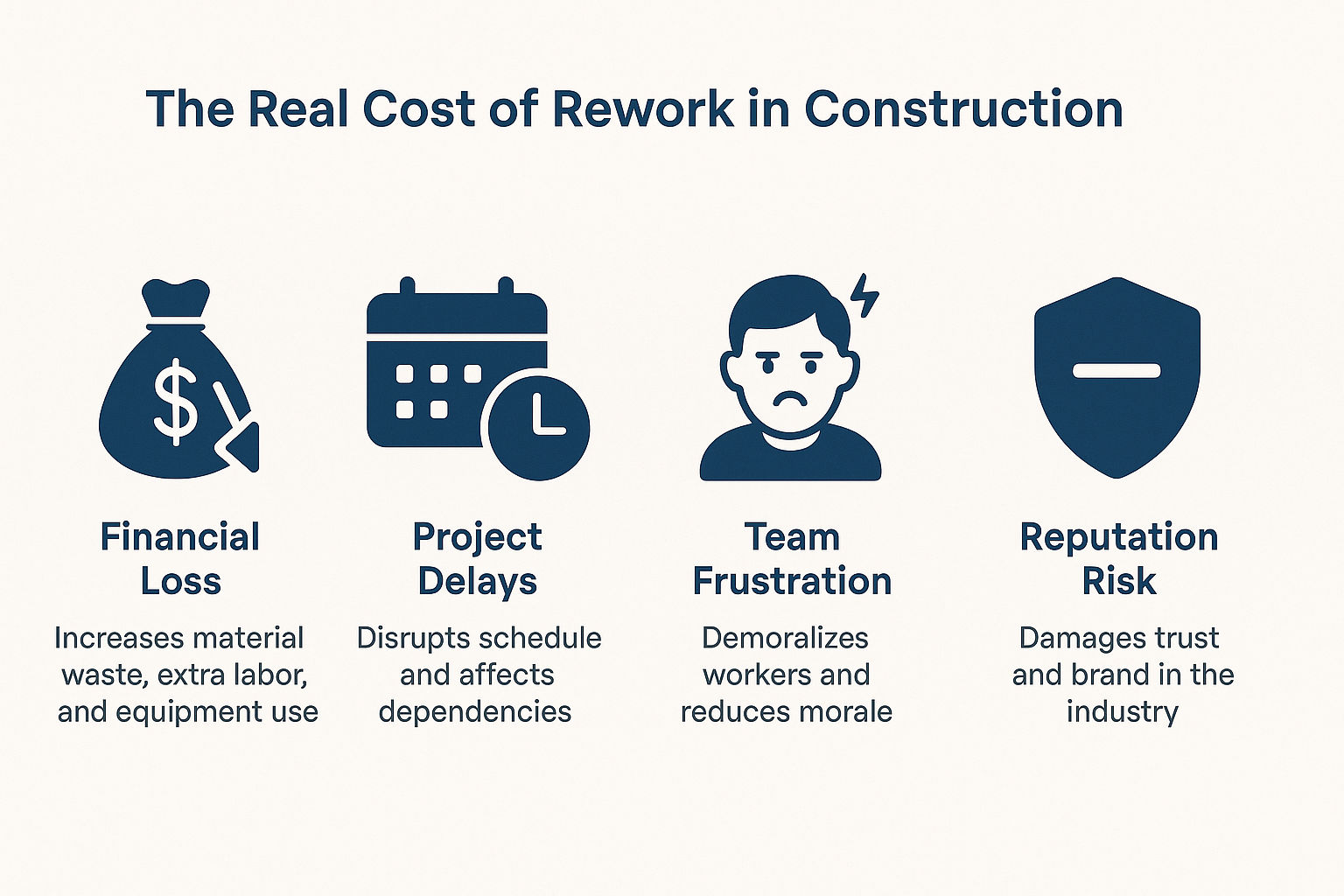
The Real Cost of Rework in Construction

Rework happens when a completed task doesn’t meet quality standards and must be redone. Sometimes it’s as simple as fixing a paint job. Other times, it’s tearing down structural work or reordering expensive components. The consequences go far beyond money.

There’s a direct financial impact — wasted materials, extra labor hours, equipment rentals, and penalties for delays. Then there’s the schedule disruption, as rework ripples through your timeline and affects inspections, dependencies, and resource planning. Lastly, there’s the reputational cost. Teams get demoralized, and clients lose confidence.

The Construction Industry Institute (CII) estimates rework causes over $15 billion in direct costs annually in the U.S. alone. Globally, the cost is even higher, especially in regions where QC processes or project management tools are less standardized.

The Real Cost of Rework in Construction

What Is Quality Control in Construction?

Quality control (QC) in construction refers to the systematic monitoring, inspection, and verification processes used to ensure that all work and materials meet established project standards. It includes every phase of a build, from procurement to foundation to finishing.

Unlike Quality Assurance (QA), which is proactive and process-driven, QC is execution-focused. It involves on-site checks, documentation, supervisor approvals, and immediate corrective actions when issues arise.

When quality control is integrated into your workflow — especially through a digital solution like construction project management software — it becomes a safety net that catches mistakes before they require expensive rework.

How Quality Control Processes Reduce Rework by 40%

A structured QC process is one of the most effective ways to prevent mistakes from becoming money pits. Here’s how:

1. Early Detection Through Structured Checkpoints

Quality control inserts specific checkpoints into every construction phase. For example, before a slab is poured, the team verifies rebar spacing, alignment, and mix quality. These inspections prevent irreversible errors, saving both time and resources.

2. Better Communication and Documentation

When QC processes are digitized using construction project management software, they eliminate guesswork. Everyone — from architects to subcontractors — works off the same checklists, drawings, and specs. That consistency drastically reduces miscommunication-related errors.

3. Real-Time Tracking of Defects

With digital QC tools, site supervisors can instantly log defects, assign corrective actions, and track resolution. This speeds up the feedback loop and prevents small issues from spiraling into full-scale rework.

4. Built-In Accountability

Each inspection, photo, and approval is documented, making it easier to trace root causes, avoid repeat mistakes, and hold teams accountable. This transparency encourages more attention to detail across the board.

QC Best Practices That Actually Work

Companies that reduce rework consistently don’t just react to problems — they prevent them. Here’s what they do differently:

  • Use standardized QC checklists across all job sites, ensuring that every inspection is consistent and thorough.
  • Leverage construction project management software to capture quality data in real-time. This eliminates paperwork delays and improves oversight.
  • Train subcontractors and workers on quality expectations before they start. Education reduces misalignment and costly surprises.
  • Audit quality performance regularly, using reports from your software dashboard to identify repeat problem areas.

When QC is woven into your everyday operations — and supported by the right tools — it transforms from a task into a competitive advantage.

Case Study: Rework Reduced by 40% Using QC + Software

A mid-sized commercial contractor in Bengaluru faced chronic rework issues. Misaligned formwork and concrete curing problems caused delays and ballooned costs, with rework accounting for nearly 7% of the budget.

After adopting OConstruction’s construction project management software, they introduced structured quality checklists, digital inspections, and photo documentation. Supervisors logged and resolved issues in real time, while project managers tracked progress through a central dashboard.

The results were remarkable:

  • Rework dropped from 7% to just 3.5%
  • The project was completed 17 days ahead of schedule
  • Over 85 issues were caught and resolved before the execution

The software-driven QC process didn’t just reduce rework — it improved morale, client satisfaction, and profit margins.

Why Quality Control Is Easier with Construction Project Management Software

Manual QC is time-consuming and inconsistent. But when it’s powered by construction project management software, quality control becomes streamlined and scalable.

With a platform like Oconstruction, you can:

  • Create mobile-friendly quality checklists for each task phase
  • Log defects and issues with supporting photos
  • Set up automated alerts and approvals
  • Track corrections and resolutions in real-time
  • Generate reports for audits and improvement tracking

Instead of chasing paperwork, your teams stay focused on building — and building it right the first time.

Final Thoughts: Build Right the First Time

Rework eats away at margins, timelines, and team morale. But it’s also preventable. With proactive quality control, backed by the right construction project management software, your company can reduce rework by up to 40%, delivering faster, better, and more profitably.

Don’t wait until mistakes cost you. Build a culture of quality today.

Frequently Asked Questions

Q. What’s the difference between QA and QC in construction?

Ans. QA (Quality Assurance) focuses on processes and planning to avoid defects. QC (Quality Control) focuses on identifying and fixing errors during or after construction work.

Q. Is QC implementation expensive for small firms?

Ans. Not at all. Affordable construction project management software options exist for smaller teams, offering simple QC tools like checklists, logs, and mobile access.

Q. How soon will I see results from better QC?

Ans. Most companies see a drop in rework and faster project delivery within 1–2 project cycles after adopting formal quality control processes and tools.

How Digital Tools Are Revolutionizing the Construction Industry

The Construction Site is Going Digital with Construction Project Management Software

Construction has always been a hands-on industry, steel, concrete, boots on the ground. But in today’s fast-paced, tech-first world, construction is going digital faster than ever before.

According to a McKinsey report, companies that digitize their construction processes can increase productivity by up to 15% and reduce costs by as much as 6%.

So what’s driving this digital shift? It’s simple: manual workflows, paper blueprints, and scattered communication just aren’t cutting it anymore, especially for small and mid-sized businesses trying to scale.

In this post, we’ll explore how digital tools — especially construction project management software like OConstruction are transforming the way modern construction teams work.

Whether you’re managing tasks, budgets, timelines, or teams, construction project management software offers a smarter, more reliable way to build.

From real-time collaboration to budget tracking and safety compliance, you’ll walk away with insights and action steps to modernize your operations.

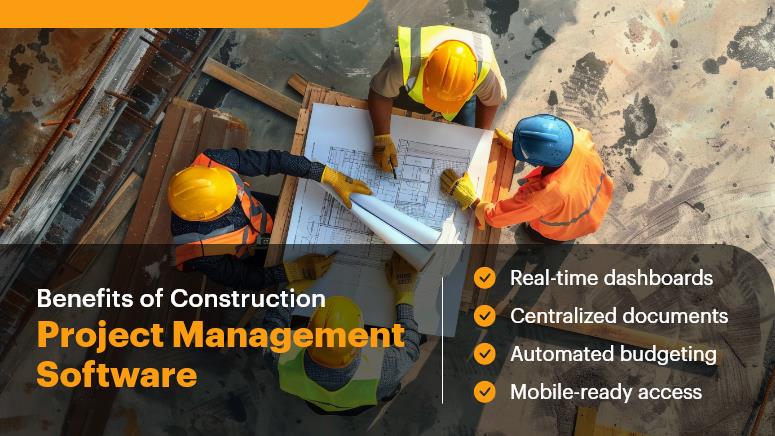
Benefits of Construction Project Management Software

Why Construction Project Management Software Matters for Construction Businesses

For decades, the construction industry lagged in tech adoption. But now, client expectations are changing, projects are more complex, and margins are tighter than ever.

Here’s why digital transformation is no longer optional:

  • Time is money, and delays are expensive. When updates are stuck in email threads or on paper forms, response times slow, and errors multiply. Digital tools ensure faster decision-making with real-time updates.
  • Small mistakes create big costs. Manual budgeting, change orders, or schedule conflicts often result in thousands in overruns. Construction software reduces risks by keeping everything visible and trackable.
  • Remote work and hybrid teams are here to stay. Project managers, subcontractors, and clients all need to collaborate across locations. Cloud-based tools like OConstruction provide mobile-friendly access from anywhere.
  • Hiring and retention depend on modern tools. Top talent, especially younger workers, expect tech-forward job sites. Equipping your team with the right digital tools makes your business more attractive and efficient.

Common use cases across industries:

  • Real estate developers are juggling multiple residential projects.
  • Infrastructure firms manage public works contracts.
  • Commercial builders oversee subcontractors and material flow.

Bottom line: Digital transformation isn’t just a tech upgrade; it’s a competitive advantage.

Best Practices for Using Construction Project Management Software

1. Centralize Communication Across Teams

  • Ditch the fragmented tools. When your crew is on WhatsApp, your PM is using Excel, and your engineer is emailing blueprints, chaos is guaranteed. Centralize everything on one platform like OConstruction for streamlined, transparent communication.
  • Set clear project roles and access permissions. Ensure that everyone from field workers to finance leads sees exactly what they need, when they need it, without clutter or confusion.

2. Use Real-Time Project Dashboards in Your Construction Project Management Software

  • Dashboards offer instant clarity on project status. From work completion to site issues and task deadlines, a real-time overview keeps decision-makers informed at every stage.
  • Eliminate the guessing game. Know exactly what’s been done, what’s overdue, and what’s ahead — so you can act quickly and avoid bottlenecks.

3. Automate Budget Tracking & Cost Control

  • Track expenses, invoices, and material usage in real-time. No more waiting until month-end to understand your project’s financial health.
  • Set up budget alerts and cost variance triggers. With OConstruction, you can get notified when expenses deviate from your estimates, helping you correct the course before it’s too late.

4. Simplify Document Management with Construction Project Management Software

  • Store blueprints, permits, contracts, and inspection logs in one digital hub. Say goodbye to lost paperwork and duplicated files.
  • Use version control to avoid costly errors. Everyone works from the same, most up-to-date documents — no confusion, no rework.

5. Enhance Site Safety & Compliance Tracking

  • Digitize safety checklists, audits, and training logs. Ensure that compliance documentation is completed and stored, not buried in binders.
  • Log incidents in real-time and assign corrective actions. Proactive tracking helps reduce risks and improve workplace safety.

6. Invest in Mobile-Ready Construction Project Management Software

  • Ensure your tools work seamlessly on phones and tablets. Field teams need fast access to plans, updates, and messaging without being tied to a desktop.
  • Enable photo uploads, GPS tagging, and voice-to-text notes. These features make it easier for on-site teams to stay engaged and productive.

7. Prioritize Ease of Use in Construction Project Management Software

  • Choose intuitive software that your team can adopt quickly. A tool is only useful if your people use it. OConstruction is designed with simplicity and speed in mind.
  • Offer onboarding and in-app support. Train your team well, and they’ll become champions of the platform.

Customer Success Snapshot: A Case in Point

“Titan Build Co., a mid-sized commercial construction company, used OConstruction to cut project delays by 40% and reduce admin workload by 60%.”

Before adopting OConstruction, Titan managed its operations through spreadsheets, emails, and disconnected mobile apps. Communication gaps and delayed updates were causing cost overruns and client frustration.

With OConstruction, Titan:

  • Centralized all documents, project updates, and team messaging in one place.
  • Enabled field teams to report progress and flag issues instantly via mobile.
  • Tracked budgets in real time, catching cost deviations before they escalated.

The result? More on-time deliveries, happier clients, and a more productive team.

Why Now Is the Time to Embrace Construction Project Management Software

  • Construction is evolving, and digital tools are at the heart of the transformation.
  • Small and mid-sized businesses benefit the most from streamlined, automated workflows.
  • OConstruction gives you everything you need to manage projects, budgets, teams, and documents in one user-friendly platform.

Construction project management software is no longer a nice-to-have — it’s a must for businesses that want to thrive in a fast-changing environment.

Whether you’re looking to save time, cut costs, or improve project visibility, the right software can make all the difference.

As the industry continues to evolve, investing in digital transformation today will pay off tomorrow in efficiency, growth, and client satisfaction.

Ready to see how OConstruction can help you streamline operations, cut delays, and boost team productivity? Book a free demo today!

FAQs

Q1. What is construction project management software?
It’s a digital tool that helps construction companies manage projects, budgets, teams, timelines, and compliance in one centralized system.

Q2. Why should small and mid-sized construction businesses use it?
Because it reduces errors, improves communication, prevents costly overruns, and allows teams to collaborate in real time—even remotely.

Q3. How does construction software save money?
By cutting delays, preventing budget overruns, eliminating duplicate work, and streamlining documentation, companies save 5–10% of project costs on average.

Q4. Is OConstruction mobile-friendly?
Yes. OConstruction is built for field teams with mobile access, photo uploads, GPS tagging, and voice-to-text notes.

Q5. How long does it take to see results?
Most companies start seeing efficiency improvements within the first 30–60 days of adopting construction project management software.

Q6. Does it require technical expertise to use?
No. OConstruction is designed to be intuitive, with onboarding support and in-app guidance for easy adoption.

Top Construction Project Challenges and How to Overcome Them

In the world of construction, every project presents a unique blend of complexity, timelines, stakeholder expectations, and budget constraints. Despite advancements in tools and technology, construction professionals still face persistent challenges that can derail timelines, inflate budgets, and compromise quality. From poor communication to labor shortages and evolving regulations, navigating these issues demands strategic foresight and effective management.

At OConstruction, we understand the pulse of the construction industry. With hands-on experience in managing real-time field operations and digital project workflows, we are uniquely positioned to address these pain points. 

This blog explores the most common construction project challenges and offers actionable strategies to overcome them using both technology and industry best practices.

Key Challenges in Construction Projects and How to Overcome Them

Key Challenges in Construction Projects and How to Overcome Them

1. Budget Management and Cost Overruns

The Challenge:

One of the most critical aspects of project management for construction is ensuring that the construction budget is well-planned and monitored. However, rising material costs, labor shortages, and scope changes often lead to budget overruns.

Solution:

  • Use construction project management software that includes integrated budget management modules.
  • Track expenses in real time to compare actual costs against the original budget for the construction project.
  • Automate reporting to identify financial leaks early and make adjustments promptly.

2. Ineffective Project Scheduling

The Challenge:

Delays in the construction project timeline can disrupt all stakeholders and inflate costs. Whether it’s due to poor resource allocation or unforeseen site issues, scheduling inefficiencies are a top challenge.

Solution:

  • Implement a planner for construction to create detailed Gantt charts and set task dependencies.
  • Use project time management software to assign responsibilities, monitor progress, and receive real-time updates.
  • Leverage forecasting tools within the best construction project management software to anticipate risks and mitigate delays.

3. Poor Communication Among Teams

The Challenge:

Miscommunication between contractors, architects, suppliers, and clients can lead to confusion, rework, and dissatisfaction.

Solution:

  • Adopt a centralized construction management application that allows real-time collaboration and file sharing.
  • Standardize communication workflows using templates and approval chains within your construction project management app.
  • Schedule regular virtual and in-person meetings to ensure alignment across teams.

4. Document Management Chaos

The Challenge:

Construction projects generate a large volume of documents, from blueprints to contracts. Misplaced or outdated documents can slow down decision-making and lead to costly errors.

Solution:

  • Use construction project management applications that support digital document storage, version control, and secure access.
  • Implement a permissions system to ensure that the right individuals can access relevant documents when needed.

5. Inadequate Resource Allocation

The Challenge:

Allocating the right labor, materials, and equipment at the right time is vital. Poor resource planning often results in idle time or bottlenecks.

Solution:

  • Leverage construction and planning tools to optimize scheduling and reduce idle resources.
  • Choose a construction management app with built-in analytics for manpower forecasting and equipment usage.
  • Keep a buffer for high-demand resources during peak project periods.

6. Risk and Compliance Issues

The Challenge:

Construction projects are subject to various risks such as safety violations, environmental factors, and regulatory compliance failures.

Solution:

  • Develop a detailed construction management plan with a strong focus on risk mitigation.
  • Use the best construction management software to automate safety audits, inspection checklists, and compliance tracking.
  • Train staff regularly on regulatory standards and provide access to guidelines via mobile construction management applications.

7. Change Orders and Scope Creep

The Challenge:

Frequent changes to the project scope can strain the team, inflate the construction budget, and delay delivery.

Solution:

  • Define scope and expectations clearly at the start and document them using your construction project management schedule.
  • Use change management features in your construction project management app to assess the impact before approval.
  • Maintain a buffer in your budget for the construction project to handle minor approved changes without disrupting the overall plan.

8. Difficulty in Performance Tracking

The Challenge:

Monitoring KPIs across project milestones is essential for continuous improvement. However, many teams still rely on manual tracking.

Solution:

  • Opt for the best construction project management software that includes customizable dashboards and real-time analytics.
  • Measure performance against key metrics such as cost variance, schedule adherence, and safety records.
  • Align your team with goals defined in the construction management plan and review them regularly.

9. Integration Challenges with Existing Systems

The Challenge:

Many construction companies operate legacy systems that don’t integrate well with modern applications.

Solution:

  • Choose scalable and customizable construction project management software that supports API integration.
  • Gradually migrate legacy data to your new construction project management application to ensure smooth operations.
  • Work with a trusted PMC (Project Management Consultant) to implement integration plans without disrupting workflow.

Conclusion

Construction projects are inherently complex, but with the right strategies, teams can mitigate risks and drive consistent success. From enhancing communication and managing labor to staying on budget and integrating smart technologies, every challenge presents an opportunity for growth and efficiency.

By choosing an all-in-one construction management platform like OConstruction, project managers can bring clarity to chaos, streamline workflows, and deliver high-quality results on time and within budget. Proactive planning, the right tools, and a commitment to continuous improvement are key to thriving in today’s construction landscape.

Ready to overcome your biggest construction project challenges? 

Book a demo with OConstruction today and experience firsthand how our platform can revolutionize the way you build.

Category: Construction Academy

Subcategory: Budgeting and Planning

Subcategory: Construction Phase

Subcategory: Design Coordination

Subcategory: Estimation Techniques

Subcategory: Initiation and Feasibility

Subcategory: Introduction

Subcategory: Personal Management

Subcategory: Project Close-Out

Subcategory: Project Scheduling

Subcategory: Project Teams

Subcategory: Proposal Management

Subcategory: Total Quality Management

Subcategory: Tracking and Control

Subcategory: Work Breakdown

Category: Help Desk

Subcategory: Client

Subcategory: Construction 101

Subcategory: Contractor Management

Subcategory: Expense

Subcategory: Finance Budget

Subcategory: Inventory Management

Subcategory: My Approvals

Subcategory: Site Management

Subcategory: Vendor Management