
How Digital Tools Are Revolutionizing the Construction Industry

The Construction Site is Going Digital with Construction Project Management Software

Construction has always been a hands-on industry, steel, concrete, boots on the ground. But in today’s fast-paced, tech-first world, construction is going digital faster than ever before.

According to a McKinsey report, companies that digitize their construction processes can increase productivity by up to 15% and reduce costs by as much as 6%.

So what’s driving this digital shift? It’s simple: manual workflows, paper blueprints, and scattered communication just aren’t cutting it anymore, especially for small and mid-sized businesses trying to scale.

In this post, we’ll explore how digital tools — especially construction project management software like OConstruction are transforming the way modern construction teams work.

Whether you’re managing tasks, budgets, timelines, or teams, construction project management software offers a smarter, more reliable way to build.

From real-time collaboration to budget tracking and safety compliance, you’ll walk away with insights and action steps to modernize your operations.
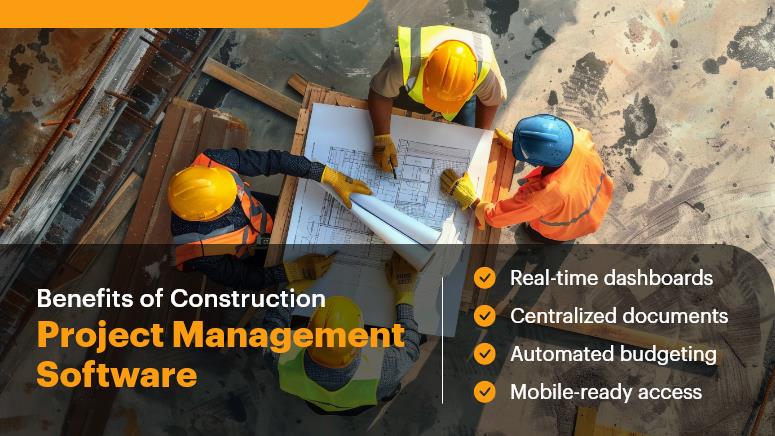
Benefits of Construction Project Management Software

Why Construction Project Management Software Matters for Construction Businesses

For decades, the construction industry lagged in tech adoption. But now, client expectations are changing, projects are more complex, and margins are tighter than ever.

Here’s why digital transformation is no longer optional:

  • Time is money, and delays are expensive. When updates are stuck in email threads or on paper forms, response times slow, and errors multiply. Digital tools ensure faster decision-making with real-time updates.
  • Small mistakes create big costs. Manual budgeting, change orders, or schedule conflicts often result in thousands in overruns. Construction software reduces risks by keeping everything visible and trackable.
  • Remote work and hybrid teams are here to stay. Project managers, subcontractors, and clients all need to collaborate across locations. Cloud-based tools like OConstruction provide mobile-friendly access from anywhere.
  • Hiring and retention depend on modern tools. Top talent, especially younger workers, expect tech-forward job sites. Equipping your team with the right digital tools makes your business more attractive and efficient.

Common use cases across industries:

  • Real estate developers are juggling multiple residential projects.
  • Infrastructure firms manage public works contracts.
  • Commercial builders oversee subcontractors and material flow.

Bottom line: Digital transformation isn’t just a tech upgrade; it’s a competitive advantage.

Best Practices for Using Construction Project Management Software

1. Centralize Communication Across Teams

  • Ditch the fragmented tools. When your crew is on WhatsApp, your PM is using Excel, and your engineer is emailing blueprints, chaos is guaranteed. Centralize everything on one platform like OConstruction for streamlined, transparent communication.
  • Set clear project roles and access permissions. Ensure that everyone from field workers to finance leads sees exactly what they need, when they need it, without clutter or confusion.

2. Use Real-Time Project Dashboards in Your Construction Project Management Software

  • Dashboards offer instant clarity on project status. From work completion to site issues and task deadlines, a real-time overview keeps decision-makers informed at every stage.
  • Eliminate the guessing game. Know exactly what’s been done, what’s overdue, and what’s ahead — so you can act quickly and avoid bottlenecks.

3. Automate Budget Tracking & Cost Control

  • Track expenses, invoices, and material usage in real-time. No more waiting until month-end to understand your project’s financial health.
  • Set up budget alerts and cost variance triggers. With OConstruction, you can get notified when expenses deviate from your estimates, helping you correct the course before it’s too late.

4. Simplify Document Management with Construction Project Management Software

  • Store blueprints, permits, contracts, and inspection logs in one digital hub. Say goodbye to lost paperwork and duplicated files.
  • Use version control to avoid costly errors. Everyone works from the same, most up-to-date documents — no confusion, no rework.

5. Enhance Site Safety & Compliance Tracking

  • Digitize safety checklists, audits, and training logs. Ensure that compliance documentation is completed and stored, not buried in binders.
  • Log incidents in real-time and assign corrective actions. Proactive tracking helps reduce risks and improve workplace safety.

6. Invest in Mobile-Ready Construction Project Management Software

  • Ensure your tools work seamlessly on phones and tablets. Field teams need fast access to plans, updates, and messaging without being tied to a desktop.
  • Enable photo uploads, GPS tagging, and voice-to-text notes. These features make it easier for on-site teams to stay engaged and productive.

7. Prioritize Ease of Use in Construction Project Management Software

  • Choose intuitive software that your team can adopt quickly. A tool is only useful if your people use it. OConstruction is designed with simplicity and speed in mind.
  • Offer onboarding and in-app support. Train your team well, and they’ll become champions of the platform.

Customer Success Snapshot: A Case in Point

“Titan Build Co., a mid-sized commercial construction company, used OConstruction to cut project delays by 40% and reduce admin workload by 60%.”

Before adopting OConstruction, Titan managed its operations through spreadsheets, emails, and disconnected mobile apps. Communication gaps and delayed updates were causing cost overruns and client frustration.

With OConstruction, Titan:

  • Centralized all documents, project updates, and team messaging in one place.
  • Enabled field teams to report progress and flag issues instantly via mobile.
  • Tracked budgets in real time, catching cost deviations before they escalated.

The result? More on-time deliveries, happier clients, and a more productive team.

Why Now Is the Time to Embrace Construction Project Management Software

  • Construction is evolving, and digital tools are at the heart of the transformation.
  • Small and mid-sized businesses benefit the most from streamlined, automated workflows.
  • OConstruction gives you everything you need to manage projects, budgets, teams, and documents in one user-friendly platform.

Construction project management software is no longer a nice-to-have — it’s a must for businesses that want to thrive in a fast-changing environment.

Whether you’re looking to save time, cut costs, or improve project visibility, the right software can make all the difference.

As the industry continues to evolve, investing in digital transformation today will pay off tomorrow in efficiency, growth, and client satisfaction.

Ready to see how OConstruction can help you streamline operations, cut delays, and boost team productivity? Book a free demo today!

FAQs

Q1. What is construction project management software?
It’s a digital tool that helps construction companies manage projects, budgets, teams, timelines, and compliance in one centralized system.

Q2. Why should small and mid-sized construction businesses use it?
Because it reduces errors, improves communication, prevents costly overruns, and allows teams to collaborate in real time—even remotely.

Q3. How does construction software save money?
By cutting delays, preventing budget overruns, eliminating duplicate work, and streamlining documentation, companies save 5–10% of project costs on average.

Q4. Is OConstruction mobile-friendly?
Yes. OConstruction is built for field teams with mobile access, photo uploads, GPS tagging, and voice-to-text notes.

Q5. How long does it take to see results?
Most companies start seeing efficiency improvements within the first 30–60 days of adopting construction project management software.

Q6. Does it require technical expertise to use?
No. OConstruction is designed to be intuitive, with onboarding support and in-app guidance for easy adoption.


Top Construction Project Challenges and How to Overcome Them

In the world of construction, every project presents a unique blend of complexity, timelines, stakeholder expectations, and budget constraints. Despite advancements in tools and technology, construction professionals still face persistent challenges that can derail timelines, inflate budgets, and compromise quality. From poor communication to labor shortages and evolving regulations, navigating these issues demands strategic foresight and effective management.

At OConstruction, we understand the pulse of the construction industry. With hands-on experience in managing real-time field operations and digital project workflows, we are uniquely positioned to address these pain points. 

This blog explores the most common construction project challenges and offers actionable strategies to overcome them using both technology and industry best practices.

Key Challenges in Construction Projects and How to Overcome Them

Key Challenges in Construction Projects and How to Overcome Them

1. Budget Management and Cost Overruns

The Challenge:

One of the most critical aspects of project management for construction is ensuring that the construction budget is well-planned and monitored. However, rising material costs, labor shortages, and scope changes often lead to budget overruns.

Solution:

  • Use construction project management software that includes integrated budget management modules.
  • Track expenses in real time to compare actual costs against the original budget for the construction project.
  • Automate reporting to identify financial leaks early and make adjustments promptly.

2. Ineffective Project Scheduling

The Challenge:

Delays in the construction project timeline can disrupt all stakeholders and inflate costs. Whether it’s due to poor resource allocation or unforeseen site issues, scheduling inefficiencies are a top challenge.

Solution:

  • Implement a planner for construction to create detailed Gantt charts and set task dependencies.
  • Use project time management software to assign responsibilities, monitor progress, and receive real-time updates.
  • Leverage forecasting tools within the best construction project management software to anticipate risks and mitigate delays.

3. Poor Communication Among Teams

The Challenge:

Miscommunication between contractors, architects, suppliers, and clients can lead to confusion, rework, and dissatisfaction.

Solution:

  • Adopt a centralized construction management application that allows real-time collaboration and file sharing.
  • Standardize communication workflows using templates and approval chains within your construction project management app.
  • Schedule regular virtual and in-person meetings to ensure alignment across teams.

4. Document Management Chaos

The Challenge:

Construction projects generate a large volume of documents, from blueprints to contracts. Misplaced or outdated documents can slow down decision-making and lead to costly errors.

Solution:

  • Use construction project management applications that support digital document storage, version control, and secure access.
  • Implement a permissions system to ensure that the right individuals can access relevant documents when needed.

5. Inadequate Resource Allocation

The Challenge:

Allocating the right labor, materials, and equipment at the right time is vital. Poor resource planning often results in idle time or bottlenecks.

Solution:

  • Leverage construction and planning tools to optimize scheduling and reduce idle resources.
  • Choose a construction management app with built-in analytics for manpower forecasting and equipment usage.
  • Keep a buffer for high-demand resources during peak project periods.

6. Risk and Compliance Issues

The Challenge:

Construction projects are subject to various risks such as safety violations, environmental factors, and regulatory compliance failures.

Solution:

  • Develop a detailed construction management plan with a strong focus on risk mitigation.
  • Use the best construction management software to automate safety audits, inspection checklists, and compliance tracking.
  • Train staff regularly on regulatory standards and provide access to guidelines via mobile construction management applications.

7. Change Orders and Scope Creep

The Challenge:

Frequent changes to the project scope can strain the team, inflate the construction budget, and delay delivery.

Solution:

  • Define scope and expectations clearly at the start and document them using your construction project management schedule.
  • Use change management features in your construction project management app to assess the impact before approval.
  • Maintain a buffer in your budget for the construction project to handle minor approved changes without disrupting the overall plan.

8. Difficulty in Performance Tracking

The Challenge:

Monitoring KPIs across project milestones is essential for continuous improvement. However, many teams still rely on manual tracking.

Solution:

  • Opt for the best construction project management software that includes customizable dashboards and real-time analytics.
  • Measure performance against key metrics such as cost variance, schedule adherence, and safety records.
  • Align your team with goals defined in the construction management plan and review them regularly.

9. Integration Challenges with Existing Systems

The Challenge:

Many construction companies operate legacy systems that don’t integrate well with modern applications.

Solution:

  • Choose scalable and customizable construction project management software that supports API integration.
  • Gradually migrate legacy data to your new construction project management application to ensure smooth operations.
  • Work with a trusted PMC (Project Management Consultant) to implement integration plans without disrupting workflow.

Conclusion

Construction projects are inherently complex, but with the right strategies, teams can mitigate risks and drive consistent success. From enhancing communication and managing labor to staying on budget and integrating smart technologies, every challenge presents an opportunity for growth and efficiency.

By choosing an all-in-one construction management platform like OConstruction, project managers can bring clarity to chaos, streamline workflows, and deliver high-quality results on time and within budget. Proactive planning, the right tools, and a commitment to continuous improvement are key to thriving in today’s construction landscape.

Ready to overcome your biggest construction project challenges? 

Book a demo with OConstruction today and experience firsthand how our platform can revolutionize the way you build.

Why Construction Firms Need Project Software in 2025

The construction industry in 2025 is navigating a landscape marked by rapid technological advancements, heightened project complexities, and increasing demands for sustainability and efficiency. In this dynamic environment, traditional project management methods are proving inadequate. Embracing specialized project management software has become imperative for construction firms aiming to maintain competitiveness, ensure timely project delivery, and optimize resource utilization.

The Evolving Landscape of Construction in 2025

Several factors are reshaping the construction industry:

  • Technological Integration: The adoption of technologies such as Artificial Intelligence (AI), Building Information Modeling (BIM), and the Internet of Things (IoT) is revolutionizing project planning and execution.
  • Sustainability Goals: There is a growing emphasis on eco-friendly construction practices, necessitating tools to monitor and report on sustainability metrics.
  • Workforce Dynamics: Labor shortages and the need for specialized skills are prompting firms to seek solutions that enhance workforce productivity and collaboration.

Key Benefits of Construction Project Management Software

1. Enhanced Collaboration and Communication

Modern construction projects involve multiple stakeholders, including architects, engineers, contractors, and clients. Project management software facilitates real-time communication, ensuring that all parties are aligned and informed, thereby reducing misunderstandings and delays.

2. Improved Scheduling and Time Management

Advanced scheduling tools allow for the creation of detailed project timelines, resource allocation, and milestone tracking. This leads to more accurate forecasting and timely project completion.

3. Cost Control and Budget Management

Integrated financial management features enable real-time tracking of expenses, budget forecasting, and cost analysis, helping firms to stay within budget and improve profitability.

4. Risk Management and Compliance

The software aids in identifying potential risks early in the project lifecycle and ensures compliance with industry regulations and standards, thereby mitigating legal and financial repercussions.

5. Document Management

Centralized document repositories ensure that all project documentation is stored securely and is easily accessible, facilitating version control and reducing the risk of information loss.

Emerging Technologies in Construction Project Management

1. Artificial Intelligence and Machine Learning

AI algorithms are being utilized for predictive analytics, helping in forecasting project outcomes, optimizing resource allocation, and identifying potential issues before they escalate.

2. Building Information Modeling (BIM)

BIM provides a digital representation of the physical and functional characteristics of a facility, enabling better decision-making throughout the project lifecycle

3. Cloud-Based Solutions

Cloud technology allows for real-time data access and collaboration from any location, enhancing flexibility and responsiveness in project management

4. Mobile Applications

Mobile integration ensures that field teams can access project information, submit reports, and communicate with stakeholders on the go, improving efficiency and responsiveness.

Challenges in Adoption

Despite the clear benefits, some firms face challenges in adopting project management software:

  • Resistance to Change: Employees accustomed to traditional methods may be hesitant to adopt new technologies.
  • Training Requirements: Implementing new software necessitates training, which can be time-consuming and costly.
  • Integration with Existing Systems: Ensuring compatibility with current tools and processes can be complex.

Addressing these challenges requires a strategic approach, including stakeholder engagement, comprehensive training programs, and selecting software solutions that offer seamless integration capabilities.

Conclusion

In the rapidly evolving construction industry of 2025, project management software is no longer a luxury but a necessity. It empowers firms to navigate complexities, enhance collaboration, and achieve operational excellence. By embracing these digital tools, construction companies can position themselves for sustained success in an increasingly competitive market.

Category: Construction Academy

Subcategory: Budgeting and Planning

Subcategory: Construction Phase

Subcategory: Design Coordination

Subcategory: Estimation Techniques

Subcategory: Initiation and Feasibility

Subcategory: Introduction

Subcategory: Personal Management

Subcategory: Project Close-Out

Subcategory: Project Scheduling

Subcategory: Project Teams

Subcategory: Proposal Management

Subcategory: Total Quality Management

Subcategory: Tracking and Control

Subcategory: Work Breakdown

Category: Help Desk

Subcategory: Client

Subcategory: Construction 101

Subcategory: Contractor Management

Subcategory: Expense

Subcategory: Finance Budget

Subcategory: Inventory Management

Subcategory: My Approvals

Subcategory: Site Management

Subcategory: Vendor Management