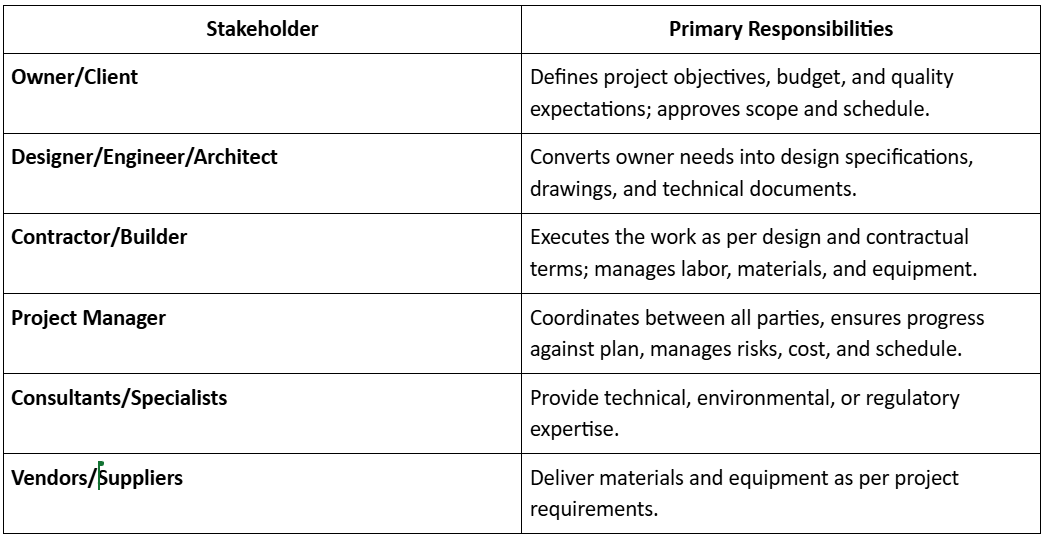
Successful project delivery depends on how well these parties collaborate rather than compete.
A cooperative, transparent, and goal-driven culture ensures efficiency across the construction lifecycle.
Successful project delivery depends on how well these parties collaborate rather than compete.
A cooperative, transparent, and goal-driven culture ensures efficiency across the construction lifecycle.
Construction projects are complex ecosystems involving design, procurement, logistics, and execution under uncertain and dynamic conditions.
Effective project management:
Ultimately, project management bridges vision with execution — transforming blueprints into operational structures.
At the heart of every construction project lies the Project Management Triangle, representing:
Maintaining balance among these four components is the cornerstone of project success.
Any change in one inevitably affects the others — for example, expanding scope increases cost and time, while reducing budget may compromise quality.
Construction project management is the art and science of coordinating people, materials, equipment, money, and schedules to deliver a built asset that meets the client’s requirements — safely, on time, and within budget.
Every construction project is unique. It involves a diverse set of professionals—owners, designers, contractors, engineers, consultants, vendors, and regulators—who must work together efficiently toward a shared objective.
Unlike routine operations, construction projects are temporary, goal-oriented, and non-repetitive. Hence, they demand meticulous planning, execution, monitoring, and control.
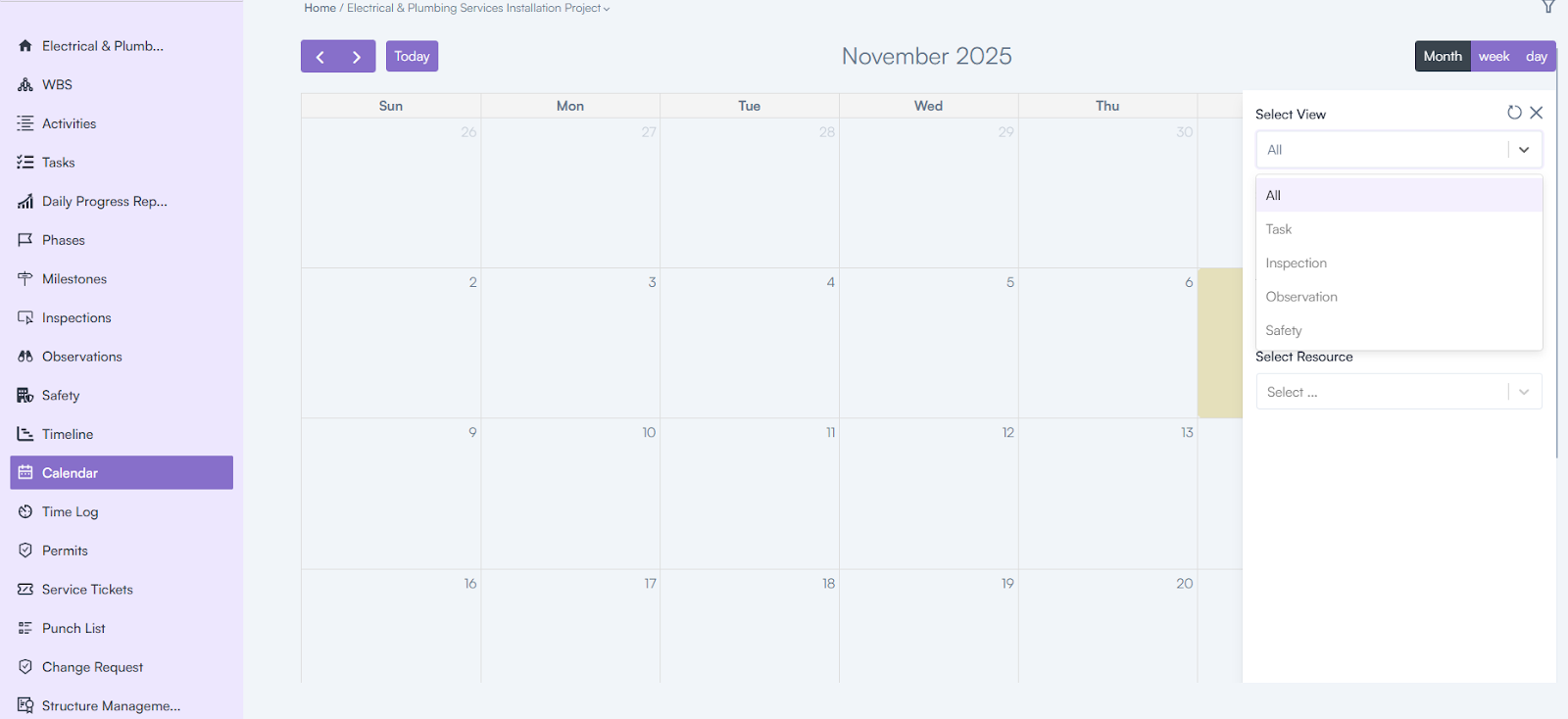
The Calendar provides a structured view of all tasks related to a project, displayed in a calendar format.
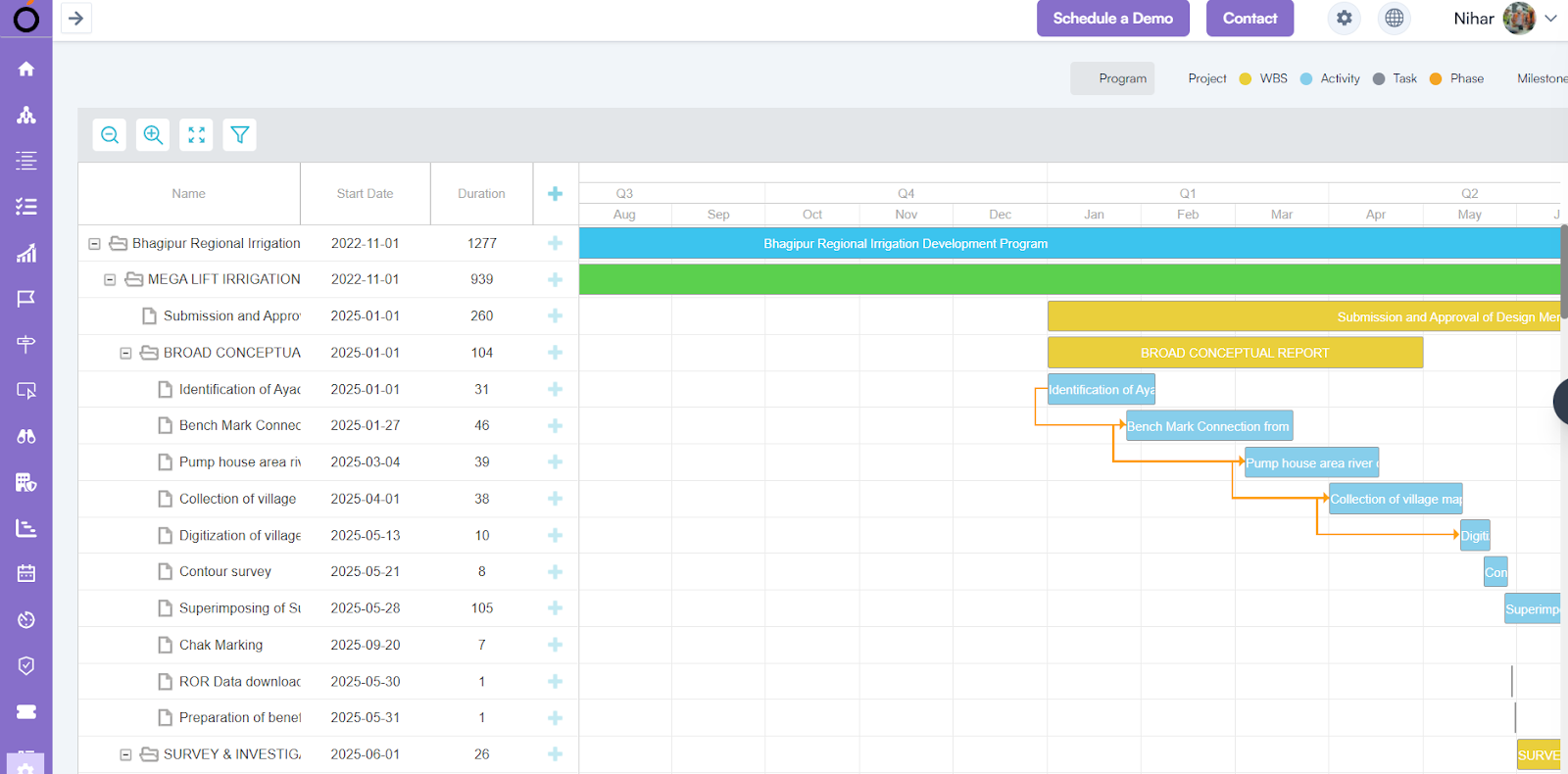
The Timeline provides a visual representation of a project, displaying:
It is displayed in a vertical chart format, allowing users to track progress and dependencies. Additionally, users can link a task to another task directly from the timeline.