Contractor Contact

Overview

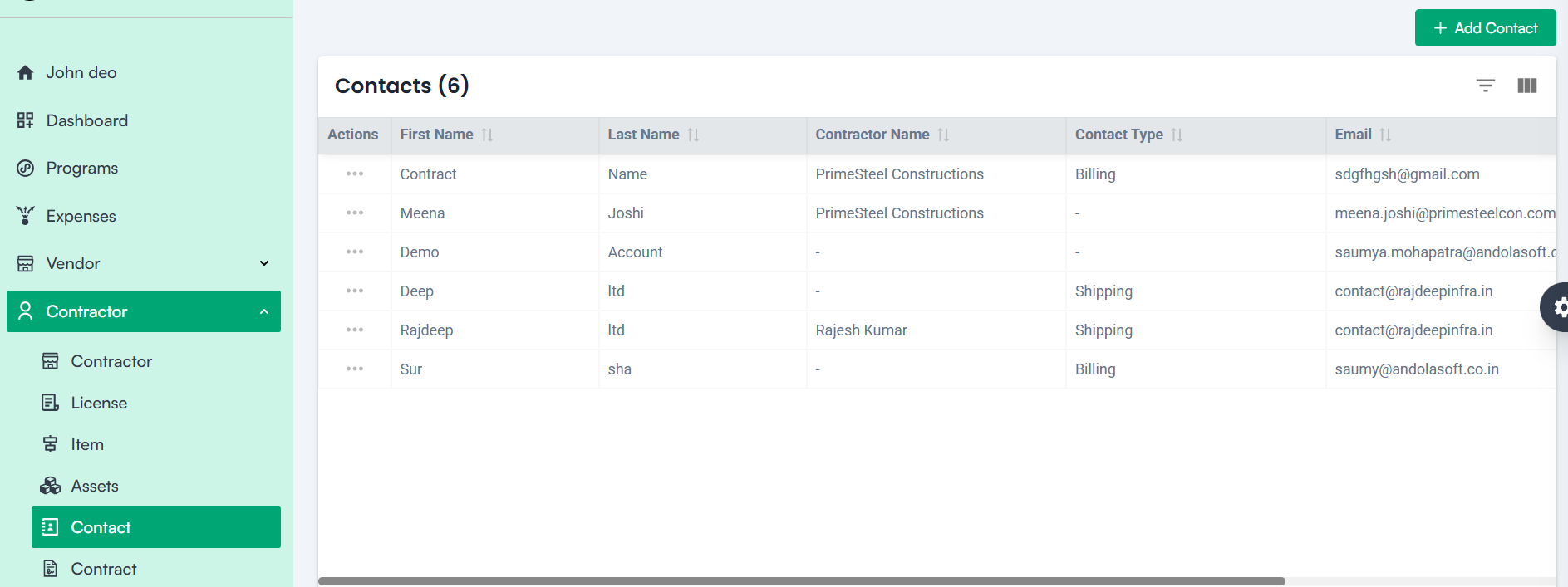
Contractor Contacts provide direct communication channels between your organization and contractors.

Navigation Path

  • Log in to the application.
  • Navigate to the left menu and click Contractor.
  • Select Contact.
  • Click Add Contact.

Contractor Contact

Field Descriptions

1. Select Contractor*

  • Choose the registered contractor to whom the contact belongs. Only listed contractors will appear.

2. First Name*

  • Enter the first name of the contact person.

3. Last Name*

  • Enter the last name of the contact person.

4. Contact Type

  • Select the purpose of the contact from options such as Billing, Shipping, or Purchase.

5. Designation*

  • Enter the job title or role, such as “Procurement Manager” or “Accounts Officer.”

6. Email*

  • Provide the official email address for communication.

7. Phone Number

  • Enter the phone number, supporting international formats.

8. Address Line 1 & 2

  • Enter the physical address, such as the office or site location.

9. Country / State / City / Zip Code

  • Provide detailed geographical information for accurate recordkeeping.

Action Buttons

  • Save – Saves the contact under the contractor’s profile.
  • Cancel – Discards the data and closes the form without saving.

Note: For Creating a Contractor Contact

1. Mandatory Fields:

  • Contractor Name *
  • First Name *
  • Last Name *
  • Designation *
  • Email *

2. Configurations in Company Settings:

  • No additional configurations required. Contacts are directly linked to registered contractors.

Additional Notes

Direct Communication

Contacts can be used to initiate emails, calls, or correspondence directly from the contractor’s profile.

Billing and Shipping Coordination

Separate contacts for billing and shipping ensure inquiries and logistics are directed to the right person, improving response time and efficiency.
Contractor Asset

Overview

Contractor Assets refer to tools, equipment, or infrastructure provided by contractors to support project execution. 

Navigation Path

  • Log in to the application.
  • Navigate to the left menu and click Contractor.
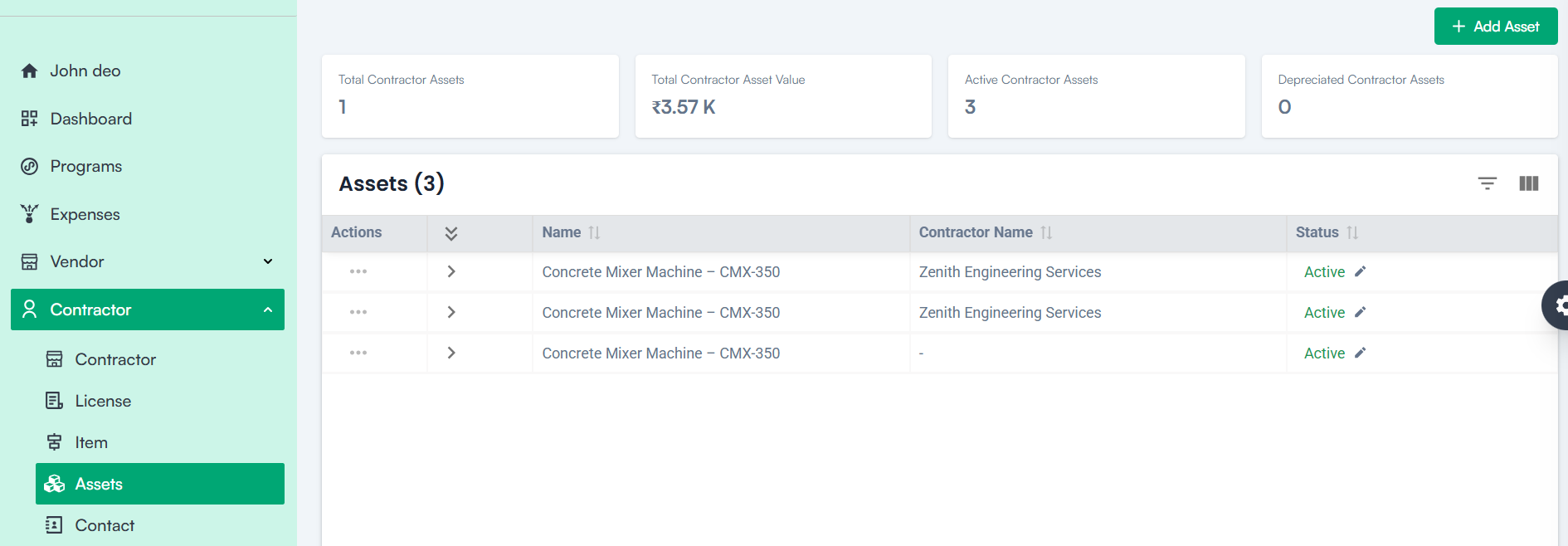
  • Click Assets.
  • Click the + Add Asset button.

Contractor Asset

Form Fields Explained

1. Contractor*

Select the contractor to whom the asset is assigned. Only registered contractors will be available.

2. Select Asset

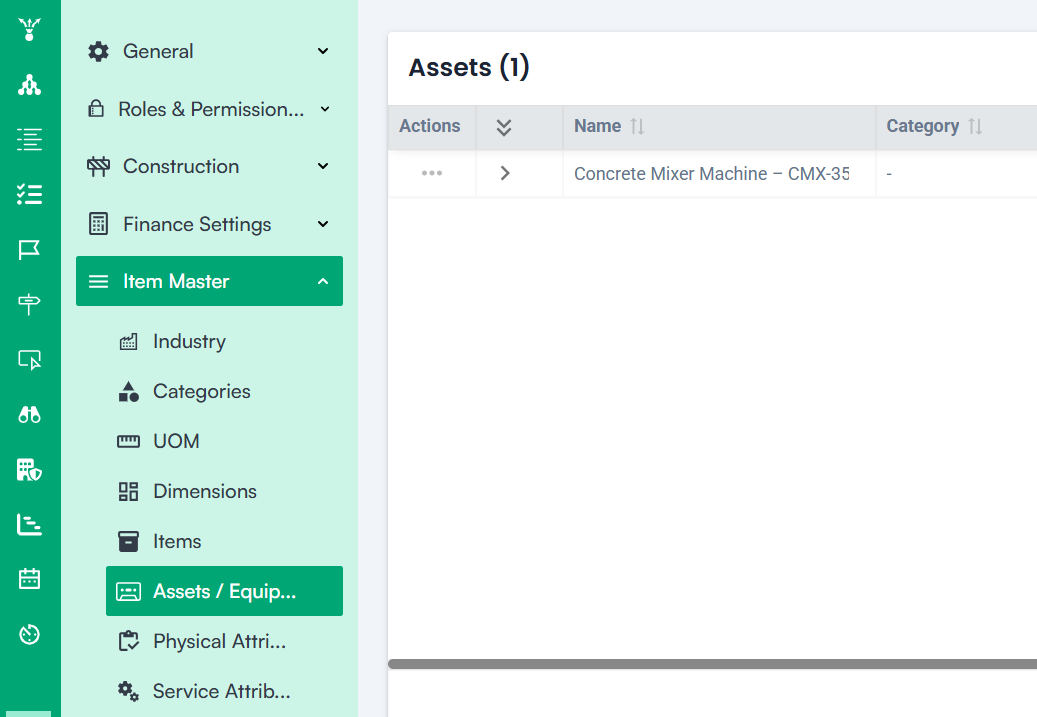
Choose the asset from the dropdown list. Assets must be predefined in Company Settings ➝ Item Master ➝ Asset to ensure uniformity.

Form Fields Explained

3. Price

Enter the unit price of the asset being provided. This field is required for valuation and cost tracking.

4. Currency Code

Select the currency used for asset pricing.

Action Buttons

  • Save – Saves the asset details and links them to the contractor’s profile.
  • Cancel – Closes the form without saving any changes.

Note: For Creating a Contractor Asset

1. Mandatory Fields:

  • Contractor Name *
  • Asset *
  • Price *
  • Currency Code *

2. Configurations in Company Settings:

  • Assets are configured under: Company Settings ➝ Item Master ➝ Asset

Form Fields Explained

Contractor Asset KPI’s

  • Total Contractor Assets – Shows the total number of assets linked to contractors.
  • Total Contractor Asset Value – Summarizes the overall value of assets supplied by contractors.
  • Active Contractor Assets – Tracks assets currently in use or available.
  • Depreciated Contractor Assets – Displays assets that have undergone value reduction due to usage or aging.

Contractor Item

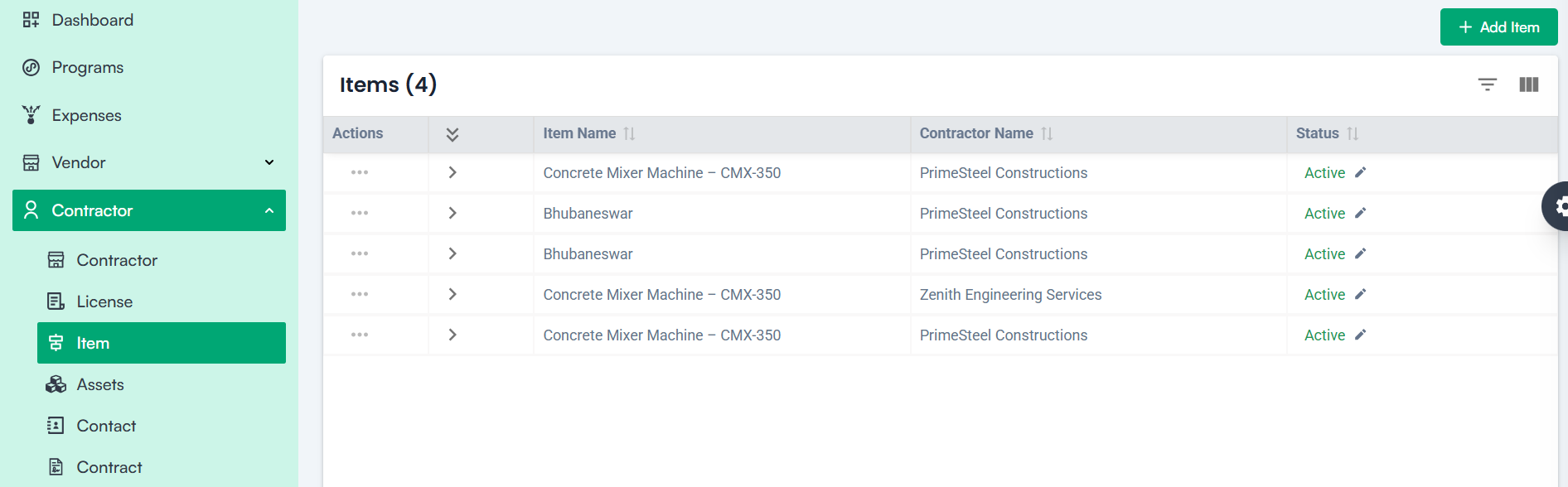
  • Contractor Items allow organizations to track materials, tools, or services supplied by contractors.
  • By associating items with specific contractors, teams can monitor procurement costs, ensure timely delivery, and maintain accurate stock levels for operational efficiency. 

Navigation Path

  • Log in to the application.
  • Navigate to the left menu and click Contractor.
  • Select Item.
  • Click the Add Item button.

Form Fields Explained

1. Contractor*

Select the registered contractor from the dropdown list to whom the item will be assigned. Only contractors already added to the system will appear here.

2. Select Item

Choose the item from the dropdown list. Items must be predefined in the item master to ensure consistency.

3. Price

Enter the unit price at which the contractor supplies the item. This field is mandatory for cost calculations and budgeting.

4. Currency Code

Select the currency used for pricing the item. This ensures accurate financial reporting across regions.

Action Buttons

  • Save – Stores the item details under the contractor’s profile after filling all mandatory fields.
  • Cancel – Discards entered data and exits the form without saving.

Note: For Creating a Contractor Item

1. Mandatory Fields:

  • Contractor Name *
  • Item *
  • Price *
  • Currency Code *

2. Configurations in Company Settings:

  • Items are configured under: Company Settings ➝ Item Master

Contractor Licenses

  • Contractor licenses ensure that contractors meet the necessary legal, safety, and industry-specific compliance requirements before working on a project. 
  • Keeping accurate records of licenses helps organizations avoid regulatory risks, plan audits, and ensure contractors remain qualified throughout the project lifecycle. 

Filling the License Form

  • Log in to the application.
  • Navigate to the left menu, click Contractor, and then select Licenses.
  • Click the Add License button at the top-right corner to open the form.

Step-by-Step Instructions to Create a License

1. Select Contractor

  • Choose the registered contractor from the dropdown list to whom the license applies.

2. Select License

  • Pick the license type from the dropdown. Only the licenses associated with that particular contractor will be available.

3. License Number

  • Enter the official license number as mentioned in the document.

4. Issue Date

  • Select the date when the license was issued using the calendar picker.

5. Valid Upto

  • Choose the expiration or validity end date to help set reminders for renewals and audits.

6. License Document Upload

Attach a soft copy of the license for record-keeping:

  • Click the upload icon or “Click to upload.”
  • Browse and select the file from your system.

Final Actions

  • Save – Store the license record and link it to the contractor’s profile.
  • Cancel – Exit the form or discard any changes without saving.

Note: For Creating a Contractor License

1. Mandatory Fields:

  • Contractor Name *
  • License *
  • Issue Date *
  • Valid Up to *

2. Configurations in Company Settings:

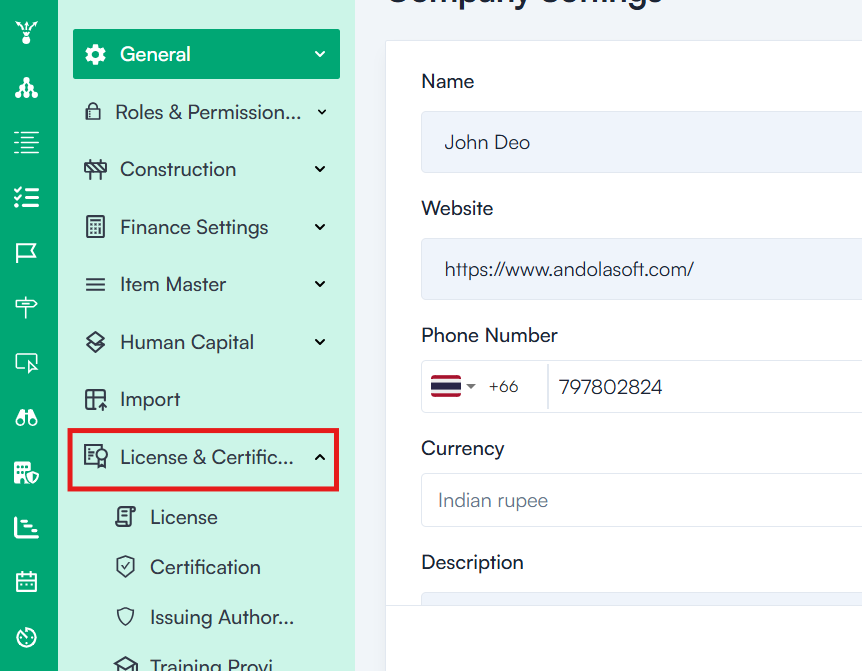
  • Licenses are configured under: Company Settings ➜ License and Certification

This ensures that the necessary license types are available to associate with contractors.

License Table Overview

The License table provides a structured view of all licenses linked to contractors, helping users track compliance, deadlines, and documentation efficiently.

Table Columns:

  • License Name – Displays the type of license assigned to the contractor (e.g., Driving License, Safety Compliance Certificate).
  • Contractor Name – Shows the name of the contractor to whom the license is linked.
  • Valid From – Indicates the start date when the license became effective.
  • Valid To – Displays the expiration date of the license to help monitor renewals.

Status – Shows the current status of the license, such as Active, Inactive, Pending, Expired, or Deleted.

Contractor

Create Contractor – Step-by-Step Guide

Accessing the Form

  • Log in to the application.
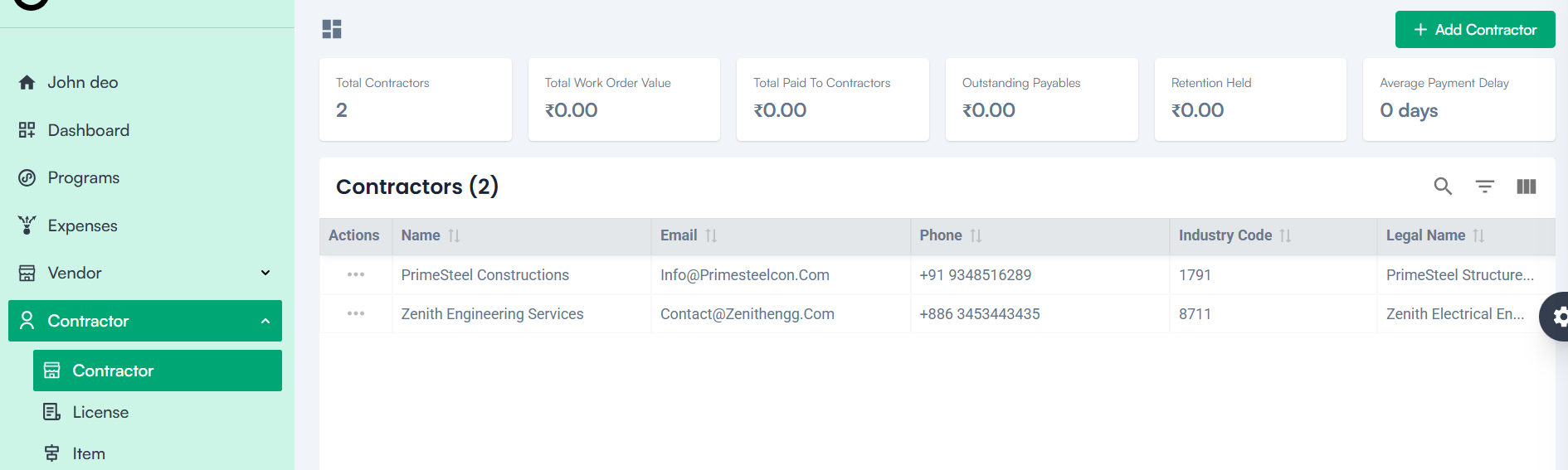
  • Navigate to the left menu and select Contractor.
  • Click Add Contractor to open the form.

Contractor

Fill Contractor Information

  1. Contractor Information

    • Name: Enter the full contractor name.
    • Email: Provide the official email address for communication.
    • Phone Number: Enter the contact number with country code.
    • Industry Code: Classification of the contractor’s industry or field.
    • Contractor Code: Unique identifier assigned to the contractor.
    • Legal Name: Registered company name of the contractor.
    • Contractor Type: Define the role, such as supplier, subcontractor, consultant, etc.
    • Category: Type of product or service provided.
    • Address: Enter detailed address information:
      • Line 1
      • Line 2
      • Country
      • State
      • City
      • Zip Code
      • Type (Primary, Billing, Shipping, Others)
  2. Bank Details

    • Account Number: Bank account used for contractor payments.
    • Account Holder Name: Name of the account owner.
    • Account Type: Type of account (savings, current, etc.).
    • Bank Name: Name of the contractor’s bank.
    • Branch Name: Branch details.
    • IFSC Code: Bank routing code.
    • SWIFT Code: International transfer code.
    • MICR Code: Clearing code.
    • Address: Branch address including:
      • Country
      • State
      • City
      • Zip Code
  3. Tax Identification

    • Type: Tax type such as GST, PAN, etc.
    • Number: Official tax number issued by the government.
    • Click + to add additional tax records if applicable.

Final Actions

  • Save – Click to register the contractor with the provided details.
  • Cancel – Click to discard changes and exit the form.

Note

For creating a Contractor:

1. Mandatory Fields:

  • Contractor Name *
  • Email *
  • Industry Code *
  • Legal Name *

2. Configurations in Company Settings:

  • Industry Code is configured under: Company Settings ➜ Item Master ➜ Industry

Contractor

Contractor Details Page

When you click on a contractor’s name, you are directed to the Contractor Details page where the following information is available:

General Information

  • Displays the information entered during contractor creation, such as Legal Name, Contractor Code,Category,Contractor Type.

Contact Details

  • Email – Communication address.
  • Phone Number – Primary contact number.
  • Address – Registered location and other address records.

Contractor Tabs – Explained

Each tab focuses on specific areas of the contractor’s operations:

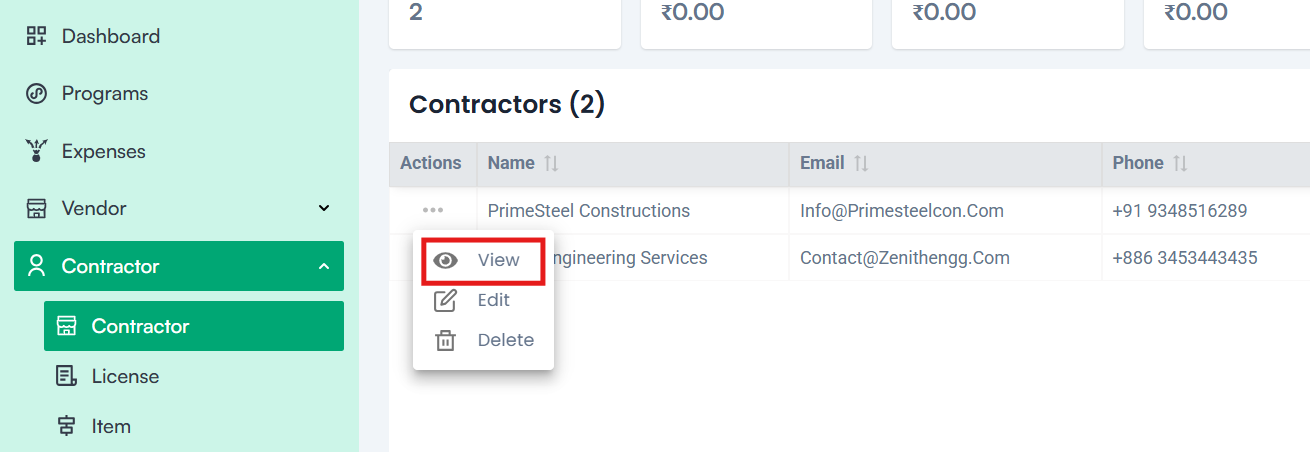
  • License Tab – Shows certifications, permits, and compliance documents required for legal and operational purposes.
  • Item Tab – Lists materials, equipment, and tools provided by the contractor to projects, helping track supplies and procurement.
  • Assets Tab – Displays details of assets supplied by the contractor, such as machinery and equipment.
  • Contact Tab – Contains individuals associated with the contractor, such as billing managers or site supervisors.
  • Contract Tab – Lists formal agreements and contractual obligations with the contractor.
  • Work Order Tab – Tracks assigned tasks or jobs issued to the contractor, including progress and completion details.
  • Invoice Tab – Records all billing activities from the contractor, including invoice numbers, amounts, and payment status.
  • Payment Tab – Provides a payment history for the contractor, helping reconcile financial records and track pending dues.
  • Bank Details Tab – Shows the contractor’s payment accounts, ensuring correct and compliant fund transfers.
  • Addresses Tab – Stores multiple address records for operational or regulatory needs.
  • Tax Details Tab – Displays tax-related information, such as registration types and numbers required for billing and compliance.

Contractor Actions

Edit Contractor

  • Click Edit next to the contractor.
  • Modify the necessary fields.
  • Click Save to update the information.

Edit Contractor

Delete Contractor

  • Click Delete next to the contractor record.
  • Confirm the deletion in the pop-up window.
  • The contractor will be removed from the list.

Contractor

View Contractor Details

  • Click the contractor’s name or email to access detailed information.
  • Review all associated records, including contacts, invoices, and payments.

View Contractor Details

Search, Filter, and Sort

  • Use the search bar to quickly find contractors by name or email.
  • Apply filters based on status, category, or type.
  • Click on column headers to sort by alphabetical order, date, or other criteria.

Search

Contractor KPI Dashboard

The dashboard provides a quick overview of key performance metrics to track contractor activities and project health.

First Section – Summary Metrics

  • Total Contractors – Displays the total number of contractors registered.
  • Total Work Order Value – Shows the cumulative value of all work orders assigned to contractors.
  • Total Paid to Contractors – Tracks payments made, helping monitor cash outflows.
  • Outstanding Payables – Highlights pending payments that require follow-up.
  • Retention Held – Shows amounts retained as per contract terms or policies.
  • Average Payment Delay – Provides insights into delays in payment processing.

Dashboard Charts (Pie and Bar Charts)

  • Pending Payments by Contractor – Displays contractors with the highest pending payments.
  • Performance vs Project Progress – Tracks how contractors are contributing relative to project milestones.
  • Top Subcontractors – Work Order Frequency and Value – Identifies the most active subcontractors by task frequency and financial contribution.
  • Most Frequently Used Item – Shows which materials or tools are procured most often from contractors.

Monthly Payments to Contractors – Visualizes monthly payment trends, assisting with budgeting and forecasting.

Overview

What is a Contractor?

  • A Contractor is an individual or company engaged to perform specific tasks, services, or deliverables in a construction project.
  •  Contractors may include suppliers, subcontractors, consultants, or specialized service providers.
  •  They play a crucial role in project execution by providing materials, labor, expertise, or equipment needed to meet construction timelines, budget goals, and compliance standards.
  • Contractors help ensure that construction projects progress smoothly by offering specialized services and resources.
  •  Managing contractor information effectively helps streamline procurement, billing, payments, and compliance reporting throughout the project lifecycle.

Overview

  • Contractor Management is a crucial component in ensuring smooth project execution, compliance, and financial accountability in construction projects.
  •  It helps organizations maintain accurate records, manage contractual relationships, and track the performance and obligations of contractors.

Why Contractor Management?

  • Centralized Information – All contractor-related data is stored in one place, making it easy to access and update.
  • Compliance & Safety – Licenses, permits, and certifications are tracked to ensure contractors meet safety and legal requirements.
  • Financial Oversight – Payments, invoices, and outstanding balances are monitored to ensure timely and accurate financial transactions.
  • Operational Efficiency – Work orders, assets, and items supplied by contractors are managed effectively to support project timelines.

Module Structure

The Contractor Management module is organized into the following sections to provide a comprehensive view of contractor activities:

  • Contractor – Register and manage contractor profiles, including business information, location, and classification.
  • License – Record and track licenses and certifications associated with contractors for compliance and audit purposes.
  • Item – Track materials, tools, and services supplied by contractors, helping manage inventory and procurement.
  • Assets – Manage contractor-owned assets used on projects, including machinery and equipment details.
  • Contact – Maintain contact details of contractor representatives for communication and coordination.
  • Contract – Handle formal agreements, terms, and obligations between contractors and the organization.
  • Work Order – Create and manage orders placed with contractors, including task assignments and progress tracking.
  • Invoice – Monitor invoices issued by or to contractors, including amounts, tax details, and payment status.
  • Payment – Track payments made to contractors, adjustments, methods, and status for financial transparency.

Category: Construction Academy

Subcategory: Budgeting and Planning

Subcategory: Construction Phase

Subcategory: Design Coordination

Subcategory: Estimation Techniques

Subcategory: Initiation and Feasibility

Subcategory: Introduction

Subcategory: Personal Management

Subcategory: Project Close-Out

Subcategory: Project Scheduling

Subcategory: Project Teams

Subcategory: Proposal Management

Subcategory: Total Quality Management

Subcategory: Tracking and Control

Subcategory: Work Breakdown

Category: Help Desk

Subcategory: Client

Subcategory: Construction 101

Subcategory: Contractor Management

Subcategory: Expense

Subcategory: Finance Budget

Subcategory: Inventory Management

Subcategory: My Approvals

Subcategory: Site Management

Subcategory: Vendor Management