Contractor Relations and Communication

Strong communication with contractors ensures smooth coordination and minimizes disputes.

1. Contractor Management Essentials

  • Define roles and reporting hierarchy clearly.
  • Conduct weekly progress and coordination meetings.
  • Use a Contractor Information System for submittals, RFIs, and transmittals.
  • Review contractor performance through KPIs – safety, schedule adherence, quality compliance.

2. Communication Matrix Example
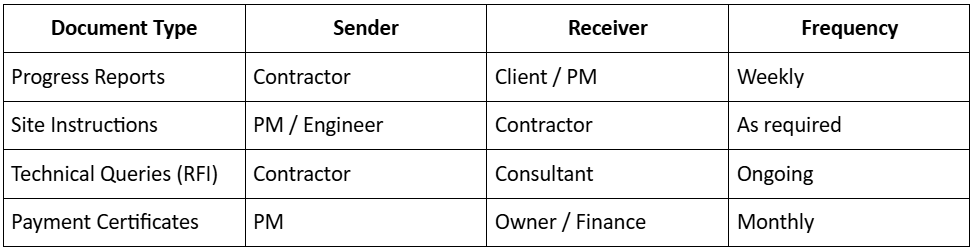
Contractor Relations and Communication

3. Relationship Building

  • Encourage a partnering mindset instead of adversarial roles.
  • Recognize milestones and safety achievements.
  • Maintain transparency in change management and claims.
“Contracts are written in clauses, but delivered through relationships.”

Procurement and Bidding Processes

Procurement translates design intent into real contracts and materials on site.

1. Procurement Phases

  • Pre-Procurement Planning – Define scope, specifications, and procurement schedule.
  • Tendering / Bidding – Invite qualified vendors or contractors.
  • Evaluation & Award – Review bids technically and commercially.
  • Contract Finalization – Negotiate terms, finalize BOQ, warranties, and delivery schedules.
  • Post-Award Management – Monitor deliveries, payments, and performance.

2. Bid Documents

  • Invitation to Tender (ITT)
  • Bill of Quantities (BOQ)
  • Technical Specifications
  • General & Special Conditions of Contract
  • Drawings and Schedules

3. Evaluation Criteria

Procurement and Bidding Processes

4. Procurement Strategies

  • Open Tendering: Public advertisement for bids.
  • Selective Tendering: Invited pre-qualified bidders.
  • Negotiated Contracts: Direct negotiation with preferred firm.
  • Two-Stage Bidding: Technical proposal first, commercial second.
“Transparent bidding builds credibility; strategic procurement builds value.”

Overview of Construction Project Delivery Methods

Construction delivery methods define how responsibilities for design, procurement, and construction are distributed between the owner, contractor, and designer.

Overview of Construction Project Delivery Methods

Choosing the Right Method

Depends on project type, funding model, risk tolerance, and owner expertise.

“The delivery method defines not just who builds, but how collaboration flows.”

Design Effectiveness and Post-Design Evaluation

Design management doesn’t end with drawing issuance — post-design evaluation ensures lessons are captured for continuous improvement.

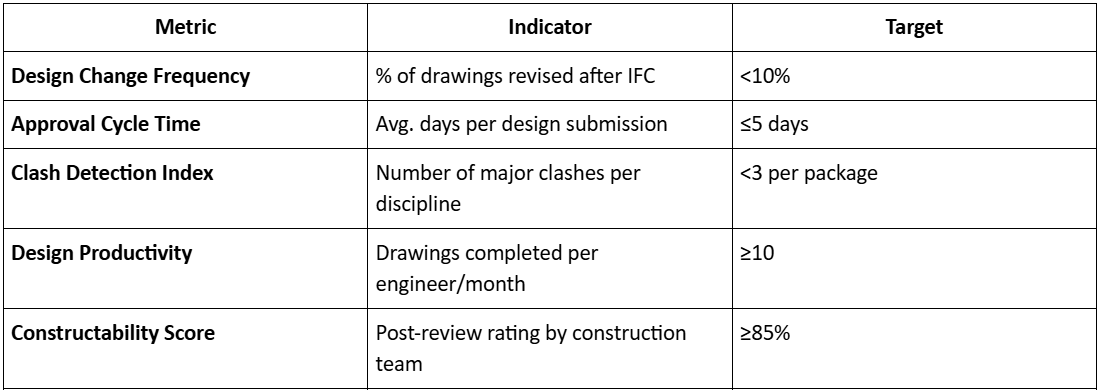
1. Design Effectiveness Metrics

Design Effectiveness Metrics

2. Post-Design Review

Conducted after project handover to evaluate:

  • Actual constructability issues encountered.
  • Rework and design-related claims.
  • Coordination bottlenecks between disciplines.
  • Lessons for future design management systems.

3. Continuous Improvement Actions

  • Update design templates and checklists.
  • Document best practices in a Design Lessons Learned Register.
  • Conduct team workshops for knowledge transfer.
“Reporting is not about documenting progress — it’s about driving it.”

Module Summary

  • Design management aligns multi-disciplinary teams through structured workflows.
  • Scope control during design prevents overruns and disputes.
  • Coordination meetings ensure continuous alignment and accountability.
  • Constructability reviews validate buildability; Value Engineering enhances efficiency.

Post-design evaluation transforms experience into excellence.

Constructability Reviews & Value Engineering

Before execution, the design must be validated for constructability — ensuring it can be built safely, efficiently, and economically.

1. Constructability Review

Systematic evaluation of design documents from a builder’s perspective.

Checklist Includes:

  • Are the details feasible with available construction methods?
  • Are material specifications practical and locally available?
  • Do drawings reflect site constraints accurately?
  • Are safety and maintenance provisions considered?
  • Is there potential for modularization or prefabrication?

Participants: Design engineers, construction managers, procurement heads, and safety officers.

2. Value Engineering (VE)

Value Engineering seeks to maximize value by optimizing cost, quality, and performance.

Value= Function / Cost

Steps in the VE Process:

  • Information Phase – Understand project goals and design intent.
  • Function Analysis Phase – Identify key functions of components.
  • Creative Phase – Brainstorm alternative methods or materials.
  • Evaluation Phase – Compare alternatives based on feasibility and ROI.
  • Implementation Phase – Approve and integrate selected alternatives.

Example:

Replacing traditional scaffolding with modular systems → 30% faster erection, 20% lower labor cost.

“Constructability saves time; Value Engineering saves money — together, they build smarter projects.”

Coordination Meetings and Reporting

Design coordination meetings serve as checkpoints to ensure alignment among all technical teams and provide progress visibility for stakeholders.

1. Purpose of Coordination Meetings

  • Resolve design clashes and interface issues.
  • Review progress of pending deliverables.
  • Validate updates against the master schedule.
  • Capture design risks and action plans.

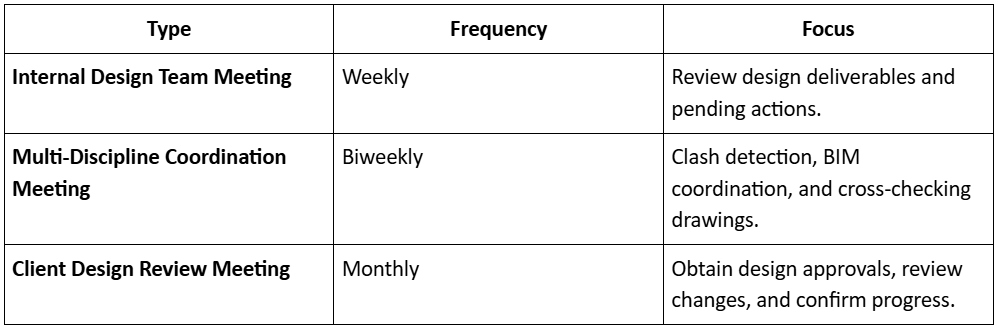
2. Meeting Formats

Coordination Meetings

3. Reporting Essentials

Each meeting should generate:

  • Minutes of Meeting (MoM) with clear action owners and due dates.
  • Design Coordination Report (DCR) summarizing design status by discipline.
  • Clash Detection Summary (using Navisworks, BIM 360, etc.).
  • Design Tracker Dashboard for graphical reporting.
“Meetings without follow-ups are conversations — not coordination.”

Category: Construction Academy

Subcategory: Budgeting and Planning

Subcategory: Construction Phase

Subcategory: Design Coordination

Subcategory: Estimation Techniques

Subcategory: Initiation and Feasibility

Subcategory: Introduction

Subcategory: Personal Management

Subcategory: Project Close-Out

Subcategory: Project Scheduling

Subcategory: Project Teams

Subcategory: Proposal Management

Subcategory: Total Quality Management

Subcategory: Tracking and Control

Subcategory: Work Breakdown

Category: Help Desk

Subcategory: Client

Subcategory: Construction 101

Subcategory: Contractor Management

Subcategory: Expense

Subcategory: Finance Budget

Subcategory: Inventory Management

Subcategory: My Approvals

Subcategory: Site Management

Subcategory: Vendor Management