Warehouse Space Management: Optimize Storage and Retrieval of Materials

In today’s fast-moving industries, warehouse space management is more than just organizing storage — it’s a strategic pillar of operational efficiency.

In construction, manufacturing, logistics, and retail, warehouse optimization defines how smoothly materials flow, how quickly projects are completed, and how profitably operations run.

A poorly managed warehouse leads to idle inventory, blocked capital, and project delays. In contrast, an optimized warehouse ensures seamless material movement, better storage efficiency, and faster retrieval — saving time, cost, and space.

This guide explores proven strategies, technologies, and KPIs that help you transform your warehouse into a smart, data-driven, and high-performance asset.

The Strategic Importance of Warehouse Space Management

Optimizing your warehouse isn’t only about neat storage — it’s about maximizing space utilization, reducing handling time, and improving visibility across every stock item.

Common Challenges in Warehouse Optimization

  • Underutilized or overcrowded storage areas
    • Long picking and retrieval times
  • Overstocking or stockouts of key materials
  • Poor real-time inventory control
  • Safety and accessibility issues

Benefits of Optimized Warehouse Space

  • Lower carrying costs
  • Faster material retrieval
  • Improved order accuracy
  • Higher safety and compliance standards

When you apply effective warehouse space management, every square foot adds value to your operations.
Warehouse-space-&-stock-management

Assessing Your Current Warehouse Layout

Before improving space utilization, analyze your existing warehouse layout and workflow.

Key Areas to Audit

  • Space Utilization Rate: Aim for 85–90% utilization for optimal flow.
  • Material Flow: Track movement from receiving → storage → dispatch.
  • Travel Time: Measure time spent on picking and replenishment.
  • Bottlenecks: Identify areas of congestion or delay.
  • Safety & Accessibility: Ensure aisles and zones follow ergonomic standards.

A detailed audit every 6–12 months keeps warehouse performance aligned with changing demand.

Space Optimization Techniques for Modern Warehouses

  • Vertical Storage Solutions

Use vertical racking, mezzanine floors, and automated carousels to maximize vertical space without costly expansion.

  • Smart Zoning

Organize zones by:

    • Frequency of use (fast-moving goods near dispatch)
    • Material type (hazardous, fragile, or heavy)
    • Temperature requirements (cold or climate-controlled areas)
  • Cross-Docking Operations

Cross-docking allows materials to move directly from inbound to outbound without storage delays — improving inventory turnover and reducing costs.

  • FIFO and LIFO Methods

Apply FIFO (First In, First Out) for perishable goods and LIFO (Last In, First Out) when retrieval speed matters more than rotation.

  • Slotting Optimization

Use analytics to assign optimal storage locations based on item size, frequency, and handling needs. This boosts retrieval speed and labor efficiency.

Advanced Stock Management Strategies

The core of effective warehouse space management lies in accurate, real-time inventory control.

  • Real-Time Inventory Tracking

Use barcodes, RFID, or IoT sensors to maintain live inventory visibility and avoid over-ordering.

  • ABC Analysis
    • A Items: High value, strict monitoring
    • B Items: Moderate value, regular tracking
    • C Items: Low value, automated handling
  • Safety Stock & Reorder Points

Set dynamic reorder levels based on lead time and usage to avoid stockouts without overstocking.

  • WMS and ERP Integration

Integrate your Warehouse Management System (WMS) with ERP tools to achieve end-to-end visibility across procurement, dispatch, and billing.

Leveraging Technology: Building a Smart Warehouse

Modern smart warehouses rely on automation, data, and AI for better decision-making.

  • Warehouse Management System (WMS)

A WMS automates space allocation, picking routes, and inventory tracking while improving accuracy and reducing human error.

  • Internet of Things (IoT)

IoT devices track temperature, shelf weight, and equipment usage, enabling proactive maintenance and better space management.

  • Robotics & Automation

AGVs, conveyors, and robotic pickers improve retrieval times and minimize labor costs.

  • Predictive Analytics & AI

AI tools use demand patterns to forecast inventory needs, reducing waste and improving inventory turnover ratios.

Space Utilization, Safety & Compliance

Optimized warehouse space management must balance efficiency with safety.

Key Safety Measures

  • Maintain minimum 3.5 ft aisles
  • Use anti-slip flooring and rated shelves
  • Label load capacities
  • Install alarms and fire safety systems
  • Conduct regular drills and audits

Compliance with ISO 45001 and OSHA ensures safety and minimizes liability.

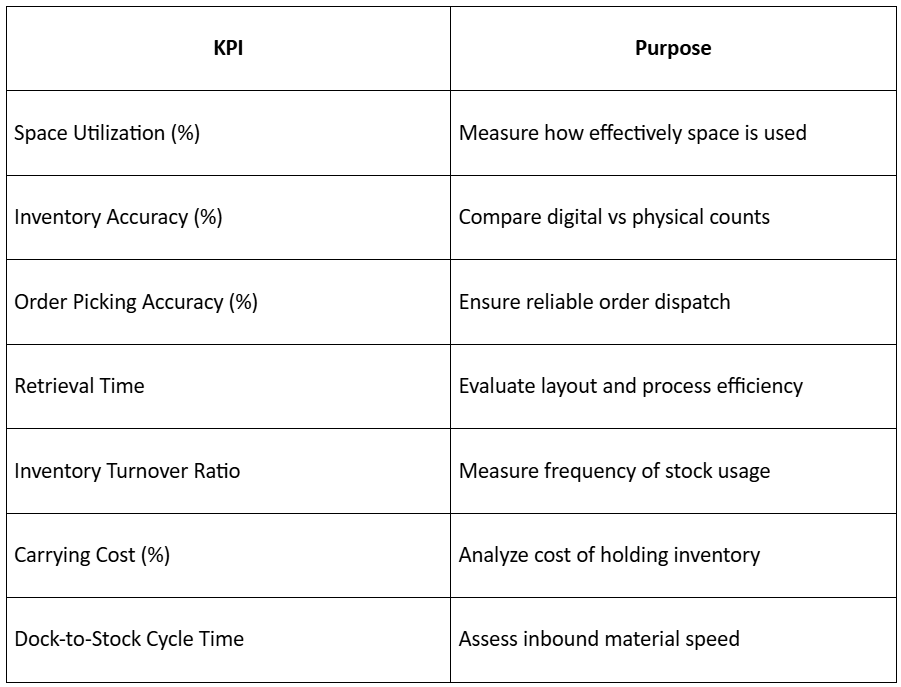
Key Warehouse Performance Metrics (KPIs)

Tracking KPIs helps maintain consistent improvement in warehouse optimization.
Warehouse-space-optimization

Training & Workforce Empowerment

A smart system only works with well-trained staff.

Train teams to:

  • Use WMS and scanning devices
  • Follow safety procedures
  • Suggest layout improvements
  • Adopt a Kaizen culture for continuous improvement

An empowered workforce sustains warehouse efficiency long-term.

The Future of Warehouse Space Management

Future-ready warehouses will feature AI-driven optimization, digital twins, and autonomous drones for auditing and tracking.

Next-gen smart warehouses will:

  • Predict demand with AI
  • Use robotic fleets for fast picking
  • Operate with green, energy-efficient systems
  • Integrate blockchain for transparent supply chains

Early adopters will achieve faster fulfillment, lower costs, and near-perfect accuracy.

Conclusion: From Storage to Strategic Efficiency

Warehouse space management is no longer a support task — it’s a strategic growth driver.

By combining layout optimization, real-time visibility, and data-driven decisions, businesses can reduce waste, boost productivity, and enhance profitability.

An optimized warehouse doesn’t just store — it powers performance, precision, and progress.

FAQs

Q1. What is warehouse space management?

Warehouse space management involves organizing and optimizing storage areas, layouts, and inventory systems to improve efficiency and reduce costs.

Q2. How does a WMS help in warehouse optimization?

A Warehouse Management System (WMS) automates tracking, space allocation, and stock movement, ensuring higher accuracy and better visibility.

Q3. Why is inventory turnover important?

High inventory turnover means materials move quickly, improving cash flow and reducing holding costs.

Q4. What technologies are used in smart warehouses?

Smart warehouses use IoT sensors, robotics, AI-driven analytics, and digital twins to enhance productivity and precision.

Multi-Site Coordination: Optimize project execution across multiple sites

Managing a single construction or infrastructure project is challenging. Managing multiple active sites simultaneously — often in different locations, with varied teams and vendors — demands a far higher level of coordination and control.

This is where multi-site coordination comes in: an integrated approach that synchronizes communication, resources, schedules, and performance tracking across all sites to ensure consistency, accountability, and timely delivery.

In industries such as construction, energy, infrastructure, and manufacturing, effective multi-site coordination directly impacts project success, cost efficiency, and client satisfaction.

Understanding Multi-Site Coordination

What Is Multi-Site Coordination?

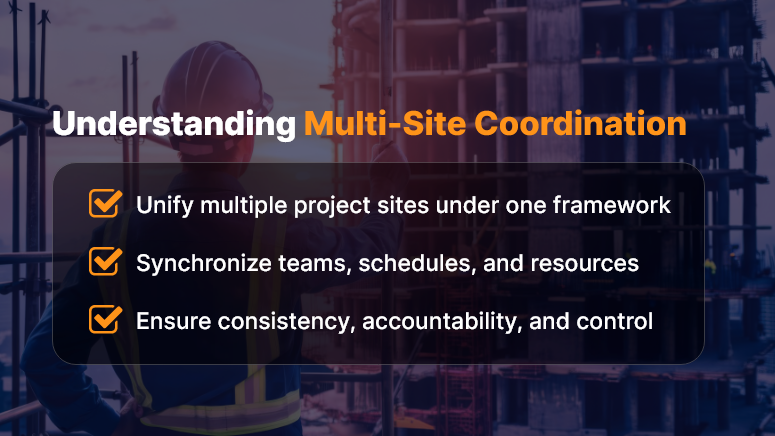
Multi-site coordination is the systematic management of projects executed at multiple geographic locations under a unified operational framework.

It ensures that every site — whether it’s a construction zone, solar installation, or infrastructure upgrade — works toward shared objectives, aligned schedules, and standardized quality metrics.

Key objectives include:

  • Real-time visibility into each site’s progress and performance.
  • Seamless collaboration between central offices and field teams.
  • Standardized workflows and documentation.
  • Efficient allocation of shared resources, materials, and equipment.

In essence, multi-site coordination consolidates dispersed operations into a single, synchronized ecosystem.

Challenges in Managing Multiple Project Sites

Without a structured coordination framework, teams face a host of challenges:

  • Communication silos: Field teams and head offices often operate with fragmented updates.
  • Inconsistent reporting: Different formats and standards confuse progress tracking.
  • Duplicate work or missed dependencies: When schedules and responsibilities aren’t synchronized.
  • Resource conflicts: Equipment or manpower overbooked across sites.
  • Delayed decision-making: Managers lack real-time data for quick intervention.

These pain points can cause schedule slippage, cost overruns, and reduced productivity — especially in large-scale infrastructure or construction programs.

Key Strategies to Optimize Multi-Site Coordination

1. Centralized Project Management Platform

Use a cloud-based project management system that consolidates updates, schedules, and documents from all sites in one place. For example, tools like OConstruction or Orangescrum allow you to:

  • Assign and monitor tasks across multiple sites.
  • Track progress visually through dashboards and Gantt charts.
  • Log issues, RFIs, and approvals in real time.

This centralization eliminates the guesswork and ensures every stakeholder sees the same data.

2. Standardize Communication Protocols

Define clear communication channels:

  • Daily site logs for on-ground updates.
  • Weekly review calls between site managers and HQ.
  • Centralized chat or ticketing system for queries and escalations.

Using structured communication templates ensures everyone follows a consistent reporting rhythm, reducing misunderstandings.

3. Real-Time Data and IoT Integration

Leverage IoT sensors, drones, and mobile apps to feed live data into your coordination system:

  • Monitor equipment usage and site safety remotely.
  • Capture progress images or videos for validation.
  • Track resource utilization through GPS-enabled machinery.

Real-time data not only improves transparency but also helps anticipate delays or equipment downtime early.

4. Optimize Resource Allocation

A unified resource pool across sites helps balance workload and reduce idle time. With centralized scheduling tools, you can:

  • Check resource availability instantly.
  • Reassign underutilized assets.
  • Track material dispatches and deliveries in real time.

This ensures materials, machinery, and manpower are always available where they’re needed most.

5. Implement Unified Quality and Safety Standards

Multi-site projects often fail due to inconsistent safety or quality compliance. Develop a shared inspection checklist, accessible digitally, to ensure:

  • Uniform quality benchmarks across sites.
  • Compliance with safety standards and local regulations.
  • Real-time corrective action tracking for identified issues.

Digitized QA/QC workflows help teams avoid rework and ensure predictable outcomes.

6. Use Dashboards and Analytics

Data visualization plays a key role in multi-site management. Dashboards can help decision-makers:

  • Compare performance metrics across all sites.
  • Identify high-risk areas through variance reports.
  • Forecast delays or budget overruns early.

Analytics transforms scattered data into actionable insights — improving planning, forecasting, and performance reviews.

7. Encourage Cross-Site Collaboration

Build a culture of shared learning:

  • Conduct virtual coordination meetings.
  • Share best practices, risk logs, and vendor feedback.
  • Recognize top-performing site teams to motivate others.

When teams communicate across locations, innovation and problem-solving accelerate.

The Role of Technology in Multi-Site Coordination

Modern project management relies heavily on digital transformation:

  • Cloud collaboration tools ensure all stakeholders have access to the same information.
  • Mobile apps enable site engineers to update data instantly.
  • AI and predictive analytics forecast delays, cost risks, and resource shortages.
  • BIM (Building Information Modeling) and Digital Twins connect design, execution, and monitoring phases across all sites.

These technologies help project leaders shift from reactive management to proactive control.

Business Impact of Optimized Multi-Site Coordination

Implementing structured coordination delivers measurable benefits:

  • 20–30% improvement in project visibility and reporting accuracy.
  • Reduced delays through early identification of critical issues.
  • Better resource utilization and cost savings.
  • Higher client satisfaction through consistent quality delivery.
  • Improved team accountability and cross-site collaboration.

Organizations that adopt digital multi-site coordination report faster decision-making, leaner operations, and scalable project control.

Best Practices for Long-Term Success

  • Document every process and update regularly.
  • Assign a Multi-Site Coordinator or Program Manager role to oversee synchronization.
  • Conduct monthly performance reviews across all sites.
  • Integrate ERP or CRM systems for financial and vendor tracking.
  • Continuously train site teams on digital tools and communication protocols.

Consistency and discipline are the cornerstones of multi-site success.

Conclusion

In a world of distributed operations, multi-site coordination is no longer optional — it’s essential for competitive, high-performing project delivery.

By integrating technology, standardizing processes, and fostering cross-site collaboration, organizations can ensure smoother execution, timely completion, and predictable outcomes.

If your enterprise manages projects across cities or regions, adopting a digital coordination platform like OConstruction can give you real-time visibility, control, and confidence — across every site.

Logistics Optimization: Plan Deliveries to Ensure Timely Procurement

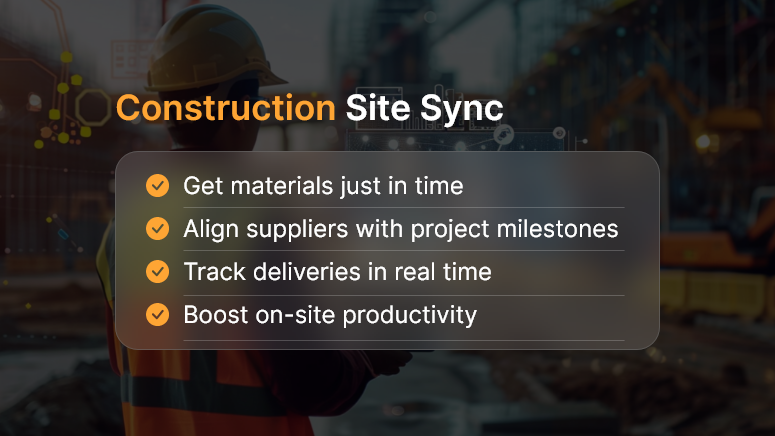
In every construction or infrastructure project, timing is everything. A single material delay can halt work, inflate costs, and disrupt downstream schedules. That’s where logistics optimization comes in — a data-driven process that ensures materials arrive exactly when needed, neither too early (clogging storage space) nor too late (stalling progress).

For modern construction teams, logistics optimization isn’t just about moving goods — it’s about coordinating procurement, transport, warehousing, and delivery schedules in perfect sync with the project plan.

Construction Site Sync

What Is Logistics Optimization?

Logistics optimization is the strategic process of planning, executing, and refining material delivery schedules to align perfectly with project milestones. It uses real-time data from procurement, suppliers, and project sites to predict demand, plan transport routes, and coordinate warehouse releases efficiently.

Key Components

  • Demand Forecasting: Predicting what materials are needed and when.
  • Route Planning: Determining the fastest, most cost-effective routes for delivery.
  • Warehouse Scheduling: Managing dispatch and storage to prevent overstocking.
  • Supplier Coordination: Synchronizing supplier timelines with project deadlines.

Why Construction Projects Need Logistics Optimization

Unlike manufacturing or retail, construction logistics face unique challenges — variable site conditions, weather risks, and fluctuating resource availability. Optimized logistics allow you to:

  • Avoid Material Shortages: Ensure every material is available before work begins.
  • Reduce Idle Time: Keep equipment and labor productive without delays.
  • Save Storage Costs: Deliver materials just in time to avoid warehousing overhead.
  • Enhance Accountability: Track material movement across suppliers and contractors.
  • Improve Sustainability: Optimize delivery frequency and reduce fuel consumption.

The Role of Technology in Logistics Optimization

Today, digital platforms like OConstruction or Orangescrum play a crucial role in synchronizing field operations with supply chain workflows.

1. Real-Time Tracking

GPS-enabled tracking provides instant visibility of trucks, materials, and delivery status.

2. Automated Alerts

Teams receive notifications if deliveries are delayed, rerouted, or rescheduled.

3. Integrated Scheduling

The project Gantt chart directly links with supplier schedules, ensuring every delivery aligns with on-site activity.

4. Predictive Insights

AI-based forecasting tools predict material demand, helping planners avoid both shortages and surplus.

5. Collaboration Dashboards

Stakeholders — contractors, vendors, and logistics partners — collaborate in one workspace, reducing miscommunication.

How to Implement Logistics Optimization

Step 1: Map Your Supply Chain

Document all suppliers, warehouses, and delivery points. Identify bottlenecks or dependencies that frequently cause delays.

Step 2: Digitize Material Planning

Use project management software to create a material requirement plan (MRP) linked to project tasks and milestones.

Step 3: Set Up Smart Scheduling

Adopt just-in-time delivery models, ensuring materials arrive only when the site is ready to use them.

Step 4: Integrate Data Systems

Connect procurement, inventory, and transportation systems under one digital platform.

Step 5: Monitor and Improve

Use analytics dashboards to track performance metrics like delivery lead times, transport utilization, and delay frequency.

Benefits of Optimized Logistics

Benefit Impact
Reduced Delays Seamless coordination between suppliers and project timelines.
Lower Costs Less idle labor, lower fuel and storage expenses.
Improved Quality Materials handled and stored properly before use.
Enhanced Safety Minimized on-site clutter and equipment congestion.
Greater Transparency Real-time visibility into supply chain activities.

Common Challenges in Logistics Optimization

Despite its advantages, several issues can still arise:

  • Unpredictable Delays: Weather, strikes, or vehicle breakdowns.
  • Supplier Non-Compliance: Vendors failing to follow just-in-time schedules.
  • Lack of Integration: Disconnected systems across procurement, transport, and projects.
  • Manual Tracking: Human error in data entry or delivery documentation.

The solution lies in automation and integration — ensuring all stakeholders work on a single, real-time data platform.

Best Practices for Construction Logistics Optimization

  • Adopt Just-In-Time (JIT) Procurement: Align deliveries with activity schedules.
  • Use Predictive Analytics: Anticipate material needs and delivery delays.
  • Establish Clear SLAs with Suppliers: Define delivery times, penalties, and escalation paths.
  • Centralize Communication: Keep everyone informed using digital collaboration tools.
  • Review and Adjust Weekly: Logistics is dynamic; continuous improvement keeps it efficient.

How OConstruction Simplifies Logistics Planning

Platforms like OConstruction and Orangescrum are designed to remove the guesswork from material logistics.

  • Integrated Material Scheduling: Link every delivery with project milestones.
  • Vendor Coordination: Invite suppliers to track and confirm deliveries directly.
  • Analytics & Dashboards: Get insights into delivery performance and cost efficiency.
  • Real-Time Alerts: Receive instant notifications for delays or dispatch issues.

With these tools, you can achieve end-to-end logistics visibility, ensuring your projects run on schedule and under budget.

Conclusion

Logistics optimization isn’t just a backend process — it’s a strategic advantage. By aligning material flow with project timelines, companies can eliminate waste, reduce delays, and increase profitability.

In a fast-moving world of tight margins and complex projects, mastering logistics optimization is the key to operational excellence.

FAQs on Logistics Optimization

1. What does logistics optimization mean in construction?

It means planning and managing material deliveries so they arrive exactly when needed, avoiding delays and excess storage.

2. How does logistics optimization improve project efficiency?

It ensures that labor, equipment, and materials are available in sync, reducing idle time and costs.

3. What tools help with logistics optimization?

Tools like OConstruction and Orangescrum provide scheduling, tracking, and analytics dashboards.

4. How does real-time tracking support logistics?

It gives visibility of delivery status, location, and estimated arrival times.

5. What is Just-In-Time (JIT) delivery?

It’s a logistics strategy that ensures materials arrive right before they are needed for use.

6. Can logistics optimization reduce costs?

Yes — by minimizing storage, fuel, and downtime costs.

7. How does AI improve logistics planning?

AI predicts material demand and identifies potential delivery risks before they occur.

8. What are common causes of delivery delays?

Supplier issues, route inefficiencies, poor weather, and manual tracking errors.

9. How often should logistics data be reviewed?

Ideally, weekly, to adapt to changing site conditions and project timelines.

10. What’s the biggest advantage of digital logistics systems?

End-to-end visibility and collaboration between all project stakeholders.

Just-in-Time (JIT) Material Procurement: Optimize Procurement

In the construction world, time and material flow define success. A delay in the delivery of steel, cement, or electrical supplies can halt an entire site. On the other hand, overstocking materials ties up capital and increases waste.

This is where Just-in-Time (JIT) Material Procurement steps in — a smart, lean approach to ensure materials arrive exactly when needed, not weeks before or days too late.

JIT helps builders and contractors achieve the perfect balance between availability and efficiency, reducing inventory costs and avoiding costly downtime.

What Is Just-in-Time (JIT) Material Procurement?

Just-in-Time (JIT) is a lean supply chain strategy that minimizes inventory levels by synchronizing procurement and delivery with actual project schedules.

Instead of stockpiling materials, project managers procure items in smaller quantities, scheduled to arrive “just in time” for use.

In construction, this approach demands real-time coordination among procurement teams, suppliers, transporters, and site engineers — often enabled through digital construction management systems.

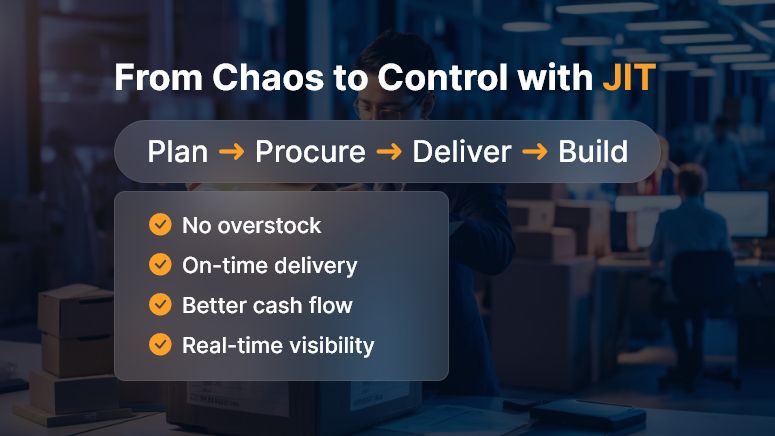
From Chaos to Control with JIT

Why JIT Matters for Modern Construction Projects

Construction projects today are complex, fast-paced, and multi-site. JIT material procurement provides several operational and financial advantages:

1. Reduced Inventory and Storage Costs

Traditional procurement models require bulk buying, leading to expensive warehousing, spoilage, and pilferage. With JIT, materials arrive only when required — saving up to 25-30% of storage and handling costs.

2. Improved Cash Flow

By avoiding premature bulk purchases, contractors keep working capital free for core operations. This helps maintain liquidity and financial agility throughout the project lifecycle.

3. Fewer Material Wastages

Overstocking leads to damage, obsolescence, and poor accountability. JIT reduces waste by ensuring materials match usage, improving sustainability and cost efficiency.

4. Enhanced Project Scheduling and Coordination

Because JIT aligns procurement with task schedules, it encourages teams to plan better and synchronize timelines across departments — procurement, site operations, and vendors.

5. Minimized On-Site Clutter and Safety Risks

Less material clutter means safer, cleaner, and more productive construction sites — directly improving workplace safety and site mobility.

How Digital Tools Enable JIT Procurement

Implementing JIT procurement manually can be challenging. However, digital tools make it achievable and scalable. Here’s how:

1. Real-Time Inventory and Demand Tracking

Cloud-based construction platforms provide live dashboards showing consumption rates, reorder levels, and stock positions across sites. Procurement teams can forecast needs precisely and schedule deliveries automatically.

2. Integrated Vendor Portals

Modern tools allow vendors to see upcoming requirements and update their delivery schedules proactively. This eliminates manual follow-ups and communication gaps.

3. Smart Alerts and Notifications

Automated alerts notify teams before material depletion or delay, ensuring proactive decisions rather than reactive firefighting.

4. Data-Driven Procurement Decisions

Analytics modules assess past consumption patterns, supplier reliability, and lead times — enabling smarter purchase planning and negotiation.

5. Seamless Site-to-Procurement Coordination

Field engineers can raise requisitions directly from mobile apps, while central procurement teams can approve, order, and track deliveries in real time.

Steps to Implement JIT Material Procurement in Construction

If you’re planning to move toward a JIT model, here’s a proven roadmap:

  • Map Your Material Flow

Identify which materials can be sourced on a JIT basis without disrupting workflow. Bulk materials (cement, steel) may still require buffer stock.

  • Collaborate with Reliable Suppliers

Choose vendors who can guarantee consistent quality and delivery timelines.

  • Digitize Procurement and Inventory

Use construction management software to track demand, deliveries, and usage in real time.

  • Create Predictive Schedules

Integrate project Gantt charts with procurement modules to automatically trigger purchase requests based on task progress.

  • Set Performance KPIs

Monitor supplier reliability, lead times, delivery accuracy, and cost savings to evaluate the success of JIT adoption.

  • Train Your Teams

Help procurement and site teams understand the lean principles behind JIT to ensure smooth adoption.

Challenges of JIT Procurement (and How to Overcome Them)

While JIT delivers high efficiency, it requires precision and digital readiness. Common challenges include:

Challenge Impact Solution
Supplier delays Workflow disruption Build a network of backup vendors
Transportation issues Missed deadlines Use route tracking & logistics alerts
Poor forecasting Material shortages Leverage AI-based demand prediction
Lack of visibility Communication gaps Use centralized project dashboards

The ROI of JIT Procurement

Companies implementing JIT procurement report:

  • 20–35% reduction in inventory carrying costs
  • 15–25% faster project completion through smoother coordination
  • 10–20% higher cash flow efficiency
  • Fewer material wastages and better sustainability metrics

Over time, these improvements translate to higher profit margins, better client satisfaction, and stronger supplier partnerships.

Conclusion: Building the Future, One On-Time Delivery at a Time

Just-in-Time Material Procurement isn’t just about reducing inventory — it’s about building a culture of precision, collaboration, and efficiency.

For construction firms adopting digital transformation, JIT is a cornerstone of lean operations. With integrated procurement dashboards, predictive analytics, and vendor collaboration, you can turn timing into your competitive advantage.

FAQs

1. What is Just-in-Time procurement in construction?

It’s a method of sourcing materials to arrive exactly when needed, reducing storage and holding costs.

2. How does JIT reduce project delays?

By synchronizing procurement with task schedules, materials are always available when required — no waiting time.

3. What type of software supports JIT procurement?

Integrated construction management platforms with modules for inventory tracking, supplier coordination, and analytics.

4. Is JIT suitable for all materials?

Not always. Critical or imported materials may need buffer stock, while consumables and short-lead materials fit JIT best.

5. What are the key benefits of JIT procurement?

Reduced costs, better cash flow, less waste, improved coordination, and safer worksites.

6. How can JIT improve sustainability?

By minimizing excess stock and wastage, it supports eco-friendly and resource-efficient construction.

7. Does JIT work for multi-site projects?

Yes, if supported by centralized procurement dashboards and strong vendor communication.

8. What KPIs track JIT success?

Inventory turnover rate, supplier lead time, delivery accuracy, and stock-out frequency.

9. Can JIT procurement work without automation?

It’s possible, but inefficient — automation ensures accuracy, transparency, and speed.

10. How does JIT impact supplier relationships?

It builds long-term, trust-based relationships through consistent collaboration and visibility.

Lessons Learned from Failed Construction Projects and How to Avoid Them

Construction projects are ambitious, high-stakes undertakings that require precise coordination across people, processes, and resources. Yet, even the best-laid plans can falter — resulting in cost overruns, delays, disputes, or outright project failure. While failures are painful, they also provide invaluable lessons that can shape how future projects are planned and executed.

In this blog, we’ll explore the key lessons learned from failed construction projects and provide actionable strategies to avoid repeating these mistakes.

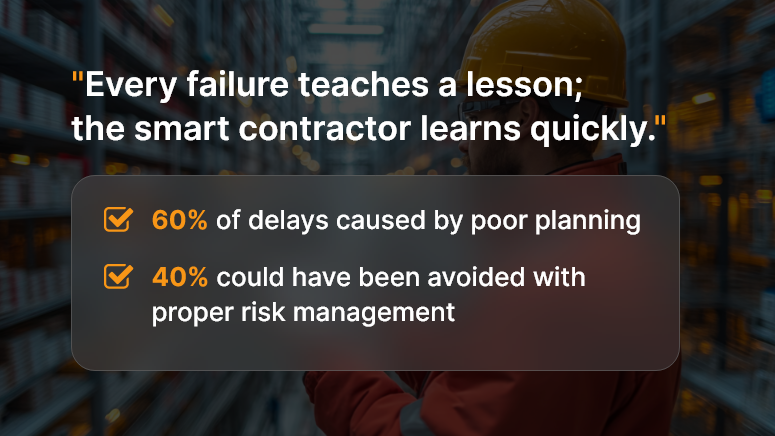
Every failure teaches a lesson

1. Poor Project Planning and Scope Definition

Lesson Learned:

One of the most common reasons for project failure is unclear scope or inadequate planning at the outset. When requirements are vague or stakeholders are not aligned, the project suffers from scope creep, rework, and escalating costs.

How to Avoid It:

  • Develop a clear project charter outlining objectives, deliverables, and success criteria.
  • Use a Work Breakdown Structure (WBS) to break down activities into manageable tasks.
  • Involve all key stakeholders during scope definition to ensure alignment.
  • Validate assumptions early with feasibility studies and risk assessments.

2. Ineffective Communication

Lesson Learned:

Breakdowns in communication — whether between owners, contractors, architects, or subcontractors — often lead to misunderstandings, errors, and delays. Many failed projects reveal that critical information was not shared on time, or decisions were not clearly documented.

How to Avoid It:

  • Implement a centralized communication platform or Common Data Environment (CDE).
  • Standardize documentation formats for RFIs, submittals, and approvals.
  • Establish a communication matrix that defines who gets what information and when.
  • Conduct regular progress meetings and distribute meeting minutes promptly.

3. Unrealistic Scheduling and Deadlines

Lesson Learned:

Projects often fail when schedules are too ambitious or do not account for contingencies. Unrealistic deadlines create a domino effect — overworked crews, compromised quality, and increased safety risks.

How to Avoid It:

  • Use tools like Critical Path Method (CPM) to create realistic schedules.
  • Factor in potential risks like weather delays, supply chain disruptions, or labor shortages.
  • Build time buffers for complex or high-risk activities.
  • Continuously monitor progress against milestones and update the schedule dynamically.

4. Insufficient Risk Management

Lesson Learned:

Unexpected challenges — ranging from design errors and regulatory changes to financial crises—can derail projects that lack a robust risk management plan. Many failed projects ignored warning signs until it was too late.

How to Avoid It:

  • Identify risks early during the planning phase and categorize them (financial, technical, environmental, contractual).
  • Develop risk response strategies: avoid, mitigate, transfer, or accept.
  • Assign a risk owner for each critical risk.
  • Maintain a live risk register and review it regularly during project meetings.

5. Financial Mismanagement

Lesson Learned:

Budget overruns are one of the biggest red flags in failed projects. Common causes include poor cost estimation, lack of transparency, and uncontrolled scope changes.

How to Avoid It:

  • Use detailed cost estimation techniques (bottom-up or activity-based costing).
  • Implement real-time cost tracking systems integrated with the project schedule.
  • Allocate a contingency budget of 5–10% to absorb unexpected expenses.
  • Regularly review financial reports and adjust forecasts as needed.

6. Lack of Quality Control

Lesson Learned:

In failed projects, quality issues often surface due to rushed timelines, inadequate inspections, or poor workmanship. These errors not only increase costs but also compromise safety and reputation.

How to Avoid It:

  • Establish a Quality Management Plan (QMP) before execution begins.
  • Conduct frequent inspections, audits, and testing at each project phase.
  • Train workers on quality standards and procedures.
  • Use digital tools for punch lists and defect tracking to close gaps faster.

7. Ignoring Human Resources and Workforce Management

Lesson Learned:

Labor shortages, unskilled workers, or poor workforce coordination can severely impact productivity. Several failed projects cite workforce mismanagement as a key factor in missed deadlines.

How to Avoid It:

  • Forecast labor requirements accurately using resource management tools.
  • Provide continuous training and certification for site workers.
  • Balance workloads to prevent fatigue and maintain morale.
  • Foster collaboration by clearly defining roles, responsibilities, and accountability.

8. Resistance to Technology Adoption

Lesson Learned:

Many construction projects still rely heavily on paper-based processes and outdated systems. This results in errors, delays, and a lack of real-time visibility. Projects that resist digital transformation risk falling behind.

How to Avoid It:

  • Adopt construction project management software for scheduling, budgeting, and communication.
  • Use Building Information Modeling (BIM) for clash detection and design coordination.
  • Implement mobile apps for on-site reporting, safety checklists, and daily logs.
  • Leverage drones, IoT sensors, and AI for progress monitoring and predictive insights.

9. Weak Stakeholder Engagement

Lesson Learned:

Ignoring the concerns of clients, communities, or regulators often results in disputes, protests, or costly project shutdowns. Failed projects highlight that stakeholder management is just as important as technical execution.

How to Avoid It:

  • Map all stakeholders and assess their level of influence and interest.
  • Engage stakeholders early and keep them updated with transparent communication.
  • Establish grievance redressal mechanisms for local communities.
  • Align project objectives with client and end-user expectations.

10. Failure to Capture and Apply Lessons Learned

Lesson Learned:

Ironically, one of the biggest lessons from failed projects is that teams often don’t document lessons learned. This leads to the same mistakes being repeated across multiple projects.

How to Avoid It:

  • Conduct post-project reviews and document lessons learned.
  • Share findings across teams and departments.
  • Maintain a knowledge repository accessible to all stakeholders.
  • Integrate lessons learned into future planning, training, and process improvements.

Conclusion

Construction projects fail not just because of external challenges but often due to avoidable internal missteps — poor planning, weak communication, and inadequate risk management. The good news? Every failure is an opportunity to improve. By learning from past mistakes and adopting proactive strategies, construction firms can reduce risks, protect margins, and deliver projects on time and within budget.

FAQs

1. Why do construction projects fail most often?

Construction projects typically fail due to poor planning, weak communication, unrealistic schedules, financial mismanagement, or a lack of proper risk controls.

2. How can scope creep be avoided in construction projects?

Scope creep can be minimized by clearly defining project scope at the outset, documenting all requirements, and implementing a strict change management process for any modifications.

3. What role does communication play in construction project success?

Effective communication ensures that all stakeholders stay aligned, decisions are documented, and critical information flows without delay. Poor communication often results in rework, disputes, and costly mistakes.

4. How do unrealistic schedules contribute to project failure?

Unrealistic deadlines pressure teams to cut corners, compromise safety, and overlook quality. They also increase stress on workers, leading to mistakes and burnout.

5. What are the best practices for construction risk management?

Identify potential risks early, categorize them (financial, technical, environmental), maintain a risk register, and assign clear responsibilities for monitoring and mitigation.

6. How can contractors avoid budget overruns?

Accurate cost estimation, real-time expense tracking, contingency reserves, and regular financial reviews are essential to prevent budget overruns.

7. Why is quality control so critical in construction projects?

Quality lapses not only lead to costly rework but also compromise safety, compliance, and reputation. Regular inspections and a strong Quality Management Plan (QMP) ensure long-term durability.

8. How can technology prevent construction project failures?

Digital project management tools, BIM (Building Information Modeling), mobile apps, and drones provide real-time insights, reduce errors, and improve collaboration between teams.

9. What’s the importance of stakeholder management in construction?

Active stakeholder engagement ensures transparency, reduces disputes, and aligns project goals with client and community expectations — ultimately preventing resistance and delays.

10. How can companies ensure they learn from past project failures?

By conducting post-project reviews, documenting lessons learned, sharing them across teams, and embedding improvements into future processes, companies build a culture of continuous learning.

The Ultimate Checklist Before Starting Any Construction Project

Starting a construction project is thrilling — but without a clear construction project checklist, it can quickly turn chaotic. Before the foundation is poured, every plan, permit, and precaution must be in place. A well-designed checklist ensures that your project stays on budget, meets deadlines, and complies with all relevant regulations.

Let’s explore the ultimate pre-construction checklist you should complete before starting any construction project.

Pre-Construction Checklist

1. Pre-Planning and Feasibility

Good preparation builds great projects.

  • Define project objectives: Clarify if the goal is residential, commercial, or industrial.
  • Conduct feasibility studies: to assess the technical, environmental, and financial aspects.
  • Set budget and funding: Confirm total costs, cash flow, and backup financing.
  • Identify stakeholders: Include investors, contractors, engineers, and government bodies.
  • Survey the site: Perform soil tests, topographic mapping, and geotechnical investigations.

Strong feasibility planning ensures the entire construction project checklist starts on solid ground.

2. Legal and Regulatory Compliance

Ignoring compliance can halt progress instantly.

  • Verify land ownership: Ensure titles and deeds are authentic and dispute-free.
  • Obtain building permits: Get all local, zoning, and environmental clearances.
  • Follow municipal codes: Meet fire safety, labor, and pollution standards.
  • Secure insurance: Include liability, builder’s risk, and workers compensation.

This section of your pre-construction checklist guarantees legality and accountability.

3. Design and Engineering

Design is the bridge between planning and execution.

  • Finalize architectural design: Align with the client’s vision and local regulations.
  • Validate structural safety: Review wind load, seismic resistance, and material standards.
  • Coordinate MEP systems: Integrate mechanical, electrical, and plumbing seamlessly.
  • Embrace sustainability: Add green materials and energy-efficient layouts.
  • Conduct value engineering: Balance quality with cost-effectiveness.

With this, your construction planning checklist becomes both smart and sustainable.

4. Contracts and Procurement

Before construction starts, lock in the essentials.

  • Choose qualified contractors: Review licenses, portfolios, and references.
  • Define the scope of work: Avoid vague deliverables and cost disputes.
  • Run fair bidding processes: Maintain transparency in selection.
  • Plan procurement: Identify long-lead items and verify supplier reliability.
  • Fix payment schedules: Link payments to milestones and inspections.

Transparent contracts keep your construction checklist legally and financially secure.

5. Project Management and Scheduling

Timing is everything in construction.

  • Create a Work Breakdown Structure (WBS): Divide work into manageable sections.
  • Build a Gantt chart: Track progress visually across timelines.
  • Apply the Critical Path Method (CPM): Focus on activities affecting delivery time.
  • Allocate resources smartly: Assign the workforce and machinery efficiently.
  • Plan risk management: Prepare for weather delays or material shortages.

A well-planned schedule transforms your construction project checklist into a live project control tool.

6. Health, Safety, and Environment (HSE)

Safety ensures productivity.

  • Develop a site safety plan: Include PPE usage, emergency drills, and audits.
  • Identify hazards: Assess risks from excavation, heights, or chemicals.
  • Manage waste effectively: Segregate and recycle construction debris.
  • Protect the environment: Control noise, dust, and runoff.
  • Train all workers: Provide first-aid, fire safety, and machinery handling sessions.

A complete construction safety checklist reduces incidents and improves team morale.

7. Technology and Documentation

Digitization drives modern construction success.

  • Use digital project tools: Manage approvals, drawings, and reports online.
  • Implement paperless workflows: Store all files securely in the cloud.
  • Adopt BIM (Building Information Modeling): Detect design clashes early.
  • Set communication protocols: Ensure transparent reporting and follow-ups.
  • Centralize document control: Store contracts, permits, and inspection records efficiently.

This step ensures your construction documentation checklist stays organized and audit-ready.

8. Financial Controls

Financial discipline keeps projects healthy.

  • Prepare detailed cost plans: Include labor, materials, and overheads.
  • Forecast cash flow: Align payment cycles with project stages.
  • Ensure tax compliance: Review GST, VAT, and statutory rules.
  • Maintain contingency reserves: Allocate at least 5–10% for emergencies.
  • Conduct monthly audits: Track financial performance consistently.

Strong financial management fortifies your construction project checklist from the ground up.

9. Stakeholder Communication

Collaboration drives clarity.

  • Host a kickoff meeting: Align everyone on scope, schedule, and deliverables.
  • Define accountability: Assign clear roles to each stakeholder.
  • Maintain reporting cadence: Provide weekly and monthly progress updates.
  • Set dispute resolution systems: Define mediation or arbitration processes.
  • Encourage transparency: Keep communication open and factual.

Effective communication ensures your construction project planning checklist remains collaborative and efficient.

10. Final Pre-Construction Checklist

Before breaking ground, review everything once more:

  • All approvals and permits are in place
  • Budget and contingencies are verified
  • Contracts are signed and sealed
  • Site is cleared and secure
  • HSE plans are ready and trained
  • Stakeholders approved all designs

You’re now ready to begin your project with confidence and compliance.

Conclusion

Every great structure starts with an even greater plan. A thorough construction project checklist ensures your project remains compliant, efficient, and safe.

By following this guide, you’ll minimize risk, maximize productivity, and deliver successful outcomes — from the first blueprint to final handover.

Frequently Asked Questions (FAQs)

1. What is a Construction Project Checklist?

A construction project checklist is a structured document that outlines all essential steps, approvals, and verifications needed before starting construction. It ensures compliance, safety, and readiness.

2. Why is a Pre-Construction Checklist Important?

It prevents costly mistakes by ensuring you’ve addressed every aspect — from land approvals to contractor selection and safety compliance — before the project begins.

3. What Should Be Included in a Construction Checklist?

Key items include site verification, budgeting, permits, design approvals, contracts, safety measures, and financial controls.

4. How Do You Prepare a Construction Project Checklist?

Start by listing all stages — planning, legal, design, safety, and procurement — and assign responsible teams for each. Review it regularly before execution.

5. How Does a Checklist Help in Project Management?

It streamlines communication, tracks progress, and ensures accountability across teams, reducing delays and rework.

6. Who Uses a Construction Project Checklist?

Project managers, contractors, engineers, architects, and site supervisors rely on it to align work and maintain compliance.

7. How Can Technology Simplify Construction Planning?

Digital project management tools centralize tasks, automate documentation, and track progress in real time, ensuring transparency and accuracy.

8. How Do I Ensure Legal Compliance Before Construction?

Verify land titles, acquire all permits, and comply with fire, environmental, and labor laws as part of your pre-construction checklist.

9. What Are Common Risks in Pre-Construction Planning?

Inadequate feasibility studies, missing permits, and poor budgeting are major risks that can delay projects or increase costs.

10. Can Small Construction Firms Use This Checklist?

Absolutely. Whether small or large, every firm benefits from a detailed construction project checklist that ensures control, compliance, and confidence.

Category: Construction Academy

Subcategory: Budgeting and Planning

Subcategory: Construction Phase

Subcategory: Design Coordination

Subcategory: Estimation Techniques

Subcategory: Initiation and Feasibility

Subcategory: Introduction

Subcategory: Personal Management

Subcategory: Project Close-Out

Subcategory: Project Scheduling

Subcategory: Project Teams

Subcategory: Proposal Management

Subcategory: Total Quality Management

Subcategory: Tracking and Control

Subcategory: Work Breakdown

Category: Help Desk

Subcategory: Client

Subcategory: Construction 101

Subcategory: Contractor Management

Subcategory: Expense

Subcategory: Finance Budget

Subcategory: Inventory Management

Subcategory: My Approvals

Subcategory: Site Management

Subcategory: Vendor Management