10 Benefits of Digitizing Site Inspections & Audits

Construction sites are busy, dynamic environments. Every day brings new risks, compliance needs, quality checks, workforce changes, and operational updates. Site inspections and audits ensure that everything on-site — from safety measures to structural work — remains compliant, defect-free, and on schedule.

But traditional inspection methods slow projects down:

  • Paper-based checklists
  • Manual documentation
  • Delayed reporting
  • Misplaced records
  • Limited real-time visibility

Digital site inspections and audits solve these problems by using mobile devices, cloud storage, automated workflows, and real-time analytics.

This transformation leads to stronger compliance, fewer incidents, and faster project delivery.

Below are the 10 most important benefits for construction teams.
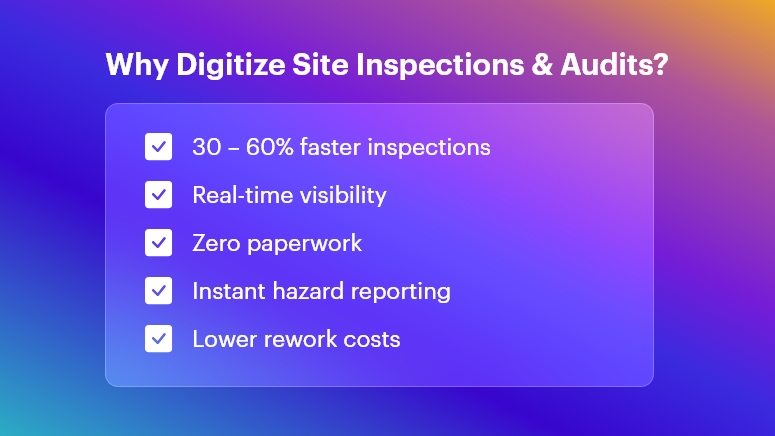
Why Digitize Site Inspections & Audits

Faster Execution with Digital Checklists & Mobile Tools

Digital inspection software allows field engineers to:

  • Capture data using dropdowns, photos, voice notes & auto-filled fields
  • Tag assets and materials instantly
  • Close checklists without revisits

On-site personnel can conduct inspections 30–60% faster because:

  • No physical paperwork
  • No repeated data entry
  • Real-time data sync

Outcome: Faster daily progress tracking and fewer bottlenecks in execution.

Real-Time Site Visibility for Office Teams

With cloud-based inspection dashboards:

  • Supervisors see issues as they happen
  • Progress can be evaluated immediately
  • Remote managers can intervene without physically visiting the site

This prevents delays from late reporting, improving decision-making and productivity.

Outcome: Stronger governance over multi-site operations and subcontractor performance.

Improved Data Accuracy & Standardization

Digital tools enforce structured data capture:

  • Mandatory checkpoints ensure complete inspections
  • GPS/time stamps validate authenticity
  • Errors from handwriting or manual transcription are removed

You get clean, consistent, audit-ready data that supports long-term quality control and project documentation.

Outcome: Higher confidence in information used for compliance and billing.

Stronger Safety Compliance & Hazard Mitigation

Construction safety inspections become more powerful with:

  • Photo-supported reports for hazard evidence
  • Risk scoring for priority classification
  • Instant alerts when a critical issue arises
  • Automated assignment of corrective actions

This boosts proactive safety, reducing accident potential and insurance risks.

Outcome: Safer job sites and better regulatory compliance (OSHA, local codes, etc.).

Centralized Record-Keeping & Accountability

All inspections are stored in a single digital repository:

  • Historical trends for recurring issues
  • Maintenance and repair documentation
  • Instant access during certifications, audits, legal checks

Even if staff changes, the data remains traceable and verifiable.

Outcome: Zero lost documents and complete project lifecycle transparency.

Automated Reporting & Data Analytics

Digital platforms automatically generate:

  • Safety audit summaries
  • Quality defect reports
  • NCR logs with photographic proof
  • Performance dashboards

Analytics help reveal:

Outcome: Better continuous improvement decisions with minimal manual effort.

Stronger Compliance with Standards & Client Requirements

Construction projects must comply with:

  • Safety protocols
  • Building codes
  • Environmental standards
  • Client specifications
  • QA/QC procedures

Digital audits enforce zero skipped checkpoints and automatically maintain compliance documentation.

Outcome: Lower risk of penalties, rework costs, and project delays.

Offline Working for Remote & High-Risk Sites

Tunnel works, rural projects, and high-rise floors often lack stable connectivity.

Digital apps allow:

  • Offline inspections
  • Auto-sync when connected
  • Seamless work continuation

Outcome: Inspections are never delayed due to network limitations.

Integration Across Project Management & Operations

Data can connect with:

  • Project schedules
  • Procurement and inventory systems
  • Asset and equipment management
  • Safety & risk management tools

Example: A failed quality check can immediately trigger a rework task or hold supplier billing.

Outcome: Smooth coordination between field execution and office control systems.

Reduced Costs, Waste & Rework

Digitalization reduces:

  • Paper/printing storage costs
  • Site revisits for missing data
  • Rework from miscommunication
  • Penalties from compliance failures

Plus, recording defects early prevents escalating repair costs.

Outcome: Maximum resource utilization and higher project profitability.

Bonus Benefit: Eco-Friendly Construction Operations

By reducing paper consumption and printing waste:

  • Projects become more sustainable
  • Support for ESG and environmental goals

This is increasingly important for green certifications and stakeholder expectations.

Conclusion

Digitizing site inspections and audits enables construction companies to:

  • Improve safety
  • Ensure quality
  • Reduce compliance risks
  • Deliver projects faster
  • Maintain full operational visibility

It’s not just a technology upgrade — it’s a competitive advantage in an increasingly complex construction environment.

The future of construction inspections is digital, automated, and intelligently connected. Organizations that adopt this transformation now will lead the industry tomorrow.

FAQs

  • What are digital site inspections in construction?

Digital site inspections involve using mobile apps, cloud platforms, and digital forms to capture, store, and analyze inspection data instead of relying on paper-based checklists and manual reporting.

  • How do digital audits improve construction safety compliance?

They provide real-time hazard reporting, automated corrective actions, detailed traceability, and validation features like GPS, photos, and timestamps, helping ensure every safety protocol is followed.

  • What technologies are used for digital site inspections?

Common technologies include mobile inspection apps, cloud data management, QR/NFC tagging, IoT sensors, automated workflows, and integrated dashboards for analytics.

  • Can digital inspection tools work offline on remote job sites?

Yes. Most digital inspection apps allow offline data capture and automatically sync information to the cloud once connectivity is restored.

  • How do digital inspections reduce project delays?

They enable faster reporting, instant approvals, and real-time communication between field and office teams, preventing delays caused by paperwork, errors, or lost documentation.

  • Are digital inspection records accepted for compliance and audits?

Absolutely. Digital records provide better authenticity, traceability, and secure archiving, making them more reliable for regulatory audits and certifications.

  • Can digital inspections track subcontractor performance?

Yes. Analytics can highlight recurring defects, delays, and compliance issues by subcontractors, enabling better quality control and accountability.

  • How do digital audits help reduce rework costs?

Early defect detection, automated alerts, and complete documentation help prevent escalation, reducing costly rework and saving time and materials.

  • What industries besides construction benefit from digitized inspections?

Manufacturing, oil & gas, infrastructure, utilities, mining, facility management, and healthcare also benefit from improved safety, compliance, and operational efficiency.

  • Is it expensive to implement digital inspection tools?

Costs vary by scale, but organizations typically see high ROI through reduced paperwork, faster execution, fewer safety incidents, and better quality control — leading to major long-term savings.

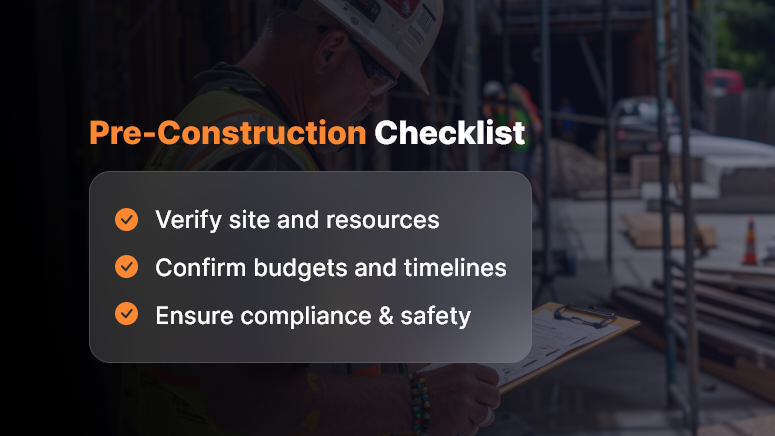
The Ultimate Checklist Before Starting Any Construction Project

Starting a construction project is thrilling — but without a clear construction project checklist, it can quickly turn chaotic. Before the foundation is poured, every plan, permit, and precaution must be in place. A well-designed checklist ensures that your project stays on budget, meets deadlines, and complies with all relevant regulations.

Let’s explore the ultimate pre-construction checklist you should complete before starting any construction project.

Pre-Construction Checklist

1. Pre-Planning and Feasibility

Good preparation builds great projects.

  • Define project objectives: Clarify if the goal is residential, commercial, or industrial.
  • Conduct feasibility studies: to assess the technical, environmental, and financial aspects.
  • Set budget and funding: Confirm total costs, cash flow, and backup financing.
  • Identify stakeholders: Include investors, contractors, engineers, and government bodies.
  • Survey the site: Perform soil tests, topographic mapping, and geotechnical investigations.

Strong feasibility planning ensures the entire construction project checklist starts on solid ground.

2. Legal and Regulatory Compliance

Ignoring compliance can halt progress instantly.

  • Verify land ownership: Ensure titles and deeds are authentic and dispute-free.
  • Obtain building permits: Get all local, zoning, and environmental clearances.
  • Follow municipal codes: Meet fire safety, labor, and pollution standards.
  • Secure insurance: Include liability, builder’s risk, and workers compensation.

This section of your pre-construction checklist guarantees legality and accountability.

3. Design and Engineering

Design is the bridge between planning and execution.

  • Finalize architectural design: Align with the client’s vision and local regulations.
  • Validate structural safety: Review wind load, seismic resistance, and material standards.
  • Coordinate MEP systems: Integrate mechanical, electrical, and plumbing seamlessly.
  • Embrace sustainability: Add green materials and energy-efficient layouts.
  • Conduct value engineering: Balance quality with cost-effectiveness.

With this, your construction planning checklist becomes both smart and sustainable.

4. Contracts and Procurement

Before construction starts, lock in the essentials.

  • Choose qualified contractors: Review licenses, portfolios, and references.
  • Define the scope of work: Avoid vague deliverables and cost disputes.
  • Run fair bidding processes: Maintain transparency in selection.
  • Plan procurement: Identify long-lead items and verify supplier reliability.
  • Fix payment schedules: Link payments to milestones and inspections.

Transparent contracts keep your construction checklist legally and financially secure.

5. Project Management and Scheduling

Timing is everything in construction.

  • Create a Work Breakdown Structure (WBS): Divide work into manageable sections.
  • Build a Gantt chart: Track progress visually across timelines.
  • Apply the Critical Path Method (CPM): Focus on activities affecting delivery time.
  • Allocate resources smartly: Assign the workforce and machinery efficiently.
  • Plan risk management: Prepare for weather delays or material shortages.

A well-planned schedule transforms your construction project checklist into a live project control tool.

6. Health, Safety, and Environment (HSE)

Safety ensures productivity.

  • Develop a site safety plan: Include PPE usage, emergency drills, and audits.
  • Identify hazards: Assess risks from excavation, heights, or chemicals.
  • Manage waste effectively: Segregate and recycle construction debris.
  • Protect the environment: Control noise, dust, and runoff.
  • Train all workers: Provide first-aid, fire safety, and machinery handling sessions.

A complete construction safety checklist reduces incidents and improves team morale.

7. Technology and Documentation

Digitization drives modern construction success.

  • Use digital project tools: Manage approvals, drawings, and reports online.
  • Implement paperless workflows: Store all files securely in the cloud.
  • Adopt BIM (Building Information Modeling): Detect design clashes early.
  • Set communication protocols: Ensure transparent reporting and follow-ups.
  • Centralize document control: Store contracts, permits, and inspection records efficiently.

This step ensures your construction documentation checklist stays organized and audit-ready.

8. Financial Controls

Financial discipline keeps projects healthy.

  • Prepare detailed cost plans: Include labor, materials, and overheads.
  • Forecast cash flow: Align payment cycles with project stages.
  • Ensure tax compliance: Review GST, VAT, and statutory rules.
  • Maintain contingency reserves: Allocate at least 5–10% for emergencies.
  • Conduct monthly audits: Track financial performance consistently.

Strong financial management fortifies your construction project checklist from the ground up.

9. Stakeholder Communication

Collaboration drives clarity.

  • Host a kickoff meeting: Align everyone on scope, schedule, and deliverables.
  • Define accountability: Assign clear roles to each stakeholder.
  • Maintain reporting cadence: Provide weekly and monthly progress updates.
  • Set dispute resolution systems: Define mediation or arbitration processes.
  • Encourage transparency: Keep communication open and factual.

Effective communication ensures your construction project planning checklist remains collaborative and efficient.

10. Final Pre-Construction Checklist

Before breaking ground, review everything once more:

  • All approvals and permits are in place
  • Budget and contingencies are verified
  • Contracts are signed and sealed
  • Site is cleared and secure
  • HSE plans are ready and trained
  • Stakeholders approved all designs

You’re now ready to begin your project with confidence and compliance.

Conclusion

Every great structure starts with an even greater plan. A thorough construction project checklist ensures your project remains compliant, efficient, and safe.

By following this guide, you’ll minimize risk, maximize productivity, and deliver successful outcomes — from the first blueprint to final handover.

Frequently Asked Questions (FAQs)

1. What is a Construction Project Checklist?

A construction project checklist is a structured document that outlines all essential steps, approvals, and verifications needed before starting construction. It ensures compliance, safety, and readiness.

2. Why is a Pre-Construction Checklist Important?

It prevents costly mistakes by ensuring you’ve addressed every aspect — from land approvals to contractor selection and safety compliance — before the project begins.

3. What Should Be Included in a Construction Checklist?

Key items include site verification, budgeting, permits, design approvals, contracts, safety measures, and financial controls.

4. How Do You Prepare a Construction Project Checklist?

Start by listing all stages — planning, legal, design, safety, and procurement — and assign responsible teams for each. Review it regularly before execution.

5. How Does a Checklist Help in Project Management?

It streamlines communication, tracks progress, and ensures accountability across teams, reducing delays and rework.

6. Who Uses a Construction Project Checklist?

Project managers, contractors, engineers, architects, and site supervisors rely on it to align work and maintain compliance.

7. How Can Technology Simplify Construction Planning?

Digital project management tools centralize tasks, automate documentation, and track progress in real time, ensuring transparency and accuracy.

8. How Do I Ensure Legal Compliance Before Construction?

Verify land titles, acquire all permits, and comply with fire, environmental, and labor laws as part of your pre-construction checklist.

9. What Are Common Risks in Pre-Construction Planning?

Inadequate feasibility studies, missing permits, and poor budgeting are major risks that can delay projects or increase costs.

10. Can Small Construction Firms Use This Checklist?

Absolutely. Whether small or large, every firm benefits from a detailed construction project checklist that ensures control, compliance, and confidence.

Compliance Audits in Construction: What You Need to Prepare

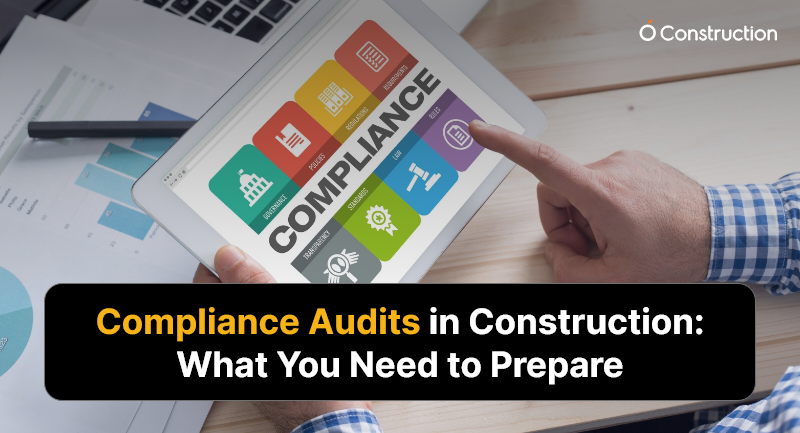
Imagine pouring months into a construction project — only to be halted mid-progress due to missing paperwork or non-compliance with regulatory norms. It’s more common than you think. Compliance audits in construction are no longer rare events — they’re routine checks that could define your project’s timeline and profitability. Audits cover everything from worker safety to environmental regulations, and failing one can lead to costly penalties or even shutdowns.

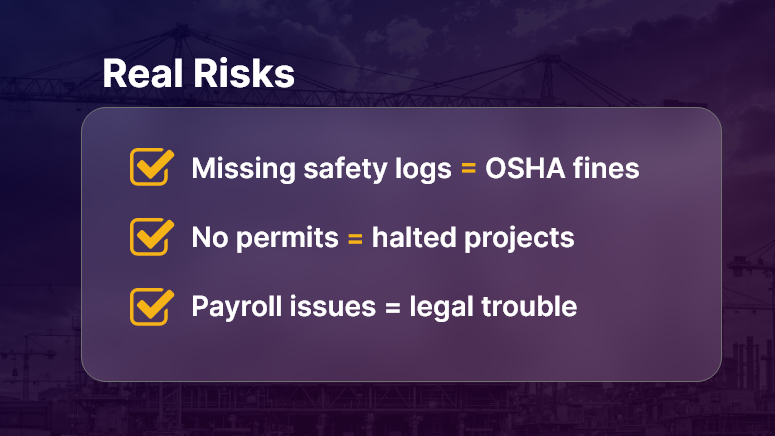
It happens more than you’d think. In fact, OSHA issued penalties worth over $146 million in 2023 alone for workplace safety violations.

In this blog, you’ll learn:

  • What compliance audits in construction involve
  • Why they matter now more than ever
  • How you can prepare (and pass) with confidence

Let’s help you get audit-ready, with smart planning and the right tools.

Real Risks

Why Compliance Audits in Construction Matter?

Construction is a high-risk, highly regulated industry. Every stakeholder — contractors, owners, subcontractors, and suppliers — must comply with safety, labor, environmental, and building codes. Audits ensure these rules are followed.

Why Should Construction Companies Care?

  • Reputation at Stake: Non-compliance can lead to fines, lawsuits, and damage to your brand.
  • Delays Hurt the Bottom Line: Projects that stall due to audit failures lose money fast.
  • Liability Protection: Audits verify that your processes protect workers, the public, and your company from harm.

Who Benefits Most?

  • General contractors gain better project visibility and control.
  • Compliance officers avoid scrambling last-minute for documents.
  • Project managers keep timelines on track by anticipating risks.

Real-World Scenarios

  • Workplace Safety Check: An OSHA inspector visits your site after a reported incident. Missing safety logs or expired PPE certifications? Expect fines.
  • Environmental Review: During a road expansion project, missing impact assessments delay permits.
  • Labor Compliance: A government audit reveals underpaid workers and a lack of labor law posters — your entire payroll could be under scrutiny.

Compliance audits in construction aren’t optional — they’re operational necessities.

How to Prepare for Construction Compliance Audits?

Preparation is your best defense. Here’s a deep dive into actionable strategies and industry best practices to keep your project audit-ready.

1. Build a Digital Documentation System

  • Store permits, drawings, safety records, and inspection reports in one secure, searchable system.
  • Make documents accessible to authorized users anytime, anywhere.
  • Tools like OConstruction help digitize and organize records by project or site.

2. Conduct Internal Pre-Audits Regularly

  • Perform routine checks using audit checklists before external auditors arrive.
  • Identify gaps in safety, labor, or environmental compliance.
  • Keep track of action items and close the loop before issues escalate.

3. Maintain Accurate Safety Records

  • Update safety training logs and toolbox talk records on a weekly basis.
  • Track incident reports, near misses, and corrective actions in real time.
  • Use mobile access for foremen or supervisors to submit reports directly from the site.

4. Stay on Top of Regulatory Changes

  • Compliance standards change often — especially labor and environmental ones.
  • Assign a compliance lead to monitor updates and apply changes proactively.
  • Subscribe to regulatory bulletins (like OSHA News).

5. Assign Clear Roles and Accountability

  • Identify who is responsible for compliance on each project.
  • Define escalation workflows — what happens when a non-compliance is spotted?
  • Use a project dashboard to show compliance status in real time.

6. Audit Trail Management

  • Ensure every action — approvals, sign-offs, safety inspections — is timestamped and traceable.
  • Automate notifications and reminders for expiring documents or upcoming inspections.

7. Standardize Procedures Across Sites

  • Use repeatable checklists and templates to standardize workflows.
  • Train site leads and supervisors in audit preparation practices.
  • Store audit SOPs centrally for easy reference.

Use Case: How One Company Passed a Surprise Audit

For example, MetroBuild Infra, a mid-sized infrastructure firm, used OConstruction’s audit-ready checklist and digital safety logs to pass a surprise regulatory audit during a highway overpass project.

  • Before: Scattered files, missed deadlines, last-minute scrambling.
  • After: Centralized records, proactive alerts, 98% compliance audit score.
  • Result: Avoided shutdown, improved trust with regulators, and kept the project on schedule.

Here’s how: Their compliance officer used OConstruction to run weekly internal audits, submit safety documentation through mobile devices, and store environmental certificates in a centralized document vault—available instantly during the inspection.

Key Takeaways

1. Compliance audits in construction are not optional — they’re critical.
They affect safety, finances, timelines, and your ability to win future projects.

2. Preparation is not just about documents — it’s about systems.
When you standardize procedures, assign roles, and go digital, you’re ready anytime.

3. Digital tools simplify compliance.
OConstruction offers real-time dashboards, document management, mobile reporting, and internal audit templates to keep your team compliant without chaos.

FAQs

Q1. What is a compliance audit in construction?
A structured review of whether your project meets safety, labor, environmental, and building regulations.

Q2. How often do audits occur?
Compliance audits can be scheduled or surprise visits—OSHA, EPA, or local authorities can check any time.

Q3. What documents should I keep ready?
Permits, safety logs, payroll records, training certificates, and environmental clearances.

Q4. What happens if you fail an audit?
Expect penalties, work stoppages, reputational damage, and in severe cases, project shutdown.

Q5. How can digital tools help with compliance?
Platforms like OConstruction provide document vaults, dashboards, mobile reporting, and pre-built audit checklists—making you always audit-ready.

Q6. Who is responsible for compliance on a project?
Typically, compliance officers or safety managers, but accountability should be shared across contractors, subcontractors, and project managers.

Benefits of Using a Centralized Document Management System

Still juggling documents across emails, desktops, and cloud drives? You’re not alone. In today’s construction industry, managing massive volumes of drawings, RFIs, contracts, and compliance paperwork can be a logistical nightmare. A centralized document management system is no longer a luxury — it’s a necessity.

It brings structure to the chaos, making sure teams access the right documents at the right time, from anywhere. In this blog, we’ll break down what it is, why it matters, and how it’s changing the game for modern construction firms.

Let’s dive in and discover how better document control leads to better project outcomes.

Implementation flow

Business Relevance: Why Construction Companies Must Rethink Document Management

In the construction world, delays and cost overruns often trace back to one simple culprit — mismanaged documents. Missing blueprints, outdated versions, compliance gaps, and scattered approvals can derail even the best-laid plans. A centralized document management system eliminates these issues by offering:

  • Single source of truth – Everyone refers to the most updated files.
  • Remote access – Site engineers and project managers can retrieve documents anytime, anywhere.
  • Audit trails – Automatic logs improve accountability and compliance.

Use Cases:

  • Project Site Coordination: Site teams instantly access the latest structural drawings — no more waiting for printouts.
  • Regulatory Compliance: Keep all certifications and safety documentation in one place for easy audits.
  • Subcontractor Communication: Share and track submittals and RFIs with external vendors in real time.

In short, it’s not just about storage — it’s about eliminating chaos and boosting control across your operations.

Actionable Best Practices for Centralized Document Management

A smart document management system can transform how you build. Here’s how to make the most of it:

Do’s

  • Organize by project, not file type: Keep all documents (plans, permits, contracts) grouped by job to speed up search and access.
  • Use version control: Always know who edited what and when, with automatic version tracking.
  • Assign access permissions: Not everyone needs everything. Define roles for viewing, editing, and sharing.
  • Tag documents: Use tags like “RFI,” “approved,” or “under review” for easy filtering.
  • Backup regularly: Choose a system with automated cloud backup to prevent data loss.

Don’ts

  • Avoid storing files on local desktops – increases risk of loss and inconsistency.
  • Don’t skip training – Make sure your team knows how to use the system to its full potential.
  • Don’t allow unrestricted access – Security is key; not every role should edit sensitive documents.

Quick Wins

  • Digitize legacy paper files for faster access and better preservation.
  • Set up document templates for standard processes like submittals or inspections.
  • Enable mobile access so teams in the field aren’t left out.

Step-by-Step Implementation Framework

  • Audit your current document flow – Identify where delays or gaps occur.
  • Select a construction-specific system – Choose tools built for field documentation, drawing markups, and compliance.
  • Migrate critical files first – Start with active projects to get quick wins.
  • Define access roles – Ensure project managers, engineers, clients, and subcontractors have proper permissions.
  • Train your team – Run short onboarding sessions or tutorials.
  • Monitor usage – Use built-in analytics to track file views, downloads, and document aging.

By following this framework, you unlock the full potential of a centralized document system.

Use Case

For example, RedBeam Infra, a mid-sized construction firm, used a centralized document management system to streamline site coordination across 5 locations.

Before, drawings were shared via email and WhatsApp, leading to frequent errors and rework. After implementation:

  • RFIs were resolved 40% faster
  • Rework due to outdated files dropped by 60%
  • Project delivery time improved by 2 weeks

Here’s how: the firm used automated file versioning, access control, and real-time notifications, allowing better collaboration across all teams.

Key Takeaways

A centralized document management system isn’t just digital storage. It’s an operational upgrade for construction firms.

Here’s why it matters:

  • It reduces project delays caused by document mismanagement.
  • It improves compliance by keeping all safety and regulatory documents organized.
  • It ensures that everyone — from office to job site — works with the latest version.

Remember:

  • Start small with critical documents.
  • Train your team early.
  • Monitor usage and scale as needed.

Construction doesn’t wait — and neither should your documents.

Category: Construction Academy

Subcategory: Budgeting and Planning

Subcategory: Construction Phase

Subcategory: Design Coordination

Subcategory: Estimation Techniques

Subcategory: Initiation and Feasibility

Subcategory: Introduction

Subcategory: Personal Management

Subcategory: Project Close-Out

Subcategory: Project Scheduling

Subcategory: Project Teams

Subcategory: Proposal Management

Subcategory: Total Quality Management

Subcategory: Tracking and Control

Subcategory: Work Breakdown

Category: Help Desk

Subcategory: Client

Subcategory: Construction 101

Subcategory: Contractor Management

Subcategory: Expense

Subcategory: Finance Budget

Subcategory: Inventory Management

Subcategory: My Approvals

Subcategory: Site Management

Subcategory: Vendor Management