Pre-Task Planning (PTP) Best Practices to Reduce Incidents

Construction remains one of the most high-risk industries globally, accounting for a significant share of workplace injuries, fatalities, and costly project delays. Despite advances in equipment and regulations, most construction incidents still occur due to poor planning, unclear task execution, and inadequate hazard identification.

This is precisely where Pre-Task Planning (PTP) in construction becomes indispensable.

Pre-Task Planning is a structured process that ensures every task is clearly understood, risks are identified in advance, controls are defined, and responsibilities are assigned before work begins. When implemented consistently, PTP transforms safety from a reactive activity into a proactive discipline.

In this blog, we explore best practices for Pre-Task Planning (PTP) to reduce incidents, improve workforce accountability, and strengthen overall construction risk management — and how modern platforms like OConstruction make PTP scalable, auditable, and effective across projects.
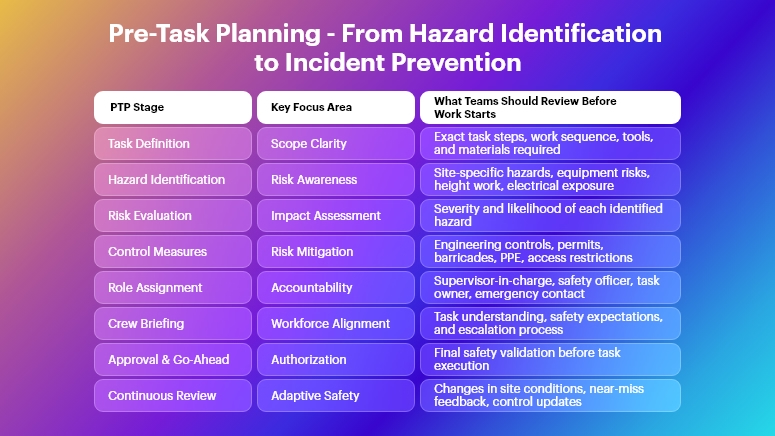
Pre-Task Planning - From Hazard Identification to Incident Prevention

What Is Pre-Task Planning (PTP) in Construction?

Pre-Task Planning (PTP) is a systematic approach where supervisors and crews evaluate a task before execution to determine:

  • What work will be performed
  • What hazards may exist
  • What controls are required
  • Who is responsible for each action

Unlike generic safety talks, PTP is task-specific, site-specific, and time-bound, ensuring that safety planning reflects real-world conditions.

When aligned with digital construction project management software, PTP becomes measurable, repeatable, and enforceable, not just a paper exercise.

Why Pre-Task Planning Reduces Construction Incidents

Effective Pre-Task Planning in construction directly impacts safety performance by:

  • Eliminating ambiguity before work begins
  • Identifying hazards early, not after incidents occur
  • Improving worker awareness and engagement
  • Reducing rework, downtime, and emergency stoppages
  • Ensuring regulatory compliance and audit readiness

Most importantly, PTP ensures that safety decisions are made before exposure, when risks can still be controlled.

Pre-Task Planning (PTP) Best Practices to Reduce Incidents

1. Break Tasks into Clear, Actionable Steps

One of the most common PTP failures is planning at a high level instead of at the task level.

Best practice requires breaking work down into specific steps, such as:

  • Equipment mobilization
  • Material handling
  • Installation activities
  • Testing or commissioning

Each step should be reviewed individually for hazards. This approach significantly improves construction safety planning by preventing overlooked risks hidden within complex tasks.

2. Identify Hazards Specific to the Jobsite Conditions

Hazards are never static. Weather, access routes, manpower, and nearby activities can change daily.

Effective Pre-Task Planning (PTP) in construction must consider:

  • Site congestion and overlapping trades
  • Equipment movement and lifting zones
  • Electrical, height, and confined space risks
  • Environmental conditions such as rain, heat, or poor visibility

By identifying real-time hazards, teams reduce the likelihood of unexpected incidents.

3. Define Control Measures Before Work Starts

Hazard identification alone does not reduce incidents. The value of Pre-Task Planning lies in defining practical control measures, such as:

  • Engineering controls (guardrails, barriers, isolation)
  • Administrative controls (permits, sequencing, access control)
  • PPE requirements aligned with the task

Documenting controls ensures that safety actions are implemented, not assumed.

4. Assign Clear Roles and Responsibilities

Many construction incidents occur because safety responsibilities are unclear or assumed.

A strong PTP process explicitly assigns:

  • Who is responsible for safety supervision
  • Who inspects tools and equipment
  • Who authorizes task execution
  • Who responds if conditions change

Using a construction project management platform like OConstruction, these responsibilities can be digitally tracked and audited.

5. Conduct Daily Pre-Task Meetings with Crew Involvement

Pre-Task Planning should never be a one-way instruction.

Best practices include:

  • Conducting daily PTP meetings before work begins
  • Encouraging workers to voice concerns
  • Verifying understanding, not just attendance

When workers actively participate, PTP becomes a shared responsibility, leading to higher compliance and safer behavior.

6. Use Digital PTP Checklists Instead of Paper Forms

Paper-based PTP forms often fail due to:

  • Incomplete data
  • Poor traceability
  • No real-time visibility for management

Digital PTP tools within construction project management software allow teams to:

This significantly strengthens construction risk management while reducing administrative overhead.

7. Monitor, Review, and Update PTP Continuously

Construction environments evolve rapidly. Therefore, Pre-Task Planning must be dynamic, not static.

Best practice includes:

  • Revisiting PTP when task scope changes
  • Updating controls if hazards increase
  • Recording near-misses and lessons learned

Continuous improvement ensures that PTP remains relevant and effective throughout the project lifecycle.

How OConstruction Enables Effective Pre-Task Planning

OConstruction, a modern construction project management software, enables organizations to operationalize Pre-Task Planning (PTP) in construction by providing:

  • Digital PTP workflows and checklists
  • Centralized task-level risk documentation
  • Real-time visibility for site and safety managers
  • Integration with schedules, resources, and site activities
  • Compliance-ready safety records

By embedding PTP directly into daily construction workflows, OConstruction helps teams reduce incidents, improve accountability, and build a culture of proactive safety.

Key Benefits of Strong Pre-Task Planning

When implemented correctly, Pre-Task Planning best practices deliver measurable outcomes:

  • Reduced accidents and near-misses
  • Lower project delays and stoppages
  • Improved worker confidence and morale
  • Better regulatory compliance
  • Enhanced project predictability and cost control

Safety planning, when digitized and standardized, becomes a competitive advantage, not just a compliance requirement.

Conclusion

In today’s high-risk construction environment, Pre-Task Planning (PTP) is no longer optional. It is a foundational practice that protects workers, safeguards timelines, and preserves project profitability.

By adopting proven PTP best practices and leveraging digital platforms like OConstruction, construction organizations can move beyond reactive safety management and build a predictive, disciplined, and incident-resistant jobsite culture.

The safest projects are not accident-free by chance — they are planned that way before the first task begins.

Frequently Asked Questions (FAQs)

1. What is PTP in construction?

Pre-Task Planning is a structured process where construction teams identify task-specific hazards, controls, and responsibilities before starting work to reduce incidents.

2. How does Pre-Task Planning reduce construction incidents?

PTP reduces incidents by identifying risks early, defining control measures in advance, and ensuring all workers understand the task and associated hazards.

3. Is PTP mandatory for construction projects?

While regulations vary, many safety standards and clients require documented task-level safety planning, making PTP a best practice across projects.

4. How often should PTP be conducted?

PTP should be conducted daily or before any new task, and updated whenever site conditions or task scope changes.

5. Can Pre-Task Planning be digitized?

Yes. Using construction project management software like OConstruction, PTP can be digitized for better consistency, traceability, and compliance.

6. What is the difference between PTP and toolbox talks?

Toolbox talks are general safety discussions, while PTP is task-specific, hazard-focused, and action-oriented.
Top 10 Must-Have Features in a Construction Management Solution

Construction projects today are under more pressure than ever. According to leading industry studies, over 60% of projects run over budget, while nearly 70% experience schedule delays due to miscommunication, inaccurate DPRs, scattered data, and manual updates. These issues don’t just slow work down, they directly impact profitability, cash flow, and client trust. Therefore, choosing the right construction management solution has become a mission-critical decision for project managers, contractors, EPC companies, QS teams, and site engineers.

This blog outlines the Top 10 must-have features you should expect from any modern construction management solution. You will learn how purpose-built tools streamline BOQ management, automate DPR workflows, improve field-to-office visibility, and help teams execute projects with fewer errors, lower costs, and better accountability.

Whether you handle residential, commercial, highway, infrastructure, or industrial construction, this guide explains how a construction management solution elevates your operations and sets your projects up for predictable success.

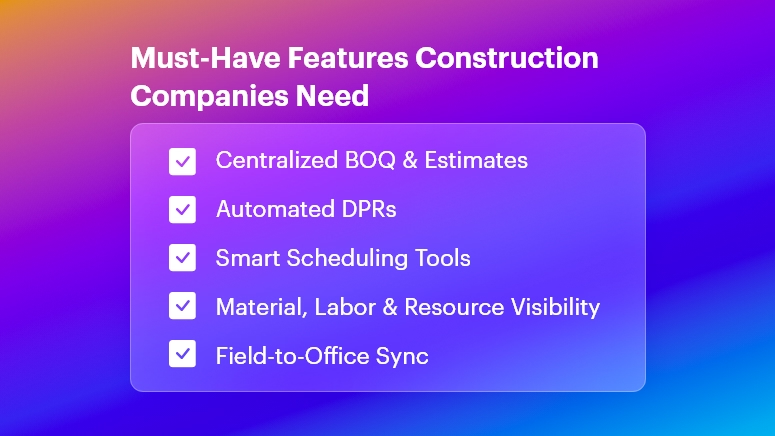
Must-Have Features Construction Companies Need

Why Construction Teams Need a Powerful Construction Management Solution

Construction is complex, fast-changing, and highly interdependent. One small delay — such as a late DPR, missing material, or inaccurate BOQ — can trigger cascading issues across the entire schedule. This is exactly why a robust construction management solution is no longer optional.

Growing Business Pressures in Construction

Modern construction companies face significant operational challenges:

  • Cost overruns caused by inaccurate estimates, fluctuating material prices, and untracked expenses, which lead to escalated budgets and reduced profit margins.
  • Material wastage due to poor tracking and lack of real-time site visibility, resulting in unused inventory, theft, pilferage, or emergency purchases at higher rates.
  • Rework caused by miscommunication or outdated drawings, consuming 10–15% of project costs and unnecessary labor hours.
  • Scattered data stored in Excel sheets, WhatsApp messages, emails, and paper diaries, making it impossible to maintain a single source of truth.
  • Delayed DPR submissions, which leads to inaccurate reporting, billing delays, and poor decision-making.
  • Disconnected tools that fail to sync field activities with office teams, slowing approvals, billing, purchasing, and planning cycles.

These problems occur across all construction segments:

  • Real estate developers struggle with multi-site coordination and contractor monitoring.
  • Infrastructure and road projects face challenges with heavy equipment tracking, material consumption, and schedule slippages.
  • Residential and commercial builders manage high-velocity tasks and subcontractor timelines.
  • EPC companies deal with large-scale BOQs, lengthy approval cycles, and risk of data duplication.

Why Traditional Methods Fail

Manual workflows cannot keep up with the speed of modern construction:

  • Excel sheets break easily, lack version control, and create data silos, making it difficult for teams to stay aligned.
  • WhatsApp messages are unstructured, leading to miscommunication, lost instructions, and zero historical records.
  • Paper-based logs and manual DPRs are prone to errors and delays.
  • Non-integrated tools create blind spots, making cost control and project tracking inefficient.

A modern construction management solution solves these challenges through real-time syncing, digital documentation, automated tracking, and structured workflows. This ensures every stakeholder — from site engineers to project directors — operates with clarity, speed, and accuracy.

Top 10 Must-Have Features in a Construction Management Solution

1. BOQ and Estimate Management

A strong construction management solution must include dynamic BOQ and estimate capabilities.

  • Centralizes all quantities, materials, activities, and rate contracts, ensuring every team member works from a single, version-controlled BOQ.
  • Automates calculations for material requirements, estimated costs, and work packages, reducing manual errors and improving pricing accuracy.
  • Supports multi-level BOQs for EPC, infrastructure, and large commercial projects, enabling granular control over item-level budgeting.

2. DPR Automation and Daily Site Reporting

DPR delays cause downstream issues across billing, planning, and procurement.

  • Automated DPR templates help site engineers submit daily progress in minutes, capturing work done, labor, machinery, and material used.
  • Real-time visibility helps project managers track progress against planned schedules, reducing reporting gaps and manipulation.
  • Photo and document attachments allow accurate verification, improving accountability and reducing disputes.

3. Project Planning and Schedule Tracking

Efficient planning is essential for controlling time, cost, and quality.

  • Built-in Gantt charts and activity sequencing help teams visualize dependencies and set realistic timelines, especially for multi-contractor projects.
  • Real-time schedule tracking highlights delays before they escalate, allowing proactive corrective action.
  • Baseline vs. actual tracking improves forecasting, ensuring leadership always knows where projects stand.

4. Resource, Labor, and Workforce Management

Labor inefficiency is one of the biggest cost drivers in construction.

  • Track labor attendance, productivity, and skill allocation, ensuring optimal workforce utilization across projects.
  • Prevent overstaffing or understaffing, which often leads to productivity loss or unnecessary cost leakage.
  • Generate labor productivity analytics, helping teams benchmark performance across activities and contractors.

5. Material Tracking and Inventory Management

Untracked material is a financial risk.

  • Monitor material requests, issues, transfers, and consumption in real time, eliminating wastage and pilferage.
  • Set reorder levels and automate purchase alerts, ensuring materials arrive before work stops.
  • Track vendor deliveries against PO commitments, reducing discrepancies and billing disputes.

6. Purchase, Vendor, and Procurement Management

Procurement inefficiencies can derail timelines and budgets.

  • Digitize purchase requisitions, approvals, vendor quotes, and POs, enabling faster purchasing cycles.
  • Compare vendor quotations side-by-side, ensuring cost-efficient decisions.
  • Maintain vendor performance metrics, helping businesses negotiate better contracts and avoid unreliable suppliers.

7. Task, Workflow, and Issue Management

Execution requires strong coordination across teams and subcontractors.

  • Assign tasks with deadlines, responsibilities, and dependencies, ensuring daily work clarity.
  • Automated reminders keep everyone aligned, reducing delays due to follow-up gaps.
  • Issue logging helps identify defects, delays, safety observations, and roadblocks, enabling timely resolution.

8. Cost Control and Budget Monitoring

Cost overruns impact margins and client satisfaction.

  • Real-time cost dashboards compare planned budgets with actual spending, helping teams detect leakage early.
  • Track costs across labor, machinery, materials, subcontractors, and overheads, creating transparency and accountability.
  • Predictive forecasting allows leaders to intervene before overruns escalate, improving profitability.

9. Real-Time Field-to-Office Sync

The biggest communication gaps occur when site updates are delayed.

  • Instant syncing of DPRs, materials, approvals, and tasks, removes silos and eliminates outdated information.
  • Project managers, QS teams, and owners receive real-time updates, enabling faster decisions and fewer misunderstandings.
  • Every stakeholder shares the same dashboard, improving coordination across teams and locations.

10. Multi-Site Visibility and Centralized Reporting

Construction businesses often operate across multiple locations.

  • A unified dashboard helps monitor all projects, contractors, and sites in one place, enhancing operational control.
  • Centralized reporting provides insights on productivity, cost, delays, and resource usage, supporting data-driven decision making.
  • Standardized processes ensure consistency, reducing project-level variability and risk.

Best Practices, Frameworks, and Actionable Tips for Implementing a Construction Management Solution

To maximize the impact of a construction management solution, construction teams must adopt structured workflows. Below are actionable, implementation-ready practices.

1. Streamline BOQ and Estimation Processes

  • Always create multi-level BOQs to break down work into granular activities, helping QS teams price accurately and manage variations smoothly.
  • Standardize rate contracts for materials and activities, reducing budget conflicts during execution.
  • Integrate BOQ with material tracking and procurement, ensuring planned materials match actual consumption.

2. Optimize DPR Workflows

  • Use predefined DPR templates to ensure uniform reporting across sites, reducing inconsistencies and missing information.
  • Encourage daily submission deadlines to avoid backlog and maintain freshness of data.
  • Attach photos, location data, and progress notes, improving transparency for remote managers.

3. Strengthen Planning and Scheduling

  • Always create a project baseline before execution begins, allowing teams to measure deviations accurately.
  • Break schedules into weekly and daily execution goals, making them easier to monitor.
  • Use critical-path analysis to identify activities that directly impact project completion dates.

4. Improve Material Management Strategies

  • Track every material issue and return from the store, ensuring consumption accuracy.
  • Monitor supplier reliability by comparing deliveries against POs, identifying chronic delays.
  • Use reorder alerts to avoid work stoppage due to material shortages.

5. Enhance On-Site Coordination and Communication

  • Always use a centralized digital platform instead of WhatsApp for official instructions, ensuring audit trails.
  • Define SOPs for task assignments, approvals, and inspections, removing ambiguity.
  • Document all delays, issues, and dependencies, allowing managers to intervene effectively.

6. Strengthen Cost Control

  • Create cost centers for labor, materials, equipment, and subcontractors, improving financial visibility.
  • Compare planned vs. actual costs weekly, identifying leakage early.
  • Digitize vendor quotes and purchases to prevent price manipulation or duplication.

7. Prevent Rework and Human Errors

  • Maintain version-controlled drawings and documents, preventing outdated plan usage.
  • Use digital checklists and quality workflows, ensuring consistency across teams.
  • Enable issue logging and resolution tracking, reducing repeat mistakes.

8. Improve Multi-Site Coordination

  • Standardize templates for DPRs, BOQs, and approvals across all sites, ensuring uniformity.
  • Monitor cross-project performance metrics, identifying best practices and inefficiencies.
  • Centralize communication and reporting, especially for leadership and regional managers.

Case Study

For example, a mid-sized infrastructure and commercial construction company, adopted OConstruction’s DPR Automation and BOQ Management features to overcome persistent reporting delays and cost miscalculations. Within 90 days, they achieved measurable improvements.

  • DPR completion time dropped by 40%, enabling faster billing cycles.
  • BOQ accuracy improved significantly due to centralized and version-controlled estimates.
  • Material shortages reduced by 30%, thanks to real-time inventory insights.
  • Project managers gained complete visibility into site progress, labor usage, and procurement activities.
  • Rework incidents dropped due to better documentation and daily photo evidence.

Here’s the transformation: What was once a chaotic, paper-driven workflow became a fast, structured, and predictable process powered by a modern construction management solution.

Key Takeaways & Conclusion

Choosing the right construction management solution can dramatically improve project efficiency, financial control, and field visibility. The top 10 features, from BOQ management to DPR automation and cost control, ensure that teams eliminate errors, reduce rework, and improve coordination across sites.

When construction companies adopt these capabilities, they experience:

  • Better planning and predictable execution
  • Higher labor productivity and reduced wastage
  • Accurate, real-time insights for faster decisions
  • Lower cost leakage and improved margins
  • Seamless field-to-office communication

To stay competitive, now is the ideal time to invest in a modern, reliable construction management solution that prepares your organization for future growth.

FAQs

1. What is a construction management solution and why is it essential?

A construction management solution is an integrated platform that helps teams manage BOQs, DPRs, scheduling, materials, and costs. It eliminates manual errors, improves visibility, and streamlines all site-to-office workflows.

2. How does a construction management solution improve DPR accuracy?

It standardizes DPR formats, automates calculations, enables photo attachments, and syncs updates in real time. This ensures accurate reporting, faster approvals, and better decision-making.

3. Can a construction management solution help reduce project delays?

Yes. With features like schedule tracking, task management, automated alerts, and dependency monitoring, teams identify issues early and prevent delays.

4. How does OConstruction support BOQ management?

OConstruction offers multi-level BOQs, centralized rate management, automated quantity calculations, and real-time tracking, ensuring estimated accuracy and cost control.

5. Is a construction management solution suitable for multi-site companies?

Absolutely. It centralizes reporting, standardizes workflows, and gives leadership a real-time consolidated view of all active projects.

6. How does a construction management solution improve cost control?

It tracks planned vs. actual spending, monitors consumption, prevents pilferage, and offers real-time dashboards for financial visibility.

7. Can small construction companies also benefit from a construction management solution?

Yes. Even small contractors gain efficiency by digitizing DPRs, managing materials better, improving labor productivity, and enhancing transparency.

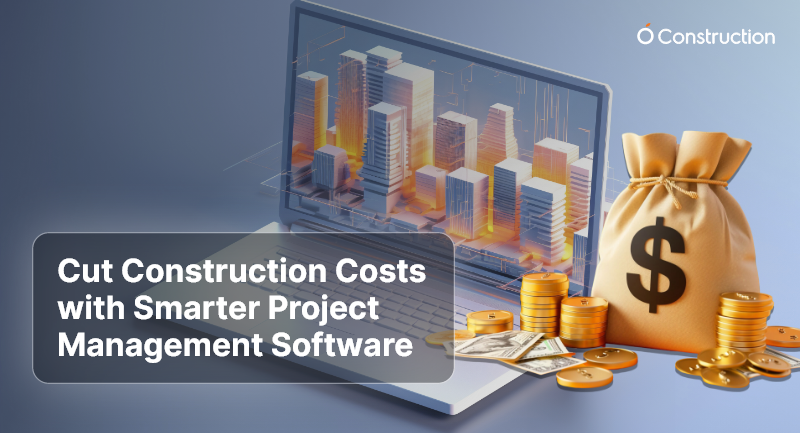
Cut Construction Costs with Smarter Project Management Software

In the construction industry, controlling costs is one of the biggest challenges. Material prices fluctuate, labor overruns happen, and delays on-site can quickly turn into budget disasters. But what if you could reduce these issues with a single tool?

That’s where smart project management software like OConstruction steps in—giving you the visibility, control, and real-time collaboration your construction projects need to stay on time and under budget.

Why Construction Projects Go Over Budget

Before we dive into the solution, let’s look at the most common reasons construction costs spiral out of control:

  • Poor scheduling and miscommunication
  • Inefficient use of labor and equipment
  • Lack of real-time updates on-site
  • Missed deadlines and overtime costs
  • Manual data entry and paperwork delays

All of these are avoidable—with the right tools in place.

How OConstruction Helps You Cut Costs

OConstruction is an all-in-one construction project management software designed specifically to reduce waste, improve accountability, and maximize your project ROI.

Here’s how it helps:

1. Real-Time Budget Tracking

Monitor project costs as they happen. Get instant updates on labor, materials, and subcontractor expenses so you can take immediate action before the budget slips.

2. Smarter Scheduling

Assign tasks, set dependencies, and track milestones all in one place. With automated notifications and calendar views, your team stays aligned-and your timelines stay on track.

3. Field-to-Office Communication

Whether your teams are on-site or in the office, OConstruction keeps everyone connected. Say goodbye to delayed updates or missed approvals that lead to costly errors.

4. Document & Resource Management

No more lost files or outdated spreadsheets. Store drawings, contracts, purchase orders, and daily logs in the cloud-accessible anytime from any device.

5. Subcontractor Coordination

Easily assign and monitor subcontractor tasks, track deliverables, and hold vendors accountable with shared timelines and clear scopes of work.

Real-World Benefits You Can Expect

  • Faster Project Completion
  • Lower Labor Costs
  • Fewer Cost Overruns
  •  Improved Resource Allocation
  • Less Administrative Overhead

Contractors using smart software report savings of up to 20% in overall project costs, simply by improving communication, planning, and tracking.

Start Saving Today with OConstruction.

If you’re still managing construction projects with spreadsheets, whiteboards, and endless WhatsApp groups—it’s time for an upgrade.

OConstruction gives you the tools to run your projects smarter, faster, and more profitably. From the first estimate to final handover, everything stays organized, visible, and efficient.

Start your journey to cost-effective construction today. Visit OConstruction.io

Final Thoughts

Cutting construction costs isn’t just about buying cheaper materials or hiring less labor. It’s about improving how you manage your projects—from planning to execution. With OConstruction, you’re not just saving money—you’re building smarter.

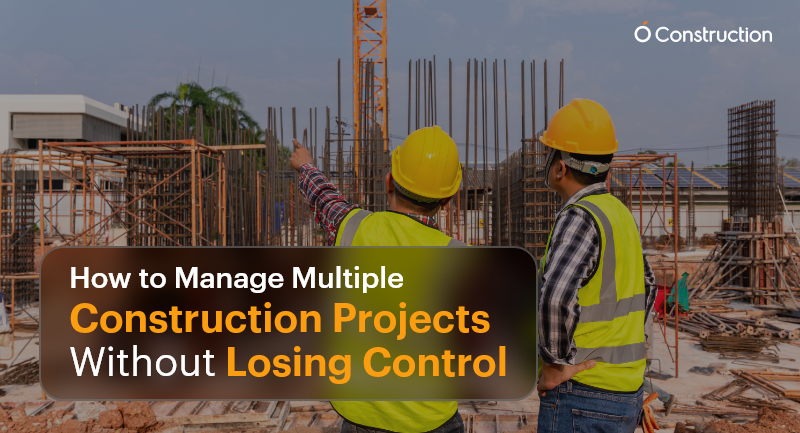
How to Manage Multiple Construction Projects Without Losing Control

Managing a single project is already a challenge — now multiply that by five, ten, or even twenty. According to a McKinsey report, large construction projects take 20% longer to finish than scheduled and are up to 80% over budget. When managing multiple construction sites, teams, and budgets at once, those risks multiply fast.

In today’s fast-paced construction world, staying in control of multiple projects isn’t just about spreadsheets and site visits anymore. It’s about having the right tools, workflows, and visibility to lead efficiently.

In this blog, we’ll walk you through how to master multi-project construction project management, avoid burnout, and use technology to gain real-time visibility — without losing your sanity.

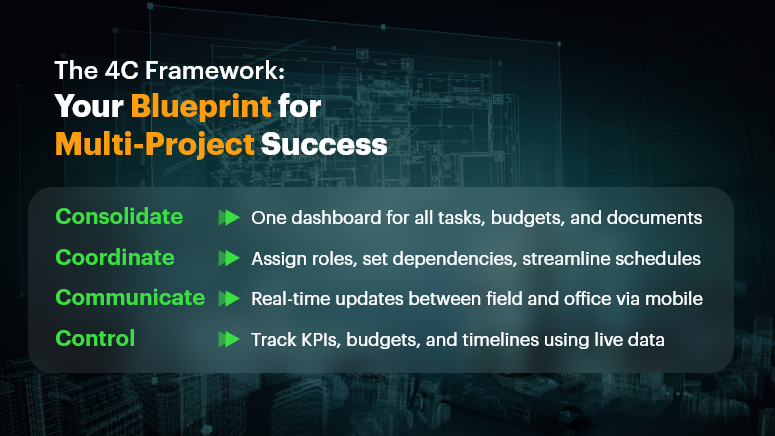
The 4C Framework Your Blueprint for Multi-Project Success

Why Multi-Project Management Matters in Construction

Managing multiple construction projects isn’t just a bigger workload — it’s a completely different operational challenge.

The Business Case

When running multiple sites simultaneously, you’re not just managing tasks — you’re managing people, materials, permits, vendors, inspections, and client expectations across geographies. One missed update or delayed decision can create a domino effect across every other project.

That’s why modern construction businesses — especially small and mid-sized firms — must rethink how they approach construction project management. The days of tracking everything in email threads and whiteboards are over.

Real-World Scenarios

  • A general contractor managing 12 residential sites loses track of which vendor was paid and who’s scheduled next on Site 7.
  • An EPC firm running industrial projects across regions struggles to align budgets with live progress reports from the field.
  • A design-build company tries to juggle stakeholder feedback on multiple projects but ends up reworking key deliverables due to version misalignment.

These aren’t just admin headaches. They impact your bottom line, brand reputation, and employee morale.

The solution? Centralized, real-time construction project management software that gives you clarity and control across everything you manage.

Best Practices to Manage Multiple Construction Projects Successfully

Let’s dive into proven strategies and practical frameworks that will help you gain control, reduce chaos, and make smarter decisions.

Do’s and Don’ts of Multi-Project Construction Management

  • Do use a centralized dashboard.

Managing multiple projects without a unified view is like flying blind. A centralized dashboard allows you to monitor timelines, budgets, milestones, and team progress — all in one place.

  • Don’t rely on manual coordination.

Emails, phone calls, and texts work until they don’t. Relying on manual updates leads to delays, miscommunication, and mistakes that cost money and trust.

  • Do standardize processes across sites.

Templates for reporting, procurement, QA/QC, and daily logs create consistency. This ensures every team follows the same quality and compliance standards.

  • Don’t ignore resource planning.

Overcommitting crews or duplicating material orders can cripple your schedule. Use real-time scheduling tools to balance people and inventory smartly.

Quick Wins to Regain Control

  • Use mobile-first field reporting tools.

Empower your site engineers to log updates, photos, and safety reports from their phones. This reduces paperwork and ensures instant communication.

  • Implement live budget tracking.

Keep track of your budget at all times. Flag overspending instantly. Tools like OConstruction help track estimates vs. actuals in real-time.

  • Set up automatic alerts and reminders.

Never miss a deadline again. From permit renewals to payment approvals, get notified before things slip.

  • Centralize vendor and contractor details.

Keep certifications, rates, and past performance in one place. This helps avoid repeated errors and manage accountability.

Framework: The 4C Model for Multi-Project Success

  • Consolidate – Bring all projects, tasks, schedules, and documents into one platform.
  • Coordinate – Assign responsibilities, dependencies, and workflows across teams.
  • Communicate – Enable instant updates between the office and the field via mobile apps.
  • Control – Use analytics, reports, and dashboards to monitor KPIs and correct courses fast.

This model aligns perfectly with how OConstruction structures its platform — helping teams stay connected, proactive, and accountable.

Customer Example: Real-World Success in Action

For example, FalconBuild Pvt. Ltd., a mid-sized commercial contractor, used OConstruction’s centralized dashboard and mobile reporting tools to manage 9 simultaneous projects across two states. With real-time visibility into site progress, resource allocation, and budget tracking, the team reduced reporting time by 40% and improved on-time project delivery by 30%. Here’s how…

  • Deployed a mobile app for on-site daily logs and inspection checklists
  • Used real-time dashboards to track material use and crew hours
  • Set up auto-notifications for permit expirations and change orders
  • Cut down email chains by 60% with built-in messaging and approvals

Result: More clarity, less chaos, and measurable ROI.

Regain Control, One Project at a Time

Managing multiple construction projects doesn’t have to feel like a high-stakes balancing act. With the right tools and workflows, you can reduce risk, increase productivity, and stay confidently in control.

  • Centralize your project data
  • Standardize your workflows
  • Empower your teams with mobile access
  • Use real-time dashboards to make informed decisions faster

Modern construction project management is about agility, visibility, and control — and that’s exactly what a platform like OConstruction delivers.

FAQs

1. What is multi-project construction management?
Multi-project construction management refers to overseeing several construction projects at once, ensuring timelines, budgets, resources, and teams are coordinated efficiently.

2. Why is managing multiple construction projects so challenging?
Because it involves coordinating tasks, crews, vendors, permits, and budgets across different sites. A small delay or miscommunication in one project can ripple across others.

3. How does construction project management software help with multi-project management?
It centralizes all projects into a single platform, offering real-time dashboards, resource planning, budget tracking, and communication tools that keep teams aligned.

4. What are the risks of managing multiple projects without software?
Common risks include cost overruns, delayed timelines, miscommunication between field and office, duplicate resource allocations, and low client satisfaction.

5. Can small and mid-sized construction companies benefit from multi-project management tools?
Yes. In fact, smaller firms benefit greatly since software reduces manual admin work, prevents mistakes, and helps them scale without needing large management teams.

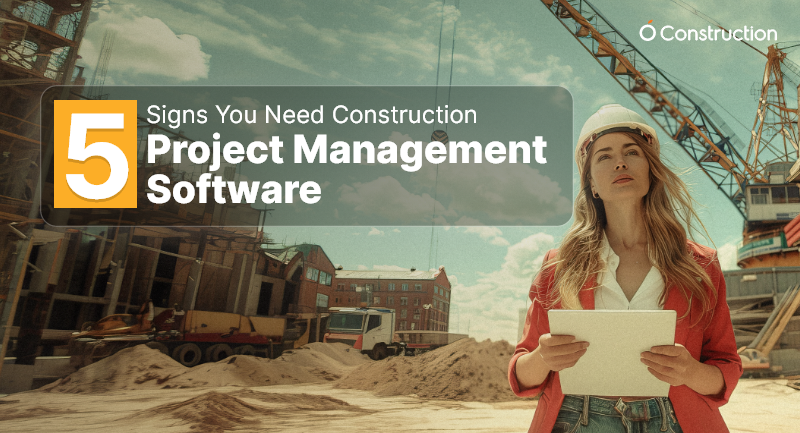
5 Signs You Need Construction Project Management Software

Ten years ago, managing construction projects with spreadsheets, phone calls, and sticky notes might have been enough. But today’s job sites are faster, more dynamic, and more demanding. If you’re still juggling WhatsApp messages, handwritten notes, and scattered documents, your project workflow is likely disjointed and inefficient. This is where construction project management software like OConstruction steps in. It brings planning, scheduling, communication, cost tracking, and document control into one digital platform—accessible from both the field and the office. If you’ve been wondering whether your team needs a more modern solution, these five warning signs are your answer.

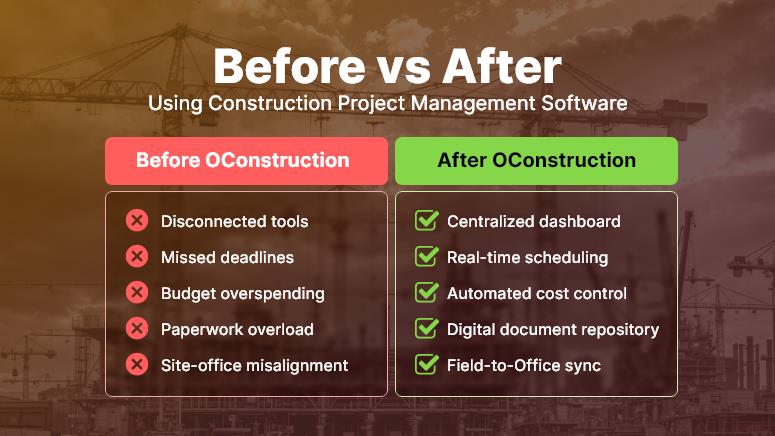
Before vs After Using Construction Project Management Software

Sign #1: You’re Constantly Behind Schedule

Why construction scheduling tools are non-negotiable

If deadlines feel more like flexible suggestions than fixed targets, it’s a red flag. Construction delays not only damage your client relationships — they also eat into profits, extend crew hours, and jeopardize future bids.

With construction scheduling software, you can:

  • Visualize project timelines using Gantt charts and task boards, helping you spot task dependencies and scheduling conflicts in real time.
  • Assign clear responsibilities with deadlines, supported by automated alerts so your team always knows what’s due and when.
  • Identify bottlenecks early and reallocate crews or resources to high-priority tasks before delays snowball.

A tool like OConstruction shifts your workflow from reactive fire-fighting to proactive project control—keeping builds on time and stress levels low.

Sign #2: Your Field and Office Teams Are Always Out of Sync

Your Field and Office Teams Are Always Out of Sync

Why site management software improves communication

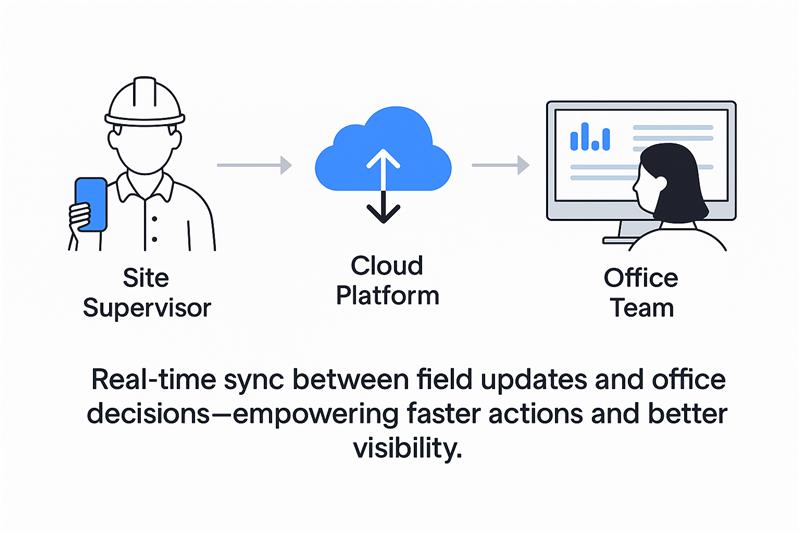
Site supervisors often rely on delayed emails or phone calls for updates, while head office waits for manual reports from the field. This disconnect leads to miscommunication, duplication of work, and costly rework.

Using site management software like OConstruction, you can:

  • Bridge the gap between the field and the office with real-time updates accessible from mobile and desktop.
  • Share annotated site photos, blueprints, and task notes, ensuring everyone has the latest information.
  • Use mobile checklists and real-time approvals, so site managers can log progress instantly, not days later.

When both your field crew and office team are aligned, project momentum builds naturally — and client satisfaction soars.

Sign #3: You Can’t Track Where the Budget Is Going

Why construction cost tracking software is a must

It’s common for managers to lose visibility into where money is spent — especially when juggling multiple sites, teams, and vendors. If your answer to “What’s the burn rate?” is vague, it’s time to upgrade.

With smart construction cost management tools, you can:

  • Track materials, labor hours, and equipment used across projects in a centralized platform.
  • Compare estimates to actuals to spot budget deviations quickly and prevent cost overruns.
  • Generate instant financial reports to keep clients and stakeholders in the loop.

OConstruction’s budgeting tools deliver real-time insights so you can take control of costs before they spiral.

Sign #4: You’re Drowning in Paperwork and Losing Documents

Why document management matters in construction software

Permits, contracts, change orders, site plans — these are the lifeblood of any build. But storing them across local drives, inboxes, and printed folders is a recipe for disaster.

With an integrated document management system like OConstruction, you can:

  • Digitally store and tag project documents so they’re easy to find, search, and share.
  • Set permission-based access, ensuring the right teams see the right files — no more email attachments or USB drives.
  • Track version history and approvals to prevent confusion over outdated plans or unauthorized changes.

Modern document control software isn’t a have—it’s essential for audit trails, collaboration, and avoiding costly mistakes.

Sign #5: You’re Wasting Time on Repetitive Tasks

Why automation in construction software saves your sanity

Construction teams often lose hours each week chasing updates, sending reminders, or recreating project templates. It’s time-consuming and drains valuable energy from critical site work.

With construction project management software like OConstruction, you can:

  • Automate recurring tasks, reminders, and alerts, keeping workflows moving without constant oversight.
  • Leverage pre-built templates for daily reports, safety inspections, and task lists, speeding up planning and execution.
  • Design workflows that trigger the next step as soon as the current one is completed, so your project never stalls.

By automating the busy work, your crew gets more time to focus on quality, safety, and delivery — the things that move your business forward.

Conclusion: Don’t Just Build — Build Smarter

If even one of these signs feels familiar, your construction operations are likely being held back by outdated tools and fragmented systems. From missed deadlines to unclear budgets and unorganized files, the cost of inaction is high.

With construction project management software like construction, you can:

  • Improve team coordination across job sites and offices
  • Gain real-time visibility into schedules, costs, and workloads
  • Ensure all documents and tasks are tracked and accessible
  • Deliver projects on time and budget

Whether you’re managing a residential project, commercial development, or industrial site, switching to the right construction software puts you in control.

Key Takeaways

  • Project delays, team silos, and cost uncertainty are clear signs you need construction software.
  • Tools like OConstruction offer powerful capabilities in scheduling, site collaboration, document management, and budget control.
  • Embracing digital tools helps small and mid-sized construction companies scale efficiently and stay competitive.

FAQs

Q1. What is construction project management software?
It’s a digital platform that helps construction teams manage scheduling, budgets, documents, communication, and compliance in one place.

Q2. How do I know if my business really needs it?
If you face frequent delays, miscommunication, budget overruns, or missing documents, it’s a strong sign you’ve outgrown spreadsheets and need a dedicated solution.

Q3. Is construction project management software only for large companies?
No. In fact, small and mid-sized businesses benefit the most since they need efficient processes to scale without adding more overhead.

Q4. Can OConstruction help my field and office teams work together?
Yes. OConstruction bridges the gap with mobile updates, real-time dashboards, annotated photos, and shared checklists. Everyone stays aligned, no matter where they are.

Q5. How does construction software save time and money?
By automating repetitive tasks, providing budget alerts, and streamlining communication, companies typically save 5–10% of project costs and reduce admin work by 30–40%.

How Digital Tools Are Revolutionizing the Construction Industry

The Construction Site is Going Digital with Construction Project Management Software

Construction has always been a hands-on industry, steel, concrete, boots on the ground. But in today’s fast-paced, tech-first world, construction is going digital faster than ever before.

According to a McKinsey report, companies that digitize their construction processes can increase productivity by up to 15% and reduce costs by as much as 6%.

So what’s driving this digital shift? It’s simple: manual workflows, paper blueprints, and scattered communication just aren’t cutting it anymore, especially for small and mid-sized businesses trying to scale.

In this post, we’ll explore how digital tools — especially construction project management software like OConstruction are transforming the way modern construction teams work.

Whether you’re managing tasks, budgets, timelines, or teams, construction project management software offers a smarter, more reliable way to build.

From real-time collaboration to budget tracking and safety compliance, you’ll walk away with insights and action steps to modernize your operations.

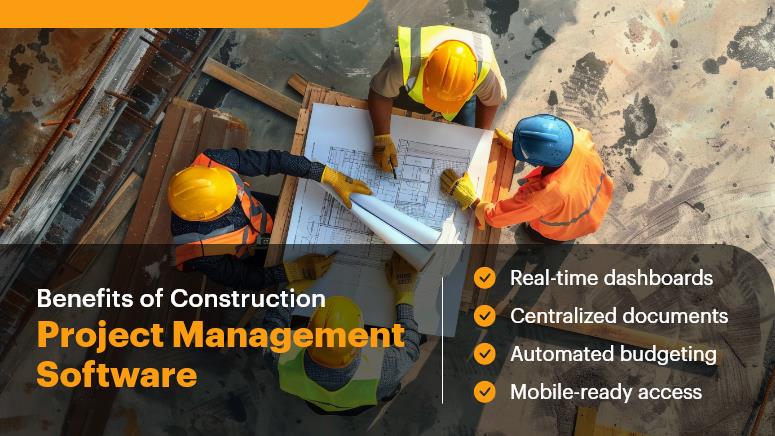
Benefits of Construction Project Management Software

Why Construction Project Management Software Matters for Construction Businesses

For decades, the construction industry lagged in tech adoption. But now, client expectations are changing, projects are more complex, and margins are tighter than ever.

Here’s why digital transformation is no longer optional:

  • Time is money, and delays are expensive. When updates are stuck in email threads or on paper forms, response times slow, and errors multiply. Digital tools ensure faster decision-making with real-time updates.
  • Small mistakes create big costs. Manual budgeting, change orders, or schedule conflicts often result in thousands in overruns. Construction software reduces risks by keeping everything visible and trackable.
  • Remote work and hybrid teams are here to stay. Project managers, subcontractors, and clients all need to collaborate across locations. Cloud-based tools like OConstruction provide mobile-friendly access from anywhere.
  • Hiring and retention depend on modern tools. Top talent, especially younger workers, expect tech-forward job sites. Equipping your team with the right digital tools makes your business more attractive and efficient.

Common use cases across industries:

  • Real estate developers are juggling multiple residential projects.
  • Infrastructure firms manage public works contracts.
  • Commercial builders oversee subcontractors and material flow.

Bottom line: Digital transformation isn’t just a tech upgrade; it’s a competitive advantage.

Best Practices for Using Construction Project Management Software

1. Centralize Communication Across Teams

  • Ditch the fragmented tools. When your crew is on WhatsApp, your PM is using Excel, and your engineer is emailing blueprints, chaos is guaranteed. Centralize everything on one platform like OConstruction for streamlined, transparent communication.
  • Set clear project roles and access permissions. Ensure that everyone from field workers to finance leads sees exactly what they need, when they need it, without clutter or confusion.

2. Use Real-Time Project Dashboards in Your Construction Project Management Software

  • Dashboards offer instant clarity on project status. From work completion to site issues and task deadlines, a real-time overview keeps decision-makers informed at every stage.
  • Eliminate the guessing game. Know exactly what’s been done, what’s overdue, and what’s ahead — so you can act quickly and avoid bottlenecks.

3. Automate Budget Tracking & Cost Control

  • Track expenses, invoices, and material usage in real-time. No more waiting until month-end to understand your project’s financial health.
  • Set up budget alerts and cost variance triggers. With OConstruction, you can get notified when expenses deviate from your estimates, helping you correct the course before it’s too late.

4. Simplify Document Management with Construction Project Management Software

  • Store blueprints, permits, contracts, and inspection logs in one digital hub. Say goodbye to lost paperwork and duplicated files.
  • Use version control to avoid costly errors. Everyone works from the same, most up-to-date documents — no confusion, no rework.

5. Enhance Site Safety & Compliance Tracking

  • Digitize safety checklists, audits, and training logs. Ensure that compliance documentation is completed and stored, not buried in binders.
  • Log incidents in real-time and assign corrective actions. Proactive tracking helps reduce risks and improve workplace safety.

6. Invest in Mobile-Ready Construction Project Management Software

  • Ensure your tools work seamlessly on phones and tablets. Field teams need fast access to plans, updates, and messaging without being tied to a desktop.
  • Enable photo uploads, GPS tagging, and voice-to-text notes. These features make it easier for on-site teams to stay engaged and productive.

7. Prioritize Ease of Use in Construction Project Management Software

  • Choose intuitive software that your team can adopt quickly. A tool is only useful if your people use it. OConstruction is designed with simplicity and speed in mind.
  • Offer onboarding and in-app support. Train your team well, and they’ll become champions of the platform.

Customer Success Snapshot: A Case in Point

“Titan Build Co., a mid-sized commercial construction company, used OConstruction to cut project delays by 40% and reduce admin workload by 60%.”

Before adopting OConstruction, Titan managed its operations through spreadsheets, emails, and disconnected mobile apps. Communication gaps and delayed updates were causing cost overruns and client frustration.

With OConstruction, Titan:

  • Centralized all documents, project updates, and team messaging in one place.
  • Enabled field teams to report progress and flag issues instantly via mobile.
  • Tracked budgets in real time, catching cost deviations before they escalated.

The result? More on-time deliveries, happier clients, and a more productive team.

Why Now Is the Time to Embrace Construction Project Management Software

  • Construction is evolving, and digital tools are at the heart of the transformation.
  • Small and mid-sized businesses benefit the most from streamlined, automated workflows.
  • OConstruction gives you everything you need to manage projects, budgets, teams, and documents in one user-friendly platform.

Construction project management software is no longer a nice-to-have — it’s a must for businesses that want to thrive in a fast-changing environment.

Whether you’re looking to save time, cut costs, or improve project visibility, the right software can make all the difference.

As the industry continues to evolve, investing in digital transformation today will pay off tomorrow in efficiency, growth, and client satisfaction.

Ready to see how OConstruction can help you streamline operations, cut delays, and boost team productivity? Book a free demo today!

FAQs

Q1. What is construction project management software?
It’s a digital tool that helps construction companies manage projects, budgets, teams, timelines, and compliance in one centralized system.

Q2. Why should small and mid-sized construction businesses use it?
Because it reduces errors, improves communication, prevents costly overruns, and allows teams to collaborate in real time—even remotely.

Q3. How does construction software save money?
By cutting delays, preventing budget overruns, eliminating duplicate work, and streamlining documentation, companies save 5–10% of project costs on average.

Q4. Is OConstruction mobile-friendly?
Yes. OConstruction is built for field teams with mobile access, photo uploads, GPS tagging, and voice-to-text notes.

Q5. How long does it take to see results?
Most companies start seeing efficiency improvements within the first 30–60 days of adopting construction project management software.

Q6. Does it require technical expertise to use?
No. OConstruction is designed to be intuitive, with onboarding support and in-app guidance for easy adoption.

Category: Construction Academy

Subcategory: Budgeting and Planning

Subcategory: Construction Phase

Subcategory: Design Coordination

Subcategory: Estimation Techniques

Subcategory: Initiation and Feasibility

Subcategory: Introduction

Subcategory: Personal Management

Subcategory: Project Close-Out

Subcategory: Project Scheduling

Subcategory: Project Teams

Subcategory: Proposal Management

Subcategory: Total Quality Management

Subcategory: Tracking and Control

Subcategory: Work Breakdown

Category: Help Desk

Subcategory: Client

Subcategory: Construction 101

Subcategory: Contractor Management

Subcategory: Expense

Subcategory: Finance Budget

Subcategory: Inventory Management

Subcategory: My Approvals

Subcategory: Site Management

Subcategory: Vendor Management