Building Construction Scheduling: Optimize Project Timelines to Reduce Costs and Delays

In construction, time is money — quite literally. A small delay in concrete curing or material delivery can cascade into weeks of lost productivity and inflated costs. That’s where building construction scheduling comes in — your blueprint for keeping projects on track, within budget, and aligned with client expectations.

But scheduling isn’t just about dates on a calendar. It’s about creating a dynamic, data-driven plan that adapts to real-world changes while maintaining overall control.

What is Building Construction Scheduling?

Building construction scheduling is the process of defining, sequencing, and managing all project activities to ensure timely completion. It involves identifying critical tasks, dependencies, milestones, and resource allocation to maintain a balanced workflow.

Think of it as the project’s GPS — showing you where you’re headed, predicting potential bottlenecks, and helping you make informed course corrections before delays hit.
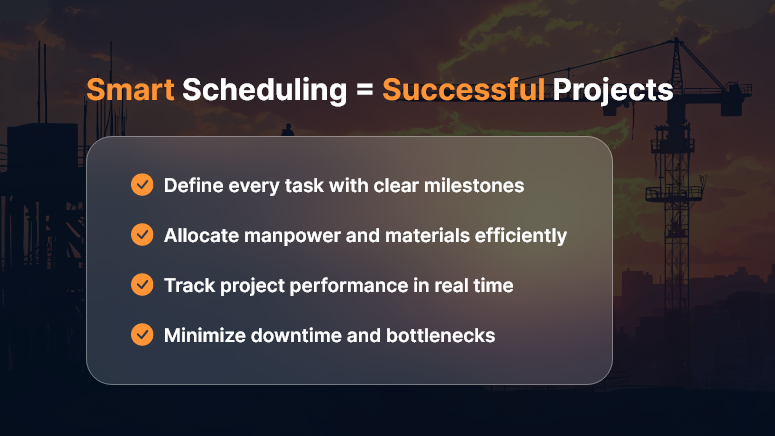
Building-Construction-Scheduling

The Real Cost of Poor Scheduling

When construction schedules go wrong, the impact is immediate and costly:

  • Budget overruns from idle labor and equipment rentals
  • Missed deadlines leading to penalties or strained client relations
  • Resource conflicts that slow progress across sites
  • Safety issues from rushed work or overlapping tasks

A solid construction schedule isn’t just good project management — it’s a profit-protection strategy.

Key Elements of Effective Construction Scheduling

To optimize your project timeline, your schedule should include these core elements:

1. Work Breakdown Structure (WBS)

Break your project into manageable chunks — foundation, framing, electrical, plumbing, finishing, etc. Each task should have clear ownership and deliverables.

2. Task Dependencies

Understand what needs to happen first. Pouring the slab comes before framing; inspection before drywall. Mapping dependencies prevents rework and chaos.

3. Resource Allocation

Assign the right people, machinery, and materials to each phase. This ensures optimal productivity without overloading teams.

4. Critical Path Method (CPM)

Identify the longest sequence of dependent tasks that determine the total project duration. Monitoring this critical path helps you predict and prevent delays before they snowball.

5. Real-Time Tracking

Use modern scheduling tools to update progress instantly, manage changes, and communicate across stakeholders. Real-time visibility ensures every decision is data-backed.

Top Techniques for Better Construction Scheduling

1. Leverage Technology

Ditch spreadsheets. Modern construction scheduling software provides interactive Gantt charts, resource tracking, and progress dashboards that make updates seamless and transparent.

2. Prioritize Communication

Scheduling is only effective when everyone follows it. Use collaboration platforms to align contractors, subcontractors, and suppliers on one timeline.

3. Build in Buffers

Unpredictable weather, material delays, or inspection hold-ups happen. Adding buffer time to critical tasks ensures flexibility without panic.

4. Monitor and Adjust

Regularly review progress vs. the baseline schedule. If the foundation stage slips, adjust downstream activities early — don’t wait for the project to derail.

5. Track Performance Metrics

Monitor schedule variance, earned value, and resource utilization to maintain performance visibility throughout the project lifecycle.

Benefits of Optimized Construction Scheduling

When done right, building construction scheduling delivers measurable business results:

  • Reduced project costs through efficient resource use
  • Fewer delays and disputes due to clear timelines and accountability
  • Improved client satisfaction from predictable delivery
  • Better cash flow management with milestone-based billing
  • Increased safety and productivity from structured workflows

A well-structured schedule isn’t just a document — it’s a strategic asset that drives profitability and trust.

Best Tools for Construction Scheduling

To make scheduling easier and smarter, consider tools like:

  • OConstruction Scheduler – purpose-built for project managers to plan, track, and optimize timelines in real time.
  • Primavera P6 – great for large infrastructure projects.
  • Microsoft Project – classic Gantt-based scheduling with resource tracking.
  • Orangescrum – flexible task and time management for agile teams.

Choose a platform that matches your project complexity and collaboration needs.

Common Mistakes to Avoid

Even experienced project managers fall into these traps:

  • Ignoring task dependencies or changing them without impact analysis
  • Failing to update schedules after every phase change
  • Over-committing resources to multiple overlapping tasks
  • Underestimating risk factors like weather or approval delays
  • Neglecting to communicate changes with all stakeholders

Avoid these, and you’ll already be ahead of most competitors.

Conclusion: Schedule Smart, Build Smarter

In today’s competitive environment, construction scheduling is no longer optional — it’s essential. A well-defined, actively managed schedule keeps your projects on time, on budget, and on scope.

Invest in robust scheduling tools, empower your teams with real-time visibility, and turn project planning into a strategic advantage. Because in construction, the best builders aren’t just those who build fast — they’re the ones who build on time, every time.

Key Takeaways

  • Plan early: Start scheduling during the design phase.
  • Stay flexible: Adapt to change while protecting milestones.
  • Use technology: Automate tracking and reporting.
  • Monitor progress: Keep everyone accountable.
  • Review lessons: Improve with every project.

FAQs

1. What is the main purpose of construction scheduling?

To ensure that all activities in a construction project are planned, sequenced, and executed on time to avoid delays and cost overruns.

2. What tools are best for construction scheduling?

Tools like OConstruction are popular for managing schedules, dependencies, and progress.

3. How often should a construction schedule be updated?

Ideally weekly, or after every major milestone, to reflect real-time progress and adjustments.

4. What’s the difference between CPM and Gantt charts?

CPM identifies critical tasks affecting total project time, while Gantt charts visualize timelines and dependencies.

5. Can scheduling help reduce project costs?

Yes. Efficient scheduling minimizes idle time, prevents rework, and ensures optimal resource utilization — directly lowering overall costs.

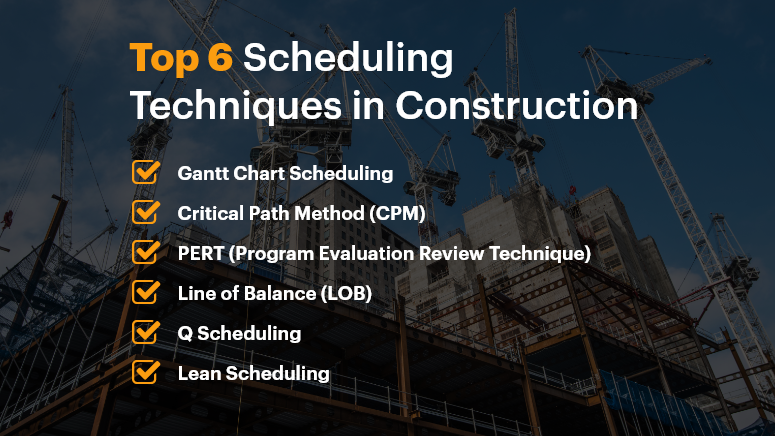
The Ultimate Guide to Construction Scheduling Techniques

Construction is complex, and without a proper schedule, it’s chaos waiting to happen. Did you know that 98% of mega construction projects face delays or cost overruns? Even smaller projects can derail without a strong scheduling system in place.

The truth is, every successful build — whether it’s a residential home or a commercial complex — starts with an accurate, realistic, and adaptive schedule.

In this guide, we’ll break down the top construction scheduling techniques, show you when to use them, and how digital tools like OConstruction’s project management software simplify the entire process.

Whether you’re managing one project or fifteen, these methods will help you stay ahead, reduce risk, and deliver on time, every time.

Why Construction Scheduling Techniques Matter for Modern Teams

Proper construction scheduling isn’t just about dates and tasks. It’s about predictability, accountability, and profitability.

Construction projects involve multiple moving parts: labor, permits, deliveries, inspections, client approvals, weather dependencies, and more. Without robust scheduling techniques, projects often slip into reactive mode, causing:

  • Missed deadlines and penalties
  • Cost overruns due to rework and inefficiencies
  • Poor client satisfaction and damaged reputation

Scheduling is no longer a back-office admin job — it’s a strategic advantage.

Who Benefits Most?

  • Project managers gain clear visibility into timelines, delays, and task dependencies
  • Contractors and site engineers know exactly when crews, materials, and vendors are scheduled
  • Executives and clients get transparency on project milestones and delivery status
  • Operations teams can plan better across multiple sites using live data

In industries like real estate development, infrastructure, interior design, and EPC, mastering construction scheduling techniques leads to faster delivery and lower costs.

Top 6 Scheduling Techniques in Construction

Best Practices, Frameworks, and Scheduling Techniques

Let’s explore the most effective scheduling techniques, common pitfalls to avoid, and how to implement them efficiently with tools like OConstruction.

Do’s and Don’ts of Construction Scheduling

  • Use visual tools like Gantt charts: Gantt charts provide a timeline-based visual layout that shows start/end dates, dependencies, and milestones. These are ideal for stakeholder communication and progress tracking.
  • Don’t build a schedule without buffer times: Things will go wrong — delays in delivery, weather issues, labor shortages. Building in contingency helps you stay realistic and flexible.
  • Align the schedule with resource availability: Scheduling without resource coordination leads to idle time or overbooking. Use platforms that integrate resource planning and project timelines.
  • Don’t treat your schedule as static: Construction schedules should evolve with the project. Use software that allows real-time updates and mobile syncing for your field teams.

Quick Wins for Better Scheduling

  • Adopt cloud-based scheduling tools

Spreadsheets get outdated fast. Cloud-based systems let teams access and edit schedules from anywhere, with changes synced in real time.

  • Define task dependencies clearly

Use the Predecessors and Successors logic to avoid task conflicts and idle waiting. Tools like OConstruction allow drag-and-drop Gantt charts to manage these visually.

  • Integrate schedules with your procurement and budget plans

When material delivery or payment approvals are disconnected from the schedule, delays happen. Choose a unified platform that ties them together.

  • Use mobile apps for field updates

Let site supervisors mark task completion or flag delays from their phones. This ensures your schedule reflects the actual ground reality.

Step-by-Step Framework: Choosing the Right Scheduling Technique

1. Gantt Chart Scheduling

Ideal for: Small to mid-size projects with linear workflows
Visualize each task along a timeline. Helps communicate progress to clients and track dependencies easily.

2. Critical Path Method (CPM)

Ideal for: Complex builds with tight deadlines
Identifies the longest stretch of dependent activities and highlights the minimum project duration. Perfect for tracking what’s most likely to delay delivery.

3. Program Evaluation Review Technique (PERT)

Ideal for: Projects with uncertainty in task duration
Uses optimistic, pessimistic, and most likely timelines to calculate expected durations. Useful in early planning stages.

4. Line of Balance (LOB)

Ideal for: Repetitive workflows like high-rise floors or housing units
Visualizes task repetition across segments to balance resources and avoid bottlenecks.

5. Q Scheduling (Quantitative Scheduling)

Ideal for: Resource-heavy projects
Focuses on quantities of work per task per period, linking material usage directly with the schedule.

6. Lean Construction Scheduling (Last Planner System)

Ideal for: Agile, collaborative environments
Encourages weekly planning and real-time coordination with field teams. Perfect for reducing waste and improving flow.

Each of these construction scheduling techniques has its use case. The smart move is using a platform like OConstruction, which supports multiple techniques and adapts to your project type.

Customer Story: Turning Chaos into Clarity

For example, TitanStruct Infra, a mid-size infrastructure firm, used OConstruction’s Gantt-based scheduling module combined with real-time field reporting to manage six highway expansion projects across two states.

Here’s how it helped:

  • Used the critical path method to highlight high-risk delays
  • Integrated project timelines with vendor delivery schedules
  • Allowed site engineers to update task statuses via mobile
  • Enabled management to visualize milestone progress in a single dashboard

Outcome:

  • 35% improvement in schedule adherence
  • 25% less idle time across teams
  • Faster decision-making with real-time delay alerts

That’s the power of combining construction scheduling techniques with smart software.

Key Takeaways: From Delay-Prone to Deadline-Driven

  • Scheduling is the strategic core of successful construction project management
  • Choose the right technique based on project size, complexity, and team structure
  • Tools like OConstruction turn theory into execution with drag-and-drop Gantt charts, mobile updates, and critical path analysis
  • Standardize your approach, but stay agile with real-time data

With the right methods and the right platform, you’ll always be on time and on budget.

FAQs

1. What is construction scheduling and why is it important?
Construction scheduling is the process of planning, organizing, and tracking tasks, resources, and timelines to ensure projects are delivered on time and within budget. It prevents delays, cost overruns, and miscommunication among teams.

2. Which construction scheduling technique is best for small projects?
For small to mid-sized projects, Gantt chart scheduling is the most effective. It visually shows timelines, dependencies, and milestones in a simple way — making it easy to communicate with clients and track progress.

3. How does the Critical Path Method (CPM) help in construction projects?
CPM identifies the longest chain of dependent tasks, highlighting the activities that directly impact the project’s delivery date. This helps managers prioritize critical tasks and avoid project delays.

4. When should I use PERT instead of CPM?
Use PERT when project tasks involve uncertainty in duration (e.g., early-stage planning or projects with many unknowns). PERT accounts for optimistic, pessimistic, and most-likely timelines, while CPM works better with fixed durations.

5. What is Line of Balance (LOB) scheduling used for?
LOB is ideal for repetitive tasks such as high-rise construction or housing projects. It ensures smooth sequencing and resource allocation across repeated tasks, reducing bottlenecks.

Category: Construction Academy

Subcategory: Budgeting and Planning

Subcategory: Construction Phase

Subcategory: Design Coordination

Subcategory: Estimation Techniques

Subcategory: Initiation and Feasibility

Subcategory: Introduction

Subcategory: Personal Management

Subcategory: Project Close-Out

Subcategory: Project Scheduling

Subcategory: Project Teams

Subcategory: Proposal Management

Subcategory: Total Quality Management

Subcategory: Tracking and Control

Subcategory: Work Breakdown

Category: Help Desk

Subcategory: Client

Subcategory: Construction 101

Subcategory: Contractor Management

Subcategory: Expense

Subcategory: Finance Budget

Subcategory: Inventory Management

Subcategory: My Approvals

Subcategory: Site Management

Subcategory: Vendor Management