
Multi-Site Coordination: Optimize project execution across multiple sites

Managing a single construction or infrastructure project is challenging. Managing multiple active sites simultaneously — often in different locations, with varied teams and vendors — demands a far higher level of coordination and control.

This is where multi-site coordination comes in: an integrated approach that synchronizes communication, resources, schedules, and performance tracking across all sites to ensure consistency, accountability, and timely delivery.

In industries such as construction, energy, infrastructure, and manufacturing, effective multi-site coordination directly impacts project success, cost efficiency, and client satisfaction.
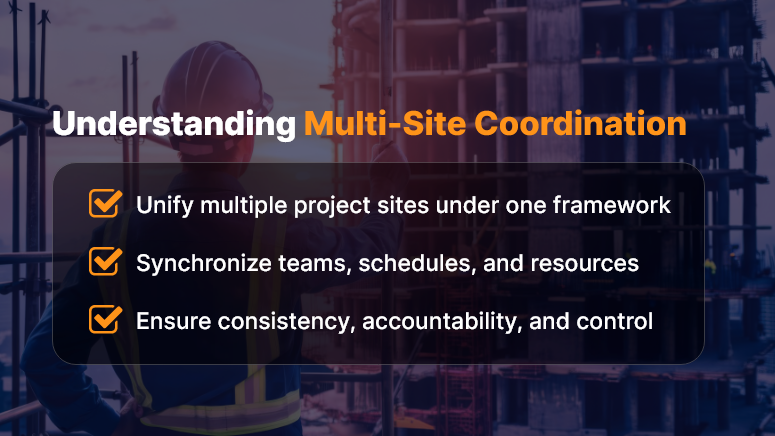
Understanding Multi-Site Coordination

What Is Multi-Site Coordination?

Multi-site coordination is the systematic management of projects executed at multiple geographic locations under a unified operational framework.

It ensures that every site — whether it’s a construction zone, solar installation, or infrastructure upgrade — works toward shared objectives, aligned schedules, and standardized quality metrics.

Key objectives include:

  • Real-time visibility into each site’s progress and performance.
  • Seamless collaboration between central offices and field teams.
  • Standardized workflows and documentation.
  • Efficient allocation of shared resources, materials, and equipment.

In essence, multi-site coordination consolidates dispersed operations into a single, synchronized ecosystem.

Challenges in Managing Multiple Project Sites

Without a structured coordination framework, teams face a host of challenges:

  • Communication silos: Field teams and head offices often operate with fragmented updates.
  • Inconsistent reporting: Different formats and standards confuse progress tracking.
  • Duplicate work or missed dependencies: When schedules and responsibilities aren’t synchronized.
  • Resource conflicts: Equipment or manpower overbooked across sites.
  • Delayed decision-making: Managers lack real-time data for quick intervention.

These pain points can cause schedule slippage, cost overruns, and reduced productivity — especially in large-scale infrastructure or construction programs.

Key Strategies to Optimize Multi-Site Coordination

1. Centralized Project Management Platform

Use a cloud-based project management system that consolidates updates, schedules, and documents from all sites in one place. For example, tools like OConstruction or Orangescrum allow you to:

  • Assign and monitor tasks across multiple sites.
  • Track progress visually through dashboards and Gantt charts.
  • Log issues, RFIs, and approvals in real time.

This centralization eliminates the guesswork and ensures every stakeholder sees the same data.

2. Standardize Communication Protocols

Define clear communication channels:

  • Daily site logs for on-ground updates.
  • Weekly review calls between site managers and HQ.
  • Centralized chat or ticketing system for queries and escalations.

Using structured communication templates ensures everyone follows a consistent reporting rhythm, reducing misunderstandings.

3. Real-Time Data and IoT Integration

Leverage IoT sensors, drones, and mobile apps to feed live data into your coordination system:

  • Monitor equipment usage and site safety remotely.
  • Capture progress images or videos for validation.
  • Track resource utilization through GPS-enabled machinery.

Real-time data not only improves transparency but also helps anticipate delays or equipment downtime early.

4. Optimize Resource Allocation

A unified resource pool across sites helps balance workload and reduce idle time. With centralized scheduling tools, you can:

  • Check resource availability instantly.
  • Reassign underutilized assets.
  • Track material dispatches and deliveries in real time.

This ensures materials, machinery, and manpower are always available where they’re needed most.

5. Implement Unified Quality and Safety Standards

Multi-site projects often fail due to inconsistent safety or quality compliance. Develop a shared inspection checklist, accessible digitally, to ensure:

  • Uniform quality benchmarks across sites.
  • Compliance with safety standards and local regulations.
  • Real-time corrective action tracking for identified issues.

Digitized QA/QC workflows help teams avoid rework and ensure predictable outcomes.

6. Use Dashboards and Analytics

Data visualization plays a key role in multi-site management. Dashboards can help decision-makers:

  • Compare performance metrics across all sites.
  • Identify high-risk areas through variance reports.
  • Forecast delays or budget overruns early.

Analytics transforms scattered data into actionable insights — improving planning, forecasting, and performance reviews.

7. Encourage Cross-Site Collaboration

Build a culture of shared learning:

  • Conduct virtual coordination meetings.
  • Share best practices, risk logs, and vendor feedback.
  • Recognize top-performing site teams to motivate others.

When teams communicate across locations, innovation and problem-solving accelerate.

The Role of Technology in Multi-Site Coordination

Modern project management relies heavily on digital transformation:

  • Cloud collaboration tools ensure all stakeholders have access to the same information.
  • Mobile apps enable site engineers to update data instantly.
  • AI and predictive analytics forecast delays, cost risks, and resource shortages.
  • BIM (Building Information Modeling) and Digital Twins connect design, execution, and monitoring phases across all sites.

These technologies help project leaders shift from reactive management to proactive control.

Business Impact of Optimized Multi-Site Coordination

Implementing structured coordination delivers measurable benefits:

  • 20–30% improvement in project visibility and reporting accuracy.
  • Reduced delays through early identification of critical issues.
  • Better resource utilization and cost savings.
  • Higher client satisfaction through consistent quality delivery.
  • Improved team accountability and cross-site collaboration.

Organizations that adopt digital multi-site coordination report faster decision-making, leaner operations, and scalable project control.

Best Practices for Long-Term Success

  • Document every process and update regularly.
  • Assign a Multi-Site Coordinator or Program Manager role to oversee synchronization.
  • Conduct monthly performance reviews across all sites.
  • Integrate ERP or CRM systems for financial and vendor tracking.
  • Continuously train site teams on digital tools and communication protocols.

Consistency and discipline are the cornerstones of multi-site success.

Conclusion

In a world of distributed operations, multi-site coordination is no longer optional — it’s essential for competitive, high-performing project delivery.

By integrating technology, standardizing processes, and fostering cross-site collaboration, organizations can ensure smoother execution, timely completion, and predictable outcomes.

If your enterprise manages projects across cities or regions, adopting a digital coordination platform like OConstruction can give you real-time visibility, control, and confidence — across every site.

How Digital Tools Are Revolutionizing the Construction Industry

The Construction Site is Going Digital with Construction Project Management Software

Construction has always been a hands-on industry, steel, concrete, boots on the ground. But in today’s fast-paced, tech-first world, construction is going digital faster than ever before.

According to a McKinsey report, companies that digitize their construction processes can increase productivity by up to 15% and reduce costs by as much as 6%.

So what’s driving this digital shift? It’s simple: manual workflows, paper blueprints, and scattered communication just aren’t cutting it anymore, especially for small and mid-sized businesses trying to scale.

In this post, we’ll explore how digital tools — especially construction project management software like OConstruction are transforming the way modern construction teams work.

Whether you’re managing tasks, budgets, timelines, or teams, construction project management software offers a smarter, more reliable way to build.

From real-time collaboration to budget tracking and safety compliance, you’ll walk away with insights and action steps to modernize your operations.

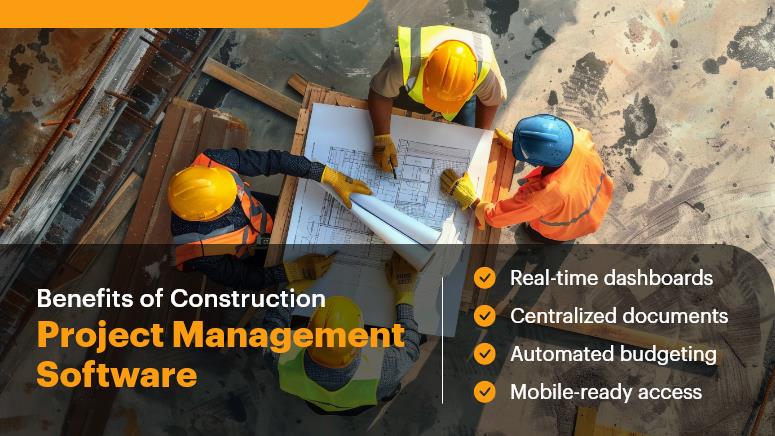
Benefits of Construction Project Management Software

Why Construction Project Management Software Matters for Construction Businesses

For decades, the construction industry lagged in tech adoption. But now, client expectations are changing, projects are more complex, and margins are tighter than ever.

Here’s why digital transformation is no longer optional:

  • Time is money, and delays are expensive. When updates are stuck in email threads or on paper forms, response times slow, and errors multiply. Digital tools ensure faster decision-making with real-time updates.
  • Small mistakes create big costs. Manual budgeting, change orders, or schedule conflicts often result in thousands in overruns. Construction software reduces risks by keeping everything visible and trackable.
  • Remote work and hybrid teams are here to stay. Project managers, subcontractors, and clients all need to collaborate across locations. Cloud-based tools like OConstruction provide mobile-friendly access from anywhere.
  • Hiring and retention depend on modern tools. Top talent, especially younger workers, expect tech-forward job sites. Equipping your team with the right digital tools makes your business more attractive and efficient.

Common use cases across industries:

  • Real estate developers are juggling multiple residential projects.
  • Infrastructure firms manage public works contracts.
  • Commercial builders oversee subcontractors and material flow.

Bottom line: Digital transformation isn’t just a tech upgrade; it’s a competitive advantage.

Best Practices for Using Construction Project Management Software

1. Centralize Communication Across Teams

  • Ditch the fragmented tools. When your crew is on WhatsApp, your PM is using Excel, and your engineer is emailing blueprints, chaos is guaranteed. Centralize everything on one platform like OConstruction for streamlined, transparent communication.
  • Set clear project roles and access permissions. Ensure that everyone from field workers to finance leads sees exactly what they need, when they need it, without clutter or confusion.

2. Use Real-Time Project Dashboards in Your Construction Project Management Software

  • Dashboards offer instant clarity on project status. From work completion to site issues and task deadlines, a real-time overview keeps decision-makers informed at every stage.
  • Eliminate the guessing game. Know exactly what’s been done, what’s overdue, and what’s ahead — so you can act quickly and avoid bottlenecks.

3. Automate Budget Tracking & Cost Control

  • Track expenses, invoices, and material usage in real-time. No more waiting until month-end to understand your project’s financial health.
  • Set up budget alerts and cost variance triggers. With OConstruction, you can get notified when expenses deviate from your estimates, helping you correct the course before it’s too late.

4. Simplify Document Management with Construction Project Management Software

  • Store blueprints, permits, contracts, and inspection logs in one digital hub. Say goodbye to lost paperwork and duplicated files.
  • Use version control to avoid costly errors. Everyone works from the same, most up-to-date documents — no confusion, no rework.

5. Enhance Site Safety & Compliance Tracking

  • Digitize safety checklists, audits, and training logs. Ensure that compliance documentation is completed and stored, not buried in binders.
  • Log incidents in real-time and assign corrective actions. Proactive tracking helps reduce risks and improve workplace safety.

6. Invest in Mobile-Ready Construction Project Management Software

  • Ensure your tools work seamlessly on phones and tablets. Field teams need fast access to plans, updates, and messaging without being tied to a desktop.
  • Enable photo uploads, GPS tagging, and voice-to-text notes. These features make it easier for on-site teams to stay engaged and productive.

7. Prioritize Ease of Use in Construction Project Management Software

  • Choose intuitive software that your team can adopt quickly. A tool is only useful if your people use it. OConstruction is designed with simplicity and speed in mind.
  • Offer onboarding and in-app support. Train your team well, and they’ll become champions of the platform.

Customer Success Snapshot: A Case in Point

“Titan Build Co., a mid-sized commercial construction company, used OConstruction to cut project delays by 40% and reduce admin workload by 60%.”

Before adopting OConstruction, Titan managed its operations through spreadsheets, emails, and disconnected mobile apps. Communication gaps and delayed updates were causing cost overruns and client frustration.

With OConstruction, Titan:

  • Centralized all documents, project updates, and team messaging in one place.
  • Enabled field teams to report progress and flag issues instantly via mobile.
  • Tracked budgets in real time, catching cost deviations before they escalated.

The result? More on-time deliveries, happier clients, and a more productive team.

Why Now Is the Time to Embrace Construction Project Management Software

  • Construction is evolving, and digital tools are at the heart of the transformation.
  • Small and mid-sized businesses benefit the most from streamlined, automated workflows.
  • OConstruction gives you everything you need to manage projects, budgets, teams, and documents in one user-friendly platform.

Construction project management software is no longer a nice-to-have — it’s a must for businesses that want to thrive in a fast-changing environment.

Whether you’re looking to save time, cut costs, or improve project visibility, the right software can make all the difference.

As the industry continues to evolve, investing in digital transformation today will pay off tomorrow in efficiency, growth, and client satisfaction.

Ready to see how OConstruction can help you streamline operations, cut delays, and boost team productivity? Book a free demo today!

FAQs

Q1. What is construction project management software?
It’s a digital tool that helps construction companies manage projects, budgets, teams, timelines, and compliance in one centralized system.

Q2. Why should small and mid-sized construction businesses use it?
Because it reduces errors, improves communication, prevents costly overruns, and allows teams to collaborate in real time—even remotely.

Q3. How does construction software save money?
By cutting delays, preventing budget overruns, eliminating duplicate work, and streamlining documentation, companies save 5–10% of project costs on average.

Q4. Is OConstruction mobile-friendly?
Yes. OConstruction is built for field teams with mobile access, photo uploads, GPS tagging, and voice-to-text notes.

Q5. How long does it take to see results?
Most companies start seeing efficiency improvements within the first 30–60 days of adopting construction project management software.

Q6. Does it require technical expertise to use?
No. OConstruction is designed to be intuitive, with onboarding support and in-app guidance for easy adoption.

Category: Construction Academy

Subcategory: Budgeting and Planning

Subcategory: Construction Phase

Subcategory: Design Coordination

Subcategory: Estimation Techniques

Subcategory: Initiation and Feasibility

Subcategory: Introduction

Subcategory: Personal Management

Subcategory: Project Close-Out

Subcategory: Project Scheduling

Subcategory: Project Teams

Subcategory: Proposal Management

Subcategory: Total Quality Management

Subcategory: Tracking and Control

Subcategory: Work Breakdown

Category: Help Desk

Subcategory: Client

Subcategory: Construction 101

Subcategory: Contractor Management

Subcategory: Expense

Subcategory: Finance Budget

Subcategory: Inventory Management

Subcategory: My Approvals

Subcategory: Site Management

Subcategory: Vendor Management