
Managing a single construction or infrastructure project is challenging. Managing multiple active sites simultaneously — often in different locations, with varied teams and vendors — demands a far higher level of coordination and control.
This is where multi-site coordination comes in: an integrated approach that synchronizes communication, resources, schedules, and performance tracking across all sites to ensure consistency, accountability, and timely delivery.
In industries such as construction, energy, infrastructure, and manufacturing, effective multi-site coordination directly impacts project success, cost efficiency, and client satisfaction.
What Is Multi-Site Coordination?
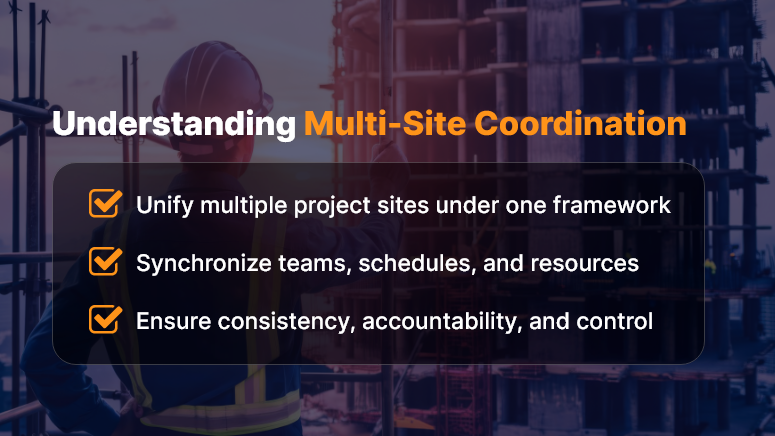
Multi-site coordination is the systematic management of projects executed at multiple geographic locations under a unified operational framework.
It ensures that every site — whether it’s a construction zone, solar installation, or infrastructure upgrade — works toward shared objectives, aligned schedules, and standardized quality metrics.
Key objectives include:
- Real-time visibility into each site’s progress and performance.
- Seamless collaboration between central offices and field teams.
- Standardized workflows and documentation.
- Efficient allocation of shared resources, materials, and equipment.
In essence, multi-site coordination consolidates dispersed operations into a single, synchronized ecosystem.
Challenges in Managing Multiple Project Sites
Without a structured coordination framework, teams face a host of challenges:
- Communication silos: Field teams and head offices often operate with fragmented updates.
- Inconsistent reporting: Different formats and standards confuse progress tracking.
- Duplicate work or missed dependencies: When schedules and responsibilities aren’t synchronized.
- Resource conflicts: Equipment or manpower overbooked across sites.
- Delayed decision-making: Managers lack real-time data for quick intervention.
These pain points can cause schedule slippage, cost overruns, and reduced productivity — especially in large-scale infrastructure or construction programs.
Key Strategies to Optimize Multi-Site Coordination
1. Centralized Project Management Platform
Use a cloud-based project management system that consolidates updates, schedules, and documents from all sites in one place. For example, tools like OConstruction or Orangescrum allow you to:
- Assign and monitor tasks across multiple sites.
- Track progress visually through dashboards and Gantt charts.
- Log issues, RFIs, and approvals in real time.
This centralization eliminates the guesswork and ensures every stakeholder sees the same data.
2. Standardize Communication Protocols
Define clear communication channels:
- Daily site logs for on-ground updates.
- Weekly review calls between site managers and HQ.
- Centralized chat or ticketing system for queries and escalations.
Using structured communication templates ensures everyone follows a consistent reporting rhythm, reducing misunderstandings.
3. Real-Time Data and IoT Integration
Leverage IoT sensors, drones, and mobile apps to feed live data into your coordination system:
- Monitor equipment usage and site safety remotely.
- Capture progress images or videos for validation.
- Track resource utilization through GPS-enabled machinery.
Real-time data not only improves transparency but also helps anticipate delays or equipment downtime early.
4. Optimize Resource Allocation
A unified resource pool across sites helps balance workload and reduce idle time. With centralized scheduling tools, you can:
- Check resource availability instantly.
- Reassign underutilized assets.
- Track material dispatches and deliveries in real time.
This ensures materials, machinery, and manpower are always available where they’re needed most.
5. Implement Unified Quality and Safety Standards
Multi-site projects often fail due to inconsistent safety or quality compliance. Develop a shared inspection checklist, accessible digitally, to ensure:
- Uniform quality benchmarks across sites.
- Compliance with safety standards and local regulations.
- Real-time corrective action tracking for identified issues.
Digitized QA/QC workflows help teams avoid rework and ensure predictable outcomes.
6. Use Dashboards and Analytics
Data visualization plays a key role in multi-site management. Dashboards can help decision-makers:
- Compare performance metrics across all sites.
- Identify high-risk areas through variance reports.
- Forecast delays or budget overruns early.
Analytics transforms scattered data into actionable insights — improving planning, forecasting, and performance reviews.
7. Encourage Cross-Site Collaboration
Build a culture of shared learning:
- Conduct virtual coordination meetings.
- Share best practices, risk logs, and vendor feedback.
- Recognize top-performing site teams to motivate others.
When teams communicate across locations, innovation and problem-solving accelerate.
The Role of Technology in Multi-Site Coordination
Modern project management relies heavily on digital transformation:
- Cloud collaboration tools ensure all stakeholders have access to the same information.
- Mobile apps enable site engineers to update data instantly.
- AI and predictive analytics forecast delays, cost risks, and resource shortages.
- BIM (Building Information Modeling) and Digital Twins connect design, execution, and monitoring phases across all sites.
These technologies help project leaders shift from reactive management to proactive control.
Business Impact of Optimized Multi-Site Coordination
Implementing structured coordination delivers measurable benefits:
- 20–30% improvement in project visibility and reporting accuracy.
- Reduced delays through early identification of critical issues.
- Better resource utilization and cost savings.
- Higher client satisfaction through consistent quality delivery.
- Improved team accountability and cross-site collaboration.
Organizations that adopt digital multi-site coordination report faster decision-making, leaner operations, and scalable project control.
Best Practices for Long-Term Success
- Document every process and update regularly.
- Assign a Multi-Site Coordinator or Program Manager role to oversee synchronization.
- Conduct monthly performance reviews across all sites.
- Integrate ERP or CRM systems for financial and vendor tracking.
- Continuously train site teams on digital tools and communication protocols.
Consistency and discipline are the cornerstones of multi-site success.
Conclusion
In a world of distributed operations, multi-site coordination is no longer optional — it’s essential for competitive, high-performing project delivery.
By integrating technology, standardizing processes, and fostering cross-site collaboration, organizations can ensure smoother execution, timely completion, and predictable outcomes.
If your enterprise manages projects across cities or regions, adopting a digital coordination platform like OConstruction can give you real-time visibility, control, and confidence — across every site.