How Sustainability Is Reshaping Construction Projects

Sustainability isn’t just a buzzword — it’s a business imperative reshaping the construction industry. Did you know that the construction sector accounts for nearly 40% of global carbon emissions? Companies that fail to integrate eco-friendly practices face rising costs, regulatory scrutiny, and reputational risks.

For construction managers, project owners, and architects, understanding sustainable construction is no longer optional — it’s a competitive advantage. In this blog, we’ll explore how sustainable construction practices are transforming projects from design to delivery, uncover actionable strategies, and show how digital tools like OConstruction can simplify green initiatives. By the end, you’ll have clear, practical insights to reduce environmental impact while boosting efficiency and profitability.

Sustainable Construction

Business Relevance & Why It Matters

Sustainable construction goes beyond environmental responsibility — it drives measurable business value. For companies in the construction and real estate sectors, adopting eco-friendly practices can reduce operational costs, improve compliance, and enhance brand reputation.

Who benefits most?

  • Project managers: Streamline sustainable workflows with real-time visibility into materials and energy use.
  • Construction firms: Reduce waste and optimize supply chain efficiency.
  • Clients and investors: Gain confidence in projects that meet environmental, social, and governance (ESG) standards.

Real-world examples of challenges and solutions:

  • Excessive material waste: Traditional construction projects often discard 20–30% of materials. Sustainable alternatives reduce waste and save costs.
  • High energy consumption: Eco-friendly designs, including passive heating/cooling and energy-efficient materials, lower operating costs for buildings.
  • Regulatory hurdles: Digital tools can track compliance with green certifications such as LEED or BREEAM, preventing costly fines.

With a digital construction platform, these challenges transform into opportunities. By integrating project planning, resource management, and sustainability tracking in one dashboard, companies can make data-driven decisions that balance environmental goals with profitability.

Best Practices, Frameworks, and Actionable Strategies

1. Material Selection & Sourcing

  • Do: Opt for renewable, recyclable, and locally sourced materials to reduce carbon footprint and shipping emissions.
  • Don’t: Rely solely on traditional concrete or steel without evaluating alternatives such as bamboo, recycled steel, or low-carbon cement.
  • Quick Win: Use OConstruction’s material tracking module to monitor usage, procurement, and eco-certifications in real time.

2. Energy-Efficient Design

  • Do: Implement passive design principles, solar panels, and energy-efficient lighting.
  • Don’t: Ignore building orientation, insulation, and ventilation, which significantly impact energy performance.

Step-by-Step Framework:

  • Analyze site and climate data.
  • Select energy-efficient systems and materials.
  • Track projected vs. actual energy consumption using your digital platform.

3. Waste Management & Recycling

  • Do: Create a waste management plan and assign recycling responsibilities.
  • Don’t: Dispose of construction debris without considering reuse or repurposing.
  • Tip: OConstruction can generate reports showing waste reduction metrics and material savings for sustainability reporting.

4. Water & Resource Conservation

  • Do: Implement rainwater harvesting, greywater recycling, and low-flow fixtures.
  • Don’t: Neglect water audits, which can reveal significant savings opportunities.

5. Monitoring & Reporting Sustainability Goals

  • Track carbon emissions, material usage, and compliance metrics digitally.
  • Set KPI targets for each project and monitor progress in real time.
  • Use dashboards to communicate results to stakeholders, ensuring accountability.

6. Staff Training & Culture

  • Do: Educate your workforce on sustainable construction practices.
  • Don’t: Treat sustainability as a one-off checklist.

Customer Story

For example, GreenBuild Co., a mid-sized construction firm, used OConstruction’s sustainability tracking feature to reduce material waste by 25% and energy usage by 18% across multiple projects. By integrating project management with real-time dashboards:

  • Project managers gained visibility into material sourcing and on-site consumption.
  • Teams optimized workflows to minimize environmental impact without delaying deadlines.
  • Clients appreciated transparent sustainability reports, boosting trust and securing repeat contracts.

The outcome? Cost savings, regulatory compliance, and stronger brand positioning — all while actively contributing to greener construction practices.

Key Takeaways & Closing Summary

  • Sustainable construction isn’t just eco-friendly; it’s strategically profitable. Businesses that implement these practices reduce costs, comply with regulations, and strengthen their brand.
  • Digital platforms like OConstruction simplify sustainability by offering real-time tracking, reporting, and actionable insights.
  • Quick wins: Optimize materials, implement energy-efficient designs, manage waste effectively, and engage staff in a sustainability culture.
  • Remember: Sustainability is a journey, not a single point to check. Starting small with measurable steps can lead to long-term environmental and business impact.

By integrating sustainability into construction projects, companies can achieve cost savings, efficiency, and competitive advantage — while building a better future for communities and the environment.

FAQs

1. What is sustainable construction?

Sustainable construction involves designing, building, and operating structures in ways that minimize environmental impact, reduce waste, conserve resources, and improve energy efficiency. It balances economic, social, and ecological considerations for long-term value.

2. Why is sustainable construction important in today’s projects?

It helps companies reduce carbon footprints, lower operating costs, comply with regulations, and enhance brand reputation. With growing environmental concerns and stricter standards, sustainable construction has become a competitive necessity.

3. How can digital tools support sustainable construction?

Platforms like OConstruction track material usage, energy consumption, waste management, and compliance metrics in real time. This helps teams make data-driven decisions, optimize workflows, and ensure transparency in sustainability efforts.

4. What are the key benefits of adopting sustainable construction practices?

  • Reduced construction and operational costs
  • Enhanced compliance with green building standards (LEED, BREEAM)
  • Lower carbon emissions and resource usage
  • Stronger client trust and brand reputation

5. What are some common sustainable construction strategies?

  • Using eco-friendly and recycled materials
  • Energy-efficient design, lighting, and HVAC systems
  • Waste reduction and recycling on-site
  • Water conservation through rainwater harvesting and greywater reuse

6. Can small construction firms implement sustainable practices?

Yes. Sustainable construction is scalable. Digital platforms help even small firms monitor, track, and report sustainability metrics efficiently, without major upfront investment.

7. How does sustainable construction impact project timelines?

When planned properly, sustainability can improve efficiency by reducing waste and rework. Tools like OConstruction ensure better scheduling and resource management, keeping projects on track.

8. How do clients benefit from sustainable construction projects?

Clients get energy-efficient, environmentally responsible buildings with lower long-term costs. Transparent sustainability reporting also builds trust and supports ESG commitments.
Cost vs. Value: How to Prioritize Features in Budget Decisions

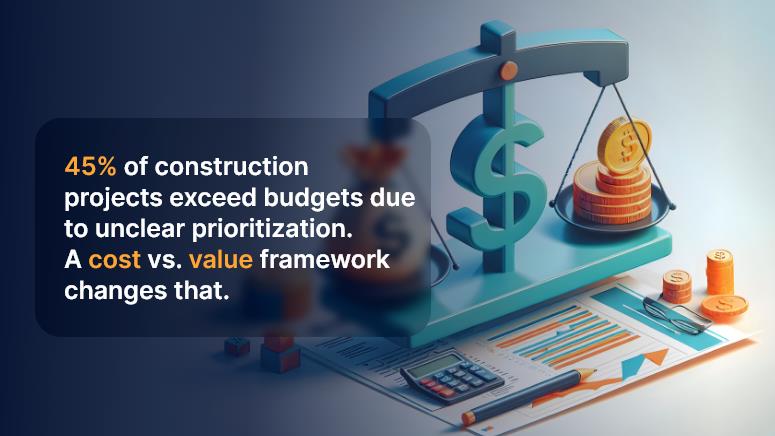
When it comes to managing construction projects, one of the hardest choices isn’t just setting the budget—it’s deciding what to prioritize within it. A flashy new feature may look appealing, but will it truly drive value? According to McKinsey, nearly 45% of construction projects exceed their budgets due to poor allocation of resources and unclear prioritization. That’s where cost vs. value in project management becomes essential.

In this blog, we’ll explore how to evaluate features not only based on cost but also on the real value they bring to your business. You’ll learn how to make smarter budget decisions, balance short-term savings with long-term ROI, and see how OConstruction’s integrated project management platform helps you streamline these tough trade-offs.

45 per of construction

Business Relevance & Why It Matters

Every construction project has constraints: time, scope, and most importantly, budget. Yet, many teams struggle to align spending with true business value. Choosing features purely on cost often leads to short-lived wins but long-term headaches—while focusing solely on value without considering budget constraints can derail profitability.

Why Companies Should Care:

  • Executives need clear ROI visibility to justify investments to stakeholders.
  • Project managers require tools to allocate budgets efficiently and avoid feature overload.
  • Clients & developers want confidence that every dollar spent translates to tangible project outcomes.

Common Challenges Without a Cost vs. Value Approach:

  • Over-investing in underused features that inflate costs.
  • Neglecting critical tools (like risk tracking or time management) that save money in the long run.
  • Struggling to demonstrate ROI when negotiating budgets or pitching to clients.

The cost vs. value in the project management framework provides a lens to assess priorities based on both immediate affordability and long-term benefits. When supported by digital platforms like OConstruction, businesses gain real-time insights into cost allocation, usage patterns, and ROI forecasting. The result? Better decisions, leaner budgets, and higher client satisfaction.

Best Practices, Frameworks, and Actionable Strategies

Dos for Balancing Cost vs. Value in Project Management

  • Quantify Value Beyond Cost

Don’t just look at upfront pricing. Evaluate features on long-term savings, efficiency gains, and improved client relationships. For instance, a robust time-tracking tool might cost more, but it can prevent budget overruns.

  • Prioritize Must-Have Features First

Start by identifying critical features that directly impact project delivery (e.g., task scheduling, client reporting, and risk tracking). OConstruction lets you categorize features by “must-have,” “nice-to-have,” and “optional,” ensuring essentials come first.

  • Involve Stakeholders in Decision-Making

Different stakeholders view value differently. Executives may focus on ROI, while project managers may value automation. Use collaboration dashboards to gather diverse inputs before finalizing.

  • Apply a Weighted Scoring Framework

Score features by cost, business impact, and urgency. This structured method ensures decisions aren’t swayed by emotions or trends.

Don’ts in Feature Prioritization

  • Don’t Overload Teams with Unnecessary Features

More isn’t always better. Too many features can confuse users, leading to low adoption and wasted budgets.

  • Don’t Undervalue Integration

Buying a cheap standalone tool may save in the short term, but creates silos later. Integrated platforms like OConstruction deliver long-term value through seamless workflows.

  • Don’t Ignore Future Growth

A feature that seems excessive now might be essential as your business scales. Avoid tunnel vision by considering scalability

Quick Wins & Best Practices

  • Start Small, Scale Later: Invest in core features now, then expand as ROI proves itself.
  • Use Data-Driven Insights: Leverage usage reports to see which tools add the most value.
  • Revisit Priorities Quarterly: Business needs evolve, so should your feature priorities.

Step-by-Step Framework: Balancing Cost vs. Value

  • Identify Needs: List all potential features with input from stakeholders.
  • Estimate Costs: Get upfront and long-term pricing for each feature.
  • Measure Value: Score each feature’s impact on efficiency, client satisfaction, and risk reduction.
  • Rank & Prioritize: Apply a weighted scoring system to align with goals.
  • Decide & Implement: Start with high-value, essential features.
  • Review & Adjust: Track ROI quarterly and reprioritize as needed.

Customer Story

For example, Skyline Developers, a mid-sized construction firm, struggled with ballooning budgets due to underutilized software features. They were paying for advanced analytics and AI forecasting, but lacked adoption among teams.

After adopting OConstruction, they implemented the cost vs. value in the project management framework. Using the platform’s built-in scoring tools and ROI dashboards, Skyline prioritized essential features like time tracking, task management, and real-time collaboration. They postponed non-critical add-ons until adoption improved.

The results:

  • Project delivery improved by 30% due to better scheduling.
  • Software costs were reduced by 20% after cutting unused features.
  • Client satisfaction rose significantly thanks to transparent reporting.

This cost vs. value approach helped Skyline balance budgets, improve outcomes, and build stronger trust with stakeholders.

Key Takeaways

Balancing cost vs. value in project management is about more than numbers—it’s about making strategic choices that maximize ROI, minimize waste, and deliver real impact.

Key Takeaways:

  • Start with essentials. Focus on must-have features that directly influence project outcomes.
  • Use data, not guesswork. Measure feature adoption and ROI continuously.
  • Think long-term. Value extends beyond cost, especially when scaling.

In today’s competitive construction landscape, companies that prioritize value-driven budgeting not only save money but also strengthen client trust and deliver projects on time. By leveraging digital tools like OConstruction, you can turn budget decisions into a growth strategy.

Frequently Asked Questions

1. What does cost vs. value mean in project management?

Cost vs. value in project management refers to weighing the price of a feature, tool, or resource against the long-term benefits it delivers. Instead of focusing only on upfront costs, teams consider ROI, efficiency gains, and scalability when making budget decisions.

2. Why is cost vs. value important in construction project budget planning?

Construction projects often face tight budgets and high stakeholder expectations. Without a cost vs. value approach, teams risk overspending on underused features or neglecting critical tools. Prioritizing based on value ensures budgets drive measurable project outcomes.

3. How can project managers prioritize features effectively?

Project managers can use a weighted scoring framework that evaluates features on cost, business impact, and urgency. This structured method helps avoid emotional or trend-driven decisions and ensures investments align with project goals.

4. What are common mistakes when prioritizing features in construction projects?

The most common mistakes include:

  • Overloading teams with unnecessary features.
  • Ignoring integration between tools.
  • Focusing only on upfront costs without considering long-term ROI.
  • Overlooking scalability for future growth.

5. How does software like OConstruction help in balancing cost vs. value?

OConstruction provides built-in scoring tools, ROI dashboards, and real-time usage reports. These features help teams categorize must-have vs. nice-to-have features, track adoption, and reprioritize budgets quarterly to stay aligned with business needs.

6. What role do stakeholders play in feature prioritization?

Executives, project managers, clients, and developers each view value differently. Involving all stakeholders ensures that decisions reflect diverse needs—ROI for executives, automation for managers, and usability for teams—leading to smarter budget allocation.

7. Can cost vs. value decisions improve client satisfaction?

Yes. When budgets are allocated to features that directly improve project delivery—like time tracking, risk management, and transparent reporting—clients see faster results, fewer overruns, and clearer ROI, which builds trust and long-term relationships.

Category: Construction Academy

Subcategory: Budgeting and Planning

Subcategory: Construction Phase

Subcategory: Design Coordination

Subcategory: Estimation Techniques

Subcategory: Initiation and Feasibility

Subcategory: Introduction

Subcategory: Personal Management

Subcategory: Project Close-Out

Subcategory: Project Scheduling

Subcategory: Project Teams

Subcategory: Proposal Management

Subcategory: Total Quality Management

Subcategory: Tracking and Control

Subcategory: Work Breakdown

Category: Help Desk

Subcategory: Client

Subcategory: Construction 101

Subcategory: Contractor Management

Subcategory: Expense

Subcategory: Finance Budget

Subcategory: Inventory Management

Subcategory: My Approvals

Subcategory: Site Management

Subcategory: Vendor Management